


Galway 2026 Draw and Run Style Bias
As well as the Qatar 'Glorious' Goodwood festival, this same week witnesses Galway's seven-day bonanza at which there is almost literally a race for every horse. The programme covers the full gamut from two year old maidens to exposed handicap chasers. Here, we'll focus our attention on the flat handicaps ahead of the 2026 renewal of the famous meeting at Ballybrit.


Shaped like a diamond, key features of the mile and a quarter Galway oval are sharp turns, undulations, and a stiff uphill quarter-mile run to the finish line. There is a shortish distance from the seven furlong start to the first of two bends, both of which require wider drawn runners in bigger fields to either take back and wait or risk conceding ground on the turns.
7f handicaps
With the going forecast yielding on the flat course and only spits and spots of rain forecast for the week, this is how draw and run style might impact the ability of horses to make the frame in Galway 12+ runner seven furlong handicaps.
On good ground through to yielding, there is a reasonable inside draw bias. As the table below shows, the number of winners coming from low stalls is the same as middle and high combined in the past decade, and this is at least partially replicated in both place percentage and PRB terms. Middle draws seem to have struggled for some reason: perhaps they're more prone to getting boxed in.
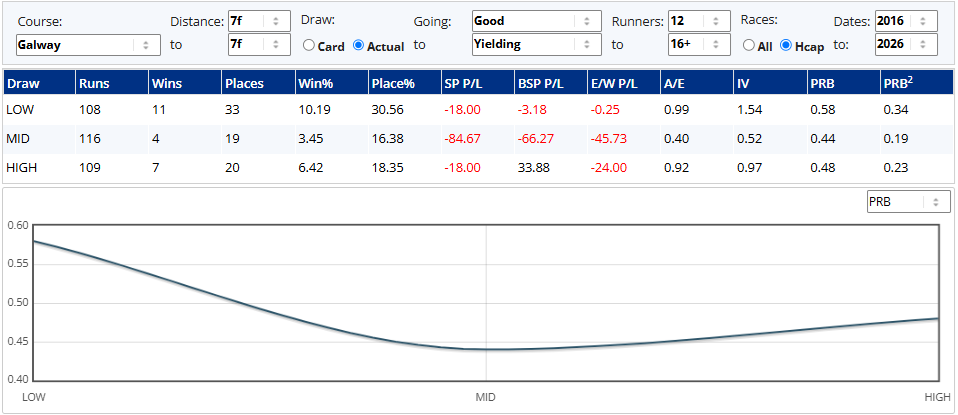
Galway Races 2026: 7f Draw Bias
As well as the low draw perspective, run style is highly material as the heat map below demonstrates. The chunk of green for leaders and prominent racers contrasts starkly with the shades of orange for midfield and held up types. The summary is that early position is very important: favour those with the tactical toe to be in the front half of the field early.
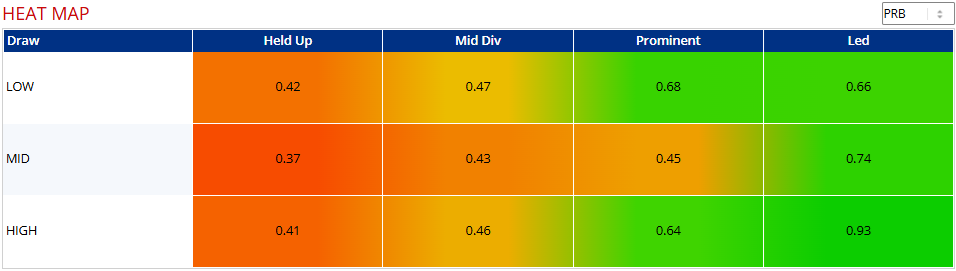
Galway Races 2026: 7f Run Style Bias
1m 1/2f handicaps
At the extended mile distance the run to the first turn is longer with an inside rail that's always tilting away from wider-drawn horses, and there's obviously more of a premium on stamina than at seven-eighths; thus not doing too much too soon is crucial and good jockeyship comes more to the fore.
At this range the draw bias seems to favour middle-berthed runners, that third of the draw having won as many races as low and high combined in the past ten years. However, a look at placed and PRB figures indicates that, if anything, there is a slight negative bias against wide runners. Again, though, we need to think about draw in relation to run style...
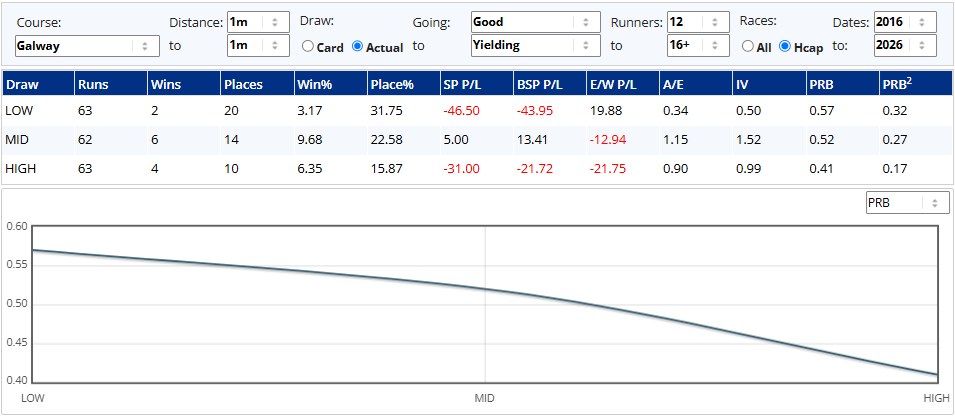
Galway Races 2026: 1m 1 1/2f Draw Bias
Here we see a similar, if less pronounced, story to the 7f trip where those in the second half of the field are likely to have to travel further around the outside, or trust to luck navigating a shorter path, while those racing prominently or on the speed can enjoy clear sailing if they've saved enough for the finish. The evidence again points to it being tougher generally for wide drawn horses overall, and yet their win and place numbers hold up fairly well. I'd be inclined to slightly lean middle to inside but would certainly not discount a high drawn contender whose profile I otherwise liked.
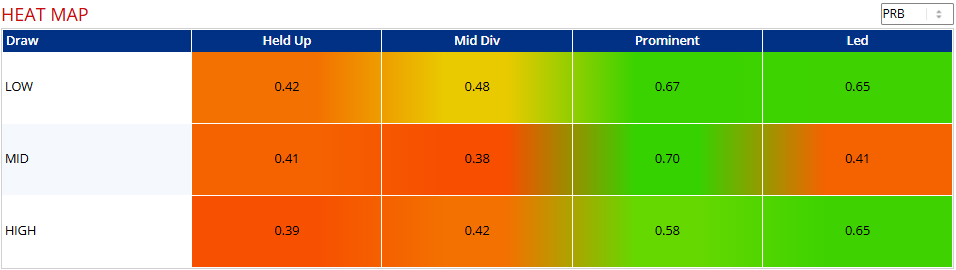
Galway Races 2026: 1m 1 1/2f Run Style Bias
1m 4f+ handicaps
Unusually, there remains some residual bias in longer distance handicaps on this sharp always-leaning-in circuit. It's most clearly defined at 1m4f, where low drawn and/or pace pressing horses have had the edge but, as the table below illustrates, some sort of advantage is enjoyed at all longer flat distances for those on the lead.
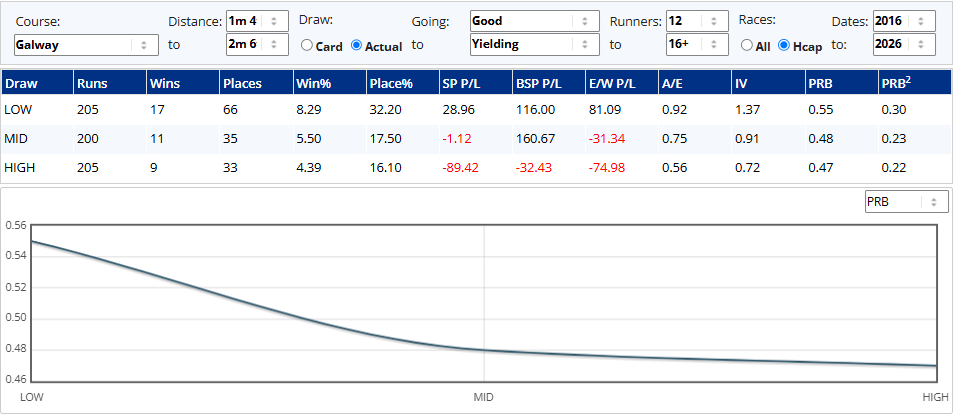
Galway Races 2026: 1m 4f+ Draw Bias


Looking at run style, this time we see the arrow head formation favouring front runners and / or low drawn horses that are not held up.
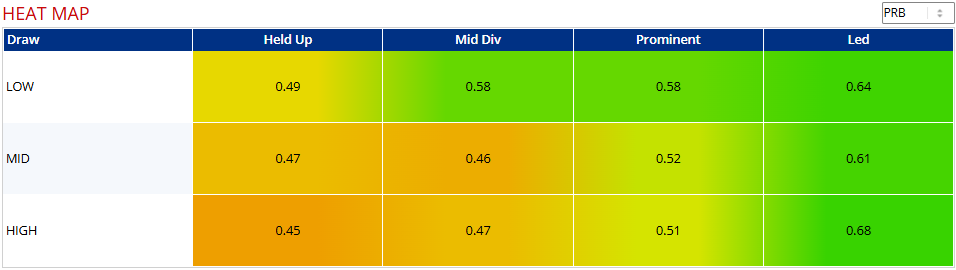
Galway Races 2026: 1m 4f+ Run Style Bias
It's all very logical, really. Those travelling the least distance have fared best - go figure 😉
Good luck!
Matt