Read all sorts of commentaries and tips across a range of racing disciplines on the most popular horse racing blog in Britain, from staff and guest writers.
We've added a couple of new features in Query Tool - woohoo!
The first is 'Course Characteristics', which covers the direction of the track, its profile (flat, undulating or very undulating), its general configuration (galloping, sharp or very sharp), and any specific configuration elements (sharp bends, uphill finish).
And the second, which might be more general fun, is DSLR, or 'Days Since Last Run'. This has a few nuances, which I'll quickly explain. Selecting a 'from' of 0 on DSLR (i.e. no days since last run) will bring back data even though it is impossible for a horse to run multiple times in one day.
What's actually happening is that we're using zero to mean 'horse is making its first start in UK or Ireland'. That in turn can mean one of two things: an unraced horse making its debut, or a horse with overseas form making its UK/Ire debut. Our dataset does not extend to overseas form so if, for instance, a French trainer brings a horse to UK for the first time, that runner will show up in the zero DSLR cohort.
Although we don't have point to point form in our database, we do normally have the number of days since the most recent point run, so horses with experience between the flags will generally not show up in the zero DSLR cohort.
I told you it was a bit nuanced!
Anyway, it's a really interesting way of looking at things like trainer performance, especially at this time of year when juveniles are making their debuts and horses are returning from their extended winter breaks.
This short video explains more about the new features and includes a couple of quick examples.
Good luck!
Matt
https://www.geegeez.co.uk/wp-content/uploads/2026/03/DSLR.png3041254Matt Bisognohttps://www.geegeez.co.uk/wp-content/uploads/2022/10/geegeez_banner_new_170x78.pngMatt Bisogno2026-03-24 11:45:282026-03-24 11:45:28Two New Features in Query Tool
The first weekend after the Cheltenham Festival, also a fortnight before the Aintree Grand National meeting, has evolved into a special opportunity for mares (and sometimes four-year-old fillies) at either end of the country, writes Tony Stafford.
Kelso, two, and Newbury, one, offer valuable races exclusively for females, but the biggest individual prize is the £65,000 to the winner Goffs Hundred Grand Bumper, also open to geldings at Newbury. Five females were among 19 runners, all of which were previously offered at auction by Goffs. The outcome was a thrilling finish between two four-year-old fillies, debutant Lady Hope (33/1), trained by Hughie Morrison, and Nicky Henderson’s once-raced and well fancied Madam Speaker.
Both youngsters finished strongly past Irish Goodbye, who seemed to have the race won coming to the closing stages; but close home Lady Hope was drawing away under Jonny Burke, and Sean Bowen on the runner-up could do nothing about it. Irish Goodbye’s effort, conceding 7lb to the first two, suggests there will be much more to come from the Twiston-Davies gelding in the future.
Understandably, Morrison was elated afterwards, regarding the daughter of Nathaniel as a potential staying star over jumps. “Her mother is by Midnight Legend and is out of the great mare Lady Rebecca. She’s only four, so we’ll take our time with her.”
She wasn’t cheap at £55k as a three-year-old, bought for Martin Hughes and Michael Kerr-Dineen. Former trainer Paul Webber was part of the selection panel with Morrison and the would-be owners. Hughes sent Eyed to Morrison when Webber retired from training in the summer of 2024 and he has won three races over fences with him.
It was a great day for Nathaniel as in the previous race at Newbury the BetVictor mares’ limited handicap hurdle, his daughter Charisma Cat came through strongly under Tom Bellamy to win for Alan King and Annabel Waley-Cohen, family and friends.
Grand National time of year always resonates with the Waley-Cohen name, through the exploits over a decade or more of amateur rider son Sam, whose record for completions and wins over the big fences has never been matched by any professional. Winning the big race on his last ride in 2022 on father Robert’s Noble Yeats was an emphatic and fitting final gesture from this modest young man.
Hughie told me there was also a GBB bonus attached to Lady Hope’s race. He wasn’t sure whether it would be 20k or half that amount. “Let’s be positive and say it’s 20k,” he said. “When can you run first time and win 85 grand? My trainer’s share of that will probably pay the staff wages for four days!”
In the spring sunshine, Hughie and wife Mary were heading off to Fonthill Stud where they have a couple of siblings to Secret Squirrel and one to Mary’s home-bred Filanderer, winner of five of his last seven races. One of the Secret Squirrel relatives is by Marmelo, his Melbourne Cup runner-up.
Now 13, Marmelo “has had six days out drag hunting and had his first team chase the other day, when he led the team throughout his round,” said Morrison. Marmelo covers the odd mare and one of his clients with a young horse is Mr Perriss, owner of Cheltenham Festival winner White Noise.
Hughie reckons it costs upwards of 30 grand to keep a horse from birth to their three-year-old days. “Then there’s the stud fee to consider. It makes no sense really. How many prizes like Saturday’s are there to spread around?”
Newsells Park Stud has stood Nathaniel ever since he retired from racing as a dual Group 1 winner of the Eclipse and King George VI and Queen Elizabeth Stakes. His fee for this year is £17,500 and Gary Coffey, the stud’s racing manager, reckons he will have a similar number of mares to last year’s 115. When all the accounting is sorted, it could be around 120.
Despite the excellent achievements of his progeny over jumps, the vast proportion of mares sent to Nathaniel are for flat racing. That’s hardly surprising as he is the sire of once-in-a-lifetime filly Enable and Derby hero Desert Crown.
Newsells has three other stallions: A’Ali, Without Parole and Isaac Shelby. That last-named horse’s first foals are now on the ground and Sam Sangster has had excellent reports of them. Sam initially bought Isaac Shelby with his trainer Brian Meehan for one of his Manton Thoroughbreds syndicates and they all had a commercial dividend when he was bought in mid-career by Wathnan Racing.
Isaac Shelby was the easy winner of the Group 3 Greenham Stakes which he followed with a close second in the French 2,000 Guineas. Coffey says Isaac Shelby, who stands for £7,000, is the only son of top 2025 UK/Ireland money-earner Night Of Thunder to stand at stud in the UK.
In overall European earnings, Night Of Thunder fell behind the recently deceased Wootton Bassett and Sea The Stars, whose overall tally of more than £10 million was boosted by the £2.36 million earned when Daryz won the Prix de l’Arc de Triomphe for Francis Graffard last October.
Sam Sangster, trainer Ollie’s near-contemporary and uncle, can point to such as Rashabar and Kathmandu as yearling purchases that went within a whisker of Group 1/Classic success, both with Meehan. Brian’s stable should be more powerful this season as Sam reckons there’s around ten horses rated at 100 or more, reporting that multiple Group 1-placed Rashabar, now four, will be brought back to a mile this year.
The filly Esna, owned by Martin Hughes and partners, is rated 107 after her fourth in the Marcel Boussac at the Arc meeting. She will be aimed at the 1,000 Guineas, while the progressive Bourbon Blues, rated 105, is another Hughes horse. He was just edged out at Group 2 level in France in mid-November and will also have an attacking programme early in the season. Both were Sam Sangster buys as yearlings.
A new arrival is the former Gosden-trained Miss Justice. This five-year-old by Triple Crown winner Justify, won at Listed level at Salisbury and ended her time with the Gosdens with a close second at Group 2 level at Newmarket. She cost 750,000gns at the December sale and has been pleasing her new trainer since then.
Until Sam pounced in midsummer to buy the Aidan O’Brien-trained Diego Velazquez, he had never been able to say: “I bought a Group 1 winner.” Days after the purchase though, Diego Velazquez did just that, and not any old Group 1, but France’s Prix Jacques Le Marois at Deauville where subsequent Breeders’ Cup winner Notable Speech was the runner-up.
At £17,500 a pop at the National Stud, where he is owned by a consortium, he has been hot property indeed, and Sam says that a total figure north of 120 covers is likely. Also, he is to have a shuttle season to Australia.
“He was a no-brainer really”, says Sam. “By Frankel, even without the Group 1 which was a great bonus for the owners, he was a multiple Group 2 winner and is a fantastic stamp of a horse. He has attracted a smart bunch of mares, notably Lucida, winner of the Rockfel at two for Jim Bolger and then second in the 1,000 Guineas. It gives him a great chance of a fast start.”
Diego Velazquez is a half-brother to Broome and Point Lonsdale, but as that Deauville win shows, he is much the quickest of the trio, with his best performances being at seven furlongs and a mile. Exciting days all round.
This article is slightly different from what you might be used to from me, and I will be reviewing the changing face of flat racing in the UK, writes Dave Renham.
Comparing different sets spanning the period from 2010 to 2025 I will consider how the racing programme has changed, what has been happening to field sizes, whether there have been any significant changes in the jockey community, and so on. My analysis covers all flat racing in the UK, turf and all-weather.
Scheduled meetings
We are less than two weeks from the start of the 2026 turf season, so I would like to start by comparing the number of flat meetings that were scheduled in 2010 with 2025.
There is only a small difference of 17 meetings, which equates to roughly one every three weeks.
Composition of Turf vs AW Race Meetings
What has changed is the split in terms of turf flat meetings versus all weather meetings. Firstly, let me share the division for between the surfaces in terms of the number of meetings across each of these two years:
Over these 15 years there has been a 5.7% decrease in the number of turf fixtures and, therefore, a 5.7% increase in AW meetings. While I do not have the schedules for all years in between, I do have yearly data in terms of the number of turf flat races and the number of AW races run.
Below is a graph showing the percentage of turf flat races each year compared with the percentage of AW ones. I have not included the splits for 2020 due to the disruption caused by Covid, hence the lack of a blue and orange dot above 2020 on the graph.
As expected, given the ‘number of meetings’ evidence, the general trend has been for the gap between the two to narrow. In 2010 turf accounted for 64.1% of all flat races with 35.9% on the AW. By 2025 this read 57.3% turf and 42.7% AW.
Average field size
A look now to see what has happened to field sizes over the past 15 years, comparing the 2010 average with the 2025 one.
The average number of runners per race has dropped by exactly three-quarters of a runner over the past 15 years. Another noptable change can be detected when we compare turf field sizes with AW ones:
As the graph shows, there has been a much bigger drop in the average field size in turf flat races (roughly one runner per race on average). The AW figure has dropped a little, and in 2025 we had bigger fields on average on the AW compared with those running on turf.
Average field size by course
I now want to look at what happened at each course in terms of field size when comparing 2010 with 2025. In the table below the averages for each individual track are shown along with a column calculating the percentage difference between the two. Any percentage figure in green indicates an increase in the average number of runners, whereas percentage figures in red indicate a decrease. For the record Chelmsford and Wetherby are not included as they did not race on the flat at either venue in 2010.
Only six courses have seen an increase in their average field sizes, which will come as no surprise based on the previous data shared. The average field size at Southwell has increased by 10% which is the most by any of the courses. I wonder if that might have something to do with the change of surface. Impossible to say for sure, but that feels to be the most likely reason. Conversely, there have been some significant drops, most notably at Salisbury, Nottingham, the Rowley course at Newmarket and Chepstow. All four have seen field size decreases of more than 20%.
It should be noted that average field size decline may have been affected slightly by courses which decide to split more handicap races into two divisions than was the case previously. I don’t have any hard data here, so it is more an observation of a potential mitigating factor.
Field size and each way betting
One impact of smaller field sizes is reduced opportunities for savvy each way bettors. In 2025, 33% of all flat races had seven or few runners: a third of all races.
If you have not yet read Russell Clarke’s excellent article where he discusses whether win bets or each way bets are optimum in terms of the number of runners in a race, I suggest you take a quick look before reading on. The link is here: www.geegeez.co.uk/money-without-work-5-bookmaker-concessions-each-way-betting/
Essentially, in 5, 6 and 7-runner handicaps, and in 6 and 7-runner non-handicaps, the percentages favour win betting over each way betting. It is only 5-runner non-handicaps where each way punters have an edge over win punters.
A mere 2.7% of all races in 2025 were 5-runner non-handicaps. In contrast, 5, 6 and 7-runner handicaps coupled with 6 and 7-runner non-handicaps accounted for 26% of all races in 2025 which is a huge number of races where each way bettors were at a disadvantage. To give further context, as well as to show reduced opportunities for each way bettors, in 2010 these races equated to 21% of all races.
Another impact of smaller field sizes is an increase in shorter priced favourites. This, for many - me included, presents a much less appealing product.
And a further impact of smaller field sizes is more limited opportunities for jockeys, which brings me on to...
Women jockeys
Horse racing is a rare sport in that women compete against men on a completely level playing field. However, for many years the sport has been dominated by male jockeys and despite some excellent lady riders coming along – Hayley Turner, Hollie Doyle and Saffie Osborne to name but three - has anything really changed? Let’s see.
Firstly, below are the annual percentage of rides for male jockeys versus females.
In general, there has been a slight uptick in the percentage of female rides over the timeframe, but it is disappointing to see the figure drop back under 10% in 2025. Moreover, if we look at the better races, just 2.6% of riders in Class 1 events in 2025 were female. Indeed, only four female jockeys from 2010 to 2025 had 50 or more rides in these contests: Hollie Doyle, Saffie Osborne, Hayley Turner and Josephine Gordon.
Combining their performances in Class 1 events during this period, they recorded a profit at BSP of £104.31 to £1 level stakes which equates to returns of over 13p in the £. Not only that, if we had backed all of their mounts on the Betfair Place Market a profit of £21.13 would have been secured. Clearly, female jockeys continue to be something of a blind spot in both owner/trainer and bettor sectors.
I have more bad news for fans of female riders because 173 different female jockeys rode at some point during the year of 2010, but in 2025 this had dropped to 134. On a personal note, I find this whole situation sad, disappointing and wrong. As a whole, female sport in the UK is booming thanks in part to the success of the England Lionesses, the World Cup winning England rugby team and the exposure of ladies’ cricket at international level and in ‘the Hundred’. However, this is not being reflected in horse racing, and something needs to change soon.
Apprentice jockeys
How about apprentice jockeys? Are there more or fewer apprentices riding now as compared to 2010? The answer is emphatic: there were far fewer apprentice jockeys riding in 2025 compared to 2010. Specifically, there were just 244 last year compared to 377 in 2010.
This is also reflected when we see the total number of rides apprentices had – there were 9941 in 2025 compared with 13948 in 2010. If we look year on year comparing open races - that is, races for both professionals and apprentices - we can see that the percentage split for apprentices has generally been on a downward trajectory.
2025 saw the biggest difference between the percentage of professionals riding in open races and the percentage of apprentice riders riding of any year going back to 2010 – 85% against 15%. With apprentice jockeys being the future of the sport this trend is a little worrying.
I would like to say that from a punting perspective some apprentice jockey data have been extremely positive in recent years. For example, the most successful apprentices, those claiming 3lb in open races, have performed extremely well in the last few years when riding shorter priced horses.
From 2018 to 2025 when riding horses priced BSP 4.0 or less, these 3lb claimers in open races have produced the following figures:
A tidy profit with returns of over 6 pence in the £. Not only that, but the yearly stats also show how consistent these performances have been:
There have been seven winning years out of eight with only a small reverse of 2.2p in the £ in the one losing year of 2022.
Another positive apprentice angle is when apprentices claiming the full 7lb allowance ride over the minimum distance (5f) in turf handicaps. They have made a decent blind profit across all price bands (around 18p in the £), but two big-priced winners have skewed the bottom line somewhat.
However, when restricting qualifiers in these handicap sprints to horses priced BSP 12.0 or less the record reads 131 wins from 678 rides (SR 19.3%) for a profit of £70.44 (ROI +10.4%). Despite their inexperience, it seems that over the shortest distance, when I guess fewer mistakes can be made due to the time the races take, apprentices claiming 7lb have offerred good value.
Changes in Race Type Topology
There have been some significant changes since 2010 in the flat racing schedule when it comes to race types. For example, in the UK in 2010 there were 277 claiming races on the flat. By 2018 this had dramatically reduced to 81, and in 2025 there were just six!
Sellers have suffered a similar fate although there were still 30 such races in 2025, compared with 237 in 2010. I know for punters as a whole these two race types can be a bit ‘marmite’ but personally I have always liked claimers and sellers as betting mediums.
Another seismic switch has been that of maidens (non-handicap) versus novice races. In 2010 there were 1326 non-handicap maiden races and 45 novice races. By 2025 there were more novice races than maidens – 765 against 630.
Finally, while looking at race types, we can see that there are more handicaps and fewer non-handicaps now than there were in 2010:
In percentage terms, handicap races have increased from 63.1% of all flat races in 2010 to 70.75% of flat races in 2025, a relative increase of 12% in the last 15 years. As a rule, I personally prefer handicaps, so for me this is a ‘win’, but I appreciate there will be punters with other points of view and for some this would not have been a good development over time.
Headgear / tongue ties
When talking headgear I am excluding tongue ties, so blinkers, cheekpieces, hoods, eye-shields and visors. There has been a 47% increase in the number of horses wearing headgear in races between 2010 and 2025.
Just under 18,000 runners in 2025 ran in headgear; that is 18,000 runners in total rather than 18,000 individual horses, as most horses wearing headgear will have had the equipment deployed more than once across the year. This equates to 31% of all runners. For the record, horses that wore headgear were poorer value than those which did not. The difference from 2010 to 2025 was around 3.5p in the £ in favour of horses that did not wear headgear.
Regarding tongue ties, the numbers of runners wearing them have more than doubled since the 2010 flat season: 2,927 runners wore a tongue tie in 2010, and it was up to 6,090 in 2025. Horses wearing tongue ties have some very interesting stats which I wrote about recently so check out that piece here if not done so already.
*
There have been a lot of changes in flat racing over the past 15 years. Change always has the potential to affect betting performance and punters need to be prepared to adapt to such new challenges.
Until next time...
- DR
https://www.geegeez.co.uk/wp-content/uploads/2022/10/DeauvilleLegend_GreatVoltigeur_2022.jpg319830Dave Renhamhttps://www.geegeez.co.uk/wp-content/uploads/2022/10/geegeez_banner_new_170x78.pngDave Renham2026-03-17 08:33:512026-03-17 08:35:28Changes in UK Flat Racing: 2010-2025
Some Long Range Ante Post Picks for the 2027 Cheltenham Festival
Straight after the 2025 Cheltenham Festival, I had a crack at putting together some ante post plays for last week's jamboree. In the end, none of the picks hit their mark; but that really does only tell half the story, as you can read for yourself here.
The management summary is that you could have had The New Lion at 7/1 (SP 3/1) and Majborough at 8/1 (SP 5/6) from only five suggestions. The other three were Fact To File at 6/1 for the Gold Cup (wrong race, late non-runner anyway), Inothewayurthinkin for the same race (recommended to wait until he'd run as suspected bigger price would be available - eventually ran 3rd at 11/1), and Marine Nationale at 7/1 for the Champion Chase (clear 2nd favourite when scratched a week before the Festival).
It's very much a case of "system working well, send more money" and what follows will be along similar lines.
Champion Hurdle 2027
A year ago the ante post market for the 2026 Champion Hurdle had Lossiemouth at 8/1 in a place but generally 6/1; Brighterdaysahead was 20/1 and Alexei not quoted.
The race was won by Lossiemouth, and in some style. But the bare numbers were relatively workaday: she'd recorded much higher TS figures three times in Ireland earlier in the season and was only 3lb ahead of her triple 160 RPR's in spite of the visually impressive nature of the win. Brighterdaysahead also under-performed against her Irish level while The New Lion improved his RPR but produced a significantly lower TS number than in his Turners win a year prior.
Where I get to with all that is that Lossiemouth is not improving but sets a strong standard; Brighterdaysahead is a capable fly in the ointment but her Festival preps seem to have taken her chance away the last couple of years (she'll be interesting if rested after her Christmas run but I suspect they might 'bottle it' and go Mares Hurdle anyway); and The New Lion continues to slightly underwhelm me.
Sir Gino shouldn't be expected to come back to his best, but if he did he'd have a chance. Not a robust proposition at this stage. Poniros has improvement in him and will be a more likely candidate next year than this, but still doesn't excite.
But one for which half a case at a price could be made is Alexei, who might well have been third but for a very bad error at the last. He's progressive, has strong Cheltenham form and is 20/1.
Of the novices, the only Supreme winner to take the Champion Hurdle the following year in the last 54 years is Constitution Hill, though both Jezki and Buveur d'Air went close in the former en route to the latter twelve months hence. My guess is that Sober Glory will go chasing, so too Old Park Star and Mydaddypaddy. None of them would be on my Champion Hurdle radar in any case.
The Turners has been a better pointer to the following season's Champion but it looked a quantity over quality renewal to my eye. The winner, King Rasko Grey, had been beaten in three of his four previous races, and the 3rd and 4th placed horses were 50/1 and 150/1. I might be wrong - again?! - but this looks, if not pinch of salt form then at least not Champion Hurdle kingmaker form, behind the winner. King Rasko has scope to step up a fair bit off so few runs to date.
The Triumph produces a five-year-old contender most years, and that age group has a physical maturity deficit against their elders without any compensating weight for age allowance. Nothing there is of interest.
State Man will be ten next year - no thank you - and there is nothing else obvious on the radar: perhaps Kabral du Mathan will drop back to two miles but will he have the speed? Maybe...
In what is a deeply unoriginal suggestion, Lossiemouth looks pretty fair at 3/1 assuming she gets to the start line - a big assumption, natch. Of the others, Alexei is mildly tempting.
Champion Chase 2027
The favourites' graveyard at the Festival, it's a race you almost want to land on the second or third in on the day. Obviously that statement makes no sense and we want to get as close as possible to backing the favourite on the day, because that horse will, in the opinion of the market, have the best chance.
This year, Majborough was sent off 5/6 having been 8/1 ante post a year before, and the winner Il Etait Temps was heavily backed into 5/2 on the day - he was 33/1 the week after the 2025 QMCC. The reason for his whopping quote was that, at that point, he'd been off the track since running 3rd to Gaelic Warrior in the Arkle and then going back to back in the Aintree/Punchestown equivalent Grade 1's. He returned at Sandown and took out the end of season Celebration Chase six weeks after the Festival.
In 2027, it seems likely Majborough will go the Ryanair or Gold Cup route, his jumping frailties exposed at the tempo of a Champion Chase. Kopek Des Bordes would be a natural horse in here but Arkle winners have a much better record than placers. Kopek can be expected to win at Punchestown though he may again have to lock horns with the excellent jumping of Kargese. She seems over-priced because there's not really another race for her, Mares' Chase aside (please, no).
The 16/1 about Marine Nationale is also too big an overreaction. He was second choice before absenting a few days ahead of the '26 Fez and he'll surely go very close at Punchestown, in so doing halving his current quote.
L'Eau du Sud is clearly not up to this, Only By Night will probably try to win the Mares Chase in which she was second this year, and Lulamba will be going up in trip. If there's a forgotten horse in this market - an Il Etait Temps if you will - it could be Salvator Mundi. His season was left at the start after defeat at 1/7 odds in November, following which he ran a middling race in the St Stephen's Day Grade 1 novice chase at Leopardstown (though sent off only 9/2). He absolutely bolted up in a Thurles beginners' chase last month (by 28 lengths from a 128-rated horse) and he was a Grade 1-winning novice hurdler this time last year. He's 50/1.
You could almost dutch 4/1 Kopek des Bordes, 9/2 Il Etait Temps, 12/1 Kargese and 16/1 Marine Nationale at close to even money - and I will be doing a variation of just that - and perhaps try a tiny win only speculative on Salvator Mundi at 50/1.
Gold Cup 2027
This felt very much like a changing of the guard in the Gold Cup ranks. Galopin Des Champs missed the gig, Inothewayurthinkin was wrong all season, Fact To File was re-routed and ejected. Next year, Haiti Couleurs and Grey Dawning will be ten, which is too old.
It would be hard not to be with Gaelic Warrior, a horse which prior to winning the Gold Cup last week had been second in a Fred Winter and a Turners and won an Arkle. Festival form. He'll be nine next year, the same age as Don Cossack, Synchronised, Imperial Commander and Kauto Star (second time) were for their wins - but the years of those victories were 2016, 2012, 2010 and 2009. In other words, the only winner older than eight since 2012 was Don Cossack. Even Galopin Des Champs was beaten as a nine-year-old. So, hard as it is, I'm still looking...
...and the place to look is in the ranks of the rising stars. Half of the Gold Cup winners this century were second season chasers: the shortest of those in the lists currently is 16/1.
That horse is Final Demand, second in the Brown Advisory off a difficult prep. He wasn't noticeably staying on compared to the winner - Kitzbuhel, made all - but perhaps with a better lead up he might be able to improve. Both will need to, as will one of the most under-rated horses in training, Salver. You couldn't put him in multiples but his Brown Advisory run has to be seen to be believed.
In the image below, I've highlighted the furlong by furlong sectional percentages of the winner, Kitzbuhel, and third placed Salver. The faint grey line is 'normalised par' - in other words anything above the faint grey line is above par.
Below the chart is a table of furlong by furlong data. A mile out Salver is eleven lengths off the lead having had to jump Kaid d'Authie when that one fell, and he jumps three from home in last place. His numbers from there are better in every single furlong than the two horses which finished in front of him.
It was an excellent staying performance and implies the three furlongs longer trip of the Gold Cup could bring out more improvement. Third to Majborough in the 2024 Triumph Hurdle (missed '25 Festival) and a dual Grade 2 novice chase winner this term, if the Moores campaign him like a Gold Cup horse he'll have a good chance. He's currently 100/1 (not shown in the image below).
I'm siding with the 1-2-3 in the Brown Advisory against the will-be-nine-year-olds, the beaten-in-the-Gold-Cup-this-years and the will-probably-run-in-the-Ryanairs. Kitzbuhel is 20/1, Final Demand 16/1 and Salver is 100/1.
*
It goes without saying - but I'll emphasise it anyway - that any number of things can go wrong over the course of 360 days, and at least some of them will. Working on a loose basis of a horse having a 65% chance of making the next Festival, you'd be looking at anything from 2/1 Lossiemouth (what price is she if lining up in twelve months' time?) to 66/1 Salver...
Caveat massively emptor!
Matt
https://www.geegeez.co.uk/wp-content/uploads/2026/03/Salver_BrownAdvisory_Sectionals.png7051213Matt Bisognohttps://www.geegeez.co.uk/wp-content/uploads/2022/10/geegeez_banner_new_170x78.pngMatt Bisogno2026-03-16 13:35:322026-03-16 14:31:43Taking A Flyer on the 2027 Cheltenham Festival
They say talk is cheap, writes Tony Stafford. Well, there was plenty of it going around at Cheltenham on Thursday with Willie Mullins and JP McManus both being highly critical of the state of the going. It was the basis of their late decision to withdraw last year’s winner and red-hot favourite Fact To File from the Ryanair Chase.
In his absence, the nine-length 2025 runner-up Heart Wood got the better of McManus and Nicky Henderson’s brave former two-mile paragon Jonbon by ten comfortable lengths. No wonder they were irritated by Fact To File’s absence, not that Henry de Bromhead would have minded.
In a week where Mullins did run 74 horses – his only other non-runner being Leader d’Allier through lameness in Tuesday’s opener - his carping about the ground, saying that he would consider not running horses at future Festivals if that were not addressed, seems a little illogical at best.
Across the four days, his uber-classy horses picked up around £1.6 million, comfortably ahead of last year’s haul. He’s now halfway towards Dan Skelton’s seasonal tally, but surely it’s still too much cash to make up. Skelton responded with two right old jobs in a couple of the hardest-to-win handicaps. Recent form wasn’t a clue to either, just Dan’s predilection for laying one out as he has been doing at the Festival for several years.
Over in the Willie corner, Mullins had eight wins, including both the Champion Hurdle and Gold Cup for the Riccis, six second places, three thirds, five fourths and a solitary fifth place. With seven pulled ups and a trio of fallers, the only spot he didn’t fill in the first 20 was 19th. That’s something he might address next year – if he sends over any horses that is!
The times both on the Old Course, used on Tuesday and Wednesday, and the New Course for the final two days, seemed to suggest fairly similar underfoot conditions, usually close to standard. So probably good ground all round.
If the Mullins/McManus complaints had been in any way justified other than that the Thursday going would not suit one particular horse, albeit a very good one, then surely there would have been appreciably more than the nine horses withdrawn from the 489 slated to run. There were five absentees through lameness over the week so 475 took part, thus fewer than 3% in overall withdrawals.
Just as an example, Newcastle, one of the four Saturday jumps fixtures in the UK, had a total of 69 declared runners of which nine came out because of unsuitable ground on the day with the meeting raced on good to soft ground, soft in places going. Thus, seven times as many in proportion to the overall number of runners compared with Cheltenham.
It’s always a balancing act for Jon Pullin and his team. Often, as this year, until a fortnight before the fixture even heavy ground would be a possibility. Thanks to the effective drainage system on the track, a few dry, warmer days brings into play the need sometimes even for some selective watering, which I understand was applied to the hitherto unused New Course on Wednesday evening. Not enough for some (three on the day) but connections of another hundred plus were happy enough to run.
Although his banker of bankers didn’t run, JP had four nice wins and seven second and third places combined from the 32 of his horses that did compete. He had some disappointments among his most fancied runners, notably The New Lion, no match for Lossiemouth and just edged out by Brighterdaysahead for second in the Champion Hurdle. Another was his 7/2 favourite Proactif, one of nine for Mullins in the JCB Triumph Hurdle.
I would love to know which of the stable’s well-heeled owners gets first dibs when Mullins and Harold Kirk go on their shopping trips to France, mostly away from the sales ring. There are a number of juvenile hurdles, either in the late spring of the horses’ three-year-old season or later in the autumn, that get their attention, as was the case when Proactif made a winning six-length debut at Auteuil last September.
18 runners started that day and the easy winner Proactif had six lengths to spare over another debutant Apolon De Charnie. That horse was allowed to start 50/1 on Friday, half the price of the previous year’s winner Poniros, and he completely turned around the French form, winning comfortably with Proactif only ninth.
Ed Ware, founder and former owner the gaming site 32Red, has plenty of horses around the place, mainly with the Crisfords on the flat, and apart from Harold Kirk for recruiting jumpers, he uses the skills of former trainer and Godolphin stalwart David Loder in the sales ring for flat-race prospects.
What it cost to assemble such a squadron can only be a matter of speculation, but it is common knowledge that the HOS Syndicate paid €370k for Cork debut winner Minella Academy, who finished tenth of the 19 runners on Friday. It might not be fanciful to suggest that possibly the nine might have cost somewhere near (or even more than) the handsome seven-figure plunder the 74 Mullins horses earned over the four days.
It was probably a roll of the dice that led to Ed’s owning the right one of Mullins’ nine contenders on Friday. Mullins has now won the race five times in a row and seven in all, and the quirk is that all of the previous successful quartet ran last week.
JP’s Majborough, the 2024 winner, disappointed, probably having gone to too fast in the Queen Mother Champion for which he was the hot favourite. Last year’s hero Poniros, the one-time Ralph Beckett trainee, was a well-beaten sixth behind Lossiemouth, herself successful in the race three years ago, and now after two wins in the Mares’ race, graduated at age seven to the prime spot with a scintillating performance.
And you couldn’t keep the first of the Mullins quintet out of the picture, albeit away down in Sydney at the Rosehill track. Vauban, winning for the second time since departing for the stable of Gai Waterhouse and Adrian Bott, repeated last year’s success in a near £100k Group 3 race over ten furlongs. It was a fine performance considering he last raced in the Melbourne Cup over 2m when a creditable sixth last November.
Very smart over jumps, he also won a Group 2 race over two miles at York in the last season before his exportation. No doubt another go at the Melbourne Cup will be on the agenda as an eight-year-old.
The running tally of Irish against UK winners took a turn for the better for the hosts, only going down by 15 wins to 13, decided in the final Martin Pipe conditional jockeys’ handicap hurdle by Henry de Bromhead’s Air Of Entitlement. She beat 25/1 Hot Fuss (Tom Dascombe) following on from last year’s success in the Grade 2 mares’ novice hurdle when she was one of 20 Irish against the meagre tally of eight for the UK.
This time around that race – the Dawn Run – found a 40/1 winner but a very popular one in White Noise, trained by Kim Bailey and his long-time assistant, now joint licence holder Mat Nichols. It’s been 31 years since Bailey won both the Champion Hurdle (Alderbrook) and Gold Cup (Master Oats) in the same year. The skill’s still there!
Another big price came in Friday’s opener, the three-mile Albert Bartlett Novices’ Hurdle, won at 20/1 by the still unbeaten over hurdles Johnny’s Jury for Jamie Snowden and Gavin Sheehan.
There were various names put forward for ride of the week, among them Paul Townend on Gaelic Warrior in the Gold Cup. That made it a record five times in the race for Townend, but I prefer the claims of Sheehan. In a week of ragged, irritating false and then second and third-time unsatisfactory starts, Johnny’s Jury was left at the back of the pack.
Few riders do better when intentionally coming from a long way back. This was never the plan, but Sheehan took his time for the first couple of miles and, steering wide, came past the lot to win tidily.
Snowden had one career as a soldier before going as a pupil assistant to Nicky Henderson, at the same time collecting a hatful of victories for several years as a rider in the Military races at Sandown. This was his third Festival win and he’s now very much in the top echelon of UK trainers.
The Henderson grounding is rarely lost and it was equally enjoyable to see the Lambourn master collecting three more nice prizes on the week in addition to Jango Baie’s terrific effort when second as the youngest horse in the Gold Cup line-up.
Both Gaelic Warrior and Jango Baie are previous winners of the Arkle Challenge Cup over two miles for novice chasers at the meeting showing, if ever it was needed, that speed is the best attribute for winning races, even over staying trips. What a week, pity Willie won’t be back next year!
- TS
https://www.geegeez.co.uk/wp-content/uploads/2026/03/GaelicWarrior_CheltenhamGoldCup2026.png316830Tony Staffordhttps://www.geegeez.co.uk/wp-content/uploads/2022/10/geegeez_banner_new_170x78.pngTony Stafford2026-03-16 05:28:342026-03-15 15:40:19Monday Musings: Talk is Cheap!
And so to Friday, Gold Cup day, on what has - for me at least - been a chastening week. The Chastening Festival: I hope that doesn't catch on.
Regardless of where you are against your ledger, we have seven spectacular servings of sport to savour so let's wash our hands and dig in...
1.20 Triumph Hurdle (Grade 1, 2m1f)
Previewed by Dave Renham.
Let me start with the strongest past race trends:
- 14 of the last 18 winners were priced with an SP 10/1 or shorter.
- There have been 5 winning favourites in the last 11.
- 9 of the last 18 winners raced at Leopardstown LTO. This means that 50% of the winners have come from only 22% of the total runners.
- 30 horses have come into the race unbeaten and 7 have won. Backing all 30 would have yielded a BSP profit of £18.77 and returns of 62p in the £.
- 5 winners for Willie Mullins, albeit from 55 runners, and 4 from 19 for Nicky Henderson.
- Female horses have won 2 of the last 6 races and they had a 1-2-3 in 2023
Poniros was a shock 100/1 winner last year but generally, as the trends have suggested, this race tends to be dominated by horses nearer the top of the market. It looks wide open this year and here are the main contenders:
Minella Study - Minella Study is three from three over hurdles, including an impressive win at the course last time out. That race has worked out fairly well and other positives are that he has generally jumped well and seems to stay. He looks a very fair price to me as I think if he was trained by either Henderson or Skelton, he would be shorter.
Maestro Conti - Maestro Conti is part owned by Sir Alex Ferguson and trained by Dan Skelton. He started off his life in France, winning at Moulins before making it two from two at Kempton just after Christmas. Last time out he won the JCB Triumph Trial at Cheltenham, finishing off strongly to make three from three in his career, which as noted earlier is a positive trend for this race. Along with Manilla Study, he represents a second decent chance for the Brits.
Proactif - Unbeaten in two starts, so that’s a positive trends-wise. His win at Fairyhouse in January looks the best trial and he won that quite impressively. Comments after that win from connections were positive, despite them feeling he was still a little green. Trained by the master Willie Mullins, he looks a solid enough market leader.
Selma De Vary - Had five runs in France before moving to Willie Mullins, the last of which was super impressive when coming from last to first and sluicing up by nearly 10 lengths. Her first run for the Irish maestro was a decent second at the beginning of February at Leopardstown. She is expected to come on a bundle for that. Matches most of the trends so is definitely one to consider seriously.
Macho Man - A third Mullins runner with a chance. Was second to Proactif at Fairyhouse and hence has around 3 lengths to find on that run.
Triumph Hurdle Recent Winners
Triumph Hurdle Pace Map
Triumph Hurdle Selection
Willie Mullins has won the last four renewals and five out of the last six. Hence, we need to take all his fancied runners seriously. Selma De Vary is my preferred option at the prices. She ticks lots of the boxes and I think she will improve a ton from her last run.
There are guaranteed daily placepot pools, and you can play with stakes as low as a penny. All winning tickets placed via Tix receive a 5% bonus on returns.
Win £200 today at Cheltenham in our best stake-to-return Tix competition
Just bet £5 or more through the Tix app. The highest ROI ticket each day will receive £200 in tote credit added to their account.
*
2.00 County Hurdle (Grade 3 Handicap, 2m1f)
Previewed by David Massey.
This year’s County Hurdle should be run at a very solid pace, with quite a few of those towards the foot of the handicap likely to go forward. That’s been a good tactic over the first two days, but as I type this up, the wind is getting up and it’s blowing quite hard down the track, so the front-runners are going to be feeling the force of it as they turn in.
So I’m looking for something that can sit fairly handy in behind the leaders, getting some cover, that’s got Cheltenham form. Plus something that’s got a bit of added stamina needed to win this and that’s nicely weighted. Step forward Jubilee Alpha.
She’s always had a bit of quality about her - a winner at Listed level, placed at Grade 2 in bumpers - and for all she hasn’t won this season, she’s had some tough tasks made harder by the fact she isn’t the biggest for carrying big weights. Twice this season she’s humped 12st around, and I think she’ll appreciate the fact she’s only got 10-11 to carry here, a far lesser burden for one of her size. A winner over 2m4f here last April, she’ll not mind the ground either; yes, there’s some rain coming, but this strong wind is going to blow it through and it’ll dry it up very quickly too. It won’t ride much slower than good in my opinion by Friday afternoon. Hopefully she can put a smile on Paul Nicholls’ face, as there wasn’t one on Thursday after No Drama This End, I can assure you.
Punters have started to cotton on to Tellherthename too, on his first start for Dan Skelton. A very useful novice for Ben Pauling, it never really happened for him when moved to Jonjo last year, but the quotes coming from the trainer have been very positive. It appears he’s working well and has refound his mojo. If that’s the case, they have a well-handicapped horse on their hands, and one that has the potential to be a gamble on the day.
Sinatra is the more obvious Skelton runner in the race, and his form has been franked by Act Of Innocence this week, third to that one in the Sidney Banks at Huntingdon last month. As an aside, how well handicapped is second-home Glance At Midnight? No wonder the Skeltons went to 245k to buy it not long after. He will race close to the pace, without necessarily being at the head of it. A mark of 133 looks very workable, and for your placepots and each-way multis on the day, he’s a must.
County Hurdle Recent Winners
County Hurdle Pace Map
County Hurdle Selection
Suggestion: Jubilee Alpha
Matt's Tix Pix: Mixing up the Skeltons and Mullins
Not many people's favourite race at the Festival but, given that - unlike all the gelding G1's - its runners can actually reproduce, it is an important one for the breed. The Irish have had a chokehold on matters since its inception in 2021 and they are again well represented at the top of the market.
Dinoblue is a warm favourite in her bid to defend her title, something none of the three to attempt that previously have managed to do. All five winners to date were aged seven or eight. Dinoblue is nine. Those facts won't stop her but they do hint at the difficulty in keeping mares sweet to that sort of age: most of the half decent ones have gone to the paddocks by this time and it will be this mare's turn soon enough.
In her favour, she's versatile with regards to ground and trip, and her Festival form reads 9221. Against that is the fact she was sent off 11/8, 7/2, 15/8 and 6/4 - favourite each time; based on those odds, I guess she's just about on her expected winners score! Excluding seasonal debuts, her form in the past two campaigns reads 411111, very often at prohibitively cramps odds. It's not her fault that she's faced limited opposition but it does leave the door ajar to a potentially more battle hardened mare.
Step forward Spindleberry, unbeaten in five chase starts before pulling up in the Irish Gold Cup last time. That was an odd prep for the Mares' Chase but it also nods to the esteem in which she's held by connections. But it was still an odd prep! Let's pretend that didn't happen and instead judge her on the prior quintet of chase wins. She was given a huge RPR of 160 for winning a Listed race at Doncaster, but her two next best figures are 152 and 145. The two horses behind her at Donny to have run since have both been beaten favourites on their subsequent starts and I'm calling bluff on the big number. I also really don't like that 'P' last time. If she's better than I think she is, fair enough.
Panic Attack is even older than Dinoblue - she's ten - and is enjoying an Indian Winter (if you see what I mean) having won three in a row including, in pre-decimal money, the Mackeson and the Hennessy - remember when booze firms sponsored horse races? As if that heady autumnal double wasn't enough, you have to watch her romp at Newbury last time to believe it. Not in terms of the strength of the performance or the ratings it produced, but just from a sheer joie de vivre perspective. You can catch it here - I just watched it again (again) and it is a thing of beauty. As impressive as she unarguably was, the level of that form - and of her two big handicap wins, off 135 and 139 - is at least 7lb shy of the pick of Dinoblue's.
Interesting, if hard to peg, is Diva Luna. The Ben Pauling inmate was 3rd in last year's Dawn Run - a race contested by the last three Mares' Chase winners a season prior to their big Friday successes. She's done all that's been asked of her in two facile successes over fences this season but has recorded barely a murmur on the Richter scale speed or form wise in this context. She's been off the track 92 days - "whacked a joint" according to the trainer - which is not ideal. But he's still talking up her chance and I respect that.
The heart breaker for me would be Only By Night, backed at 100/1 here for the Champion Chase. To be fair, she'd have had place chances at best there, whereas in this field she is a credible win option. Her form against the boys - Majborough, Jango Baie, L'Eau du Sud et al - reads very well in this company, but she is stepping up from two to two and a half miles for the first time over fences (she was thumped in a heavy ground 2m4f G1 novice hurdle two years ago).
I think she'll stay - she's normally waited with and will be given every chance to get home - and she handles most ground. It's interesting that they've returned the cheekpieces that didn't seem to help especially in her first try with them last time.
The novice July Flower won a trip and (other) track novice chase here at the November meeting before running a respectable third to Romeo Coolio and Irish Panther in a G1 at Christmas. Neither of those showed up well this week and she looks to have a little to find with more experienced mares.
Mares' Chase Recent Winners
*New race in 2021
Mares' Chase Pace Map
It appears they'll go quick, with both Dinoblue and Diva Luna usual taking their fields along. There are two or three others who can show themselves early, too, so it'll likely be a fair test.
Mares Chase 2026 Pace Map
Mares' Chase Selection
This is quite a messy race. Dinoblue has the best form, Panic Attack has created the winningest (sic) visual impression, and there are a good few up-and-comers with place prospects at least. The top two in the market have won four of the five renewals to date, and the third pick won the other one, so it may not be a race to get too cute with. That said, I'm going to chance Only By Night each way for small money. She showed plenty against the fellas in both the Arkle and a G1 at Punchestown last term to suggest she's not far off the pick of these mares.
Suggestion: Try Only By Night each way at 15/2
Matt's Tix Pix: Dinoblue on A; Only By Night, Diva Luna and Panic Attack on B
3.20 Albert Bartlett Novices' Hurdle (Grade 1, 3m)
Previewed by Matt Bisogno.
"What's this?"
"I durrn't knur, it's all coover'd in't mood"
"It's a pottairr-toe, lad".
You need to be as old as me to get that reference to a crisps advert from the 1970's, but any vintage should by now be able to grasp the nub of geegeez's approach to solving the Albert Bartlett Novices' Hurdle, affectionately known as "the potato race" - they're a spuds firm, you see...
The key to betting this race is to expect something different to happen from what has been happening most of the season.
Just two winner returneds a single figure price since At Fishers Cross in 2013 - and both of those were well backed Willie's in the lead up to the race - so we're going to be taking a swing. In fact, I'd played last year's 6/1 scorer Jasmin De Vaux at 33/1 after the Dublin Racing Festival. Bully for me, though I did highlight his case on this basis prior to last year's win right here, and that's a nod to the sideways thinking required here.
So here's the plan: we're looking for a horse that has the class to have been running in Graded races - perhaps even Grade 1's - but without the necessary turn of foot to win such events, especially when the field sizes are small. This was JdV last year, including his Alby win:
Won a big field maiden hurdle, 4th in back to back G1 novices at shorter, won a big field Albert Bartlett.
And in 2024, Stellar Story at 33/1 was another archetypal winner:
Small field Graded form in defeat, a big field maiden hurdle win to start the season, and then boom. Like JdV, SS had won a bumper and also an Irish point.
Both of those horses ran fourth in the Grade 1 Nathaniel Lacy at DRF, and this year's 4th has a similar looking profile at a similarly huge price. He's called Riskaway, and he won a big field maiden in the autumn before getting outpaced in a four-runner dawdle over 2m4f - and then seemed to weaken late on in the aforementioned G1. It is always the case with these types of play that they could massively bomb out, but he fits the identikit and he's... 50/1!
Also from that DRF G1 is Kazansky, like Riskaway trained by Gordon Elliott. He was second at Leopardstown, doing his good work late and suggesting the longer trip and presumed quicker tempo may play to his A game.
The other angle into the Albert Bartlett, which sometimes overlaps with the one showcased above, is "the wrong Willie". Mullins has won this in recent years with horses priced at 18/1 and 16/1 as well as 5/1 and 6/1 - both the shorties well punted in the lead up to the race. Paul Townend has ridden three of that quartet, though he was second rider behind Ruby in the first of the years. Doctor Steinberg is Closutton's obvious contender, having won the Nathaniel Lacy. But he has no form in big field hurdle races, the tempo here almost certain to be a new experience for him. He might cope, and he might be very good and just win - but as I hope you can see by now, that's not really the way to bet this one.
Perhaps the horse Sortudo beat in his maiden - Jalon d'Oudairies - can step up. A dual bumper winner in 2023, he was 3rd to Jasmin de Vaux in the 2024 Champion Bumper before missing the entirety of the following season. This term, after that pipe opener behind Sortudo, he just got outsped by the decent Frankie John over 2m4f before winning his maiden by 27 lengths at 1/10 odds!
The G1 element comes from his Champion Bumper run, and we have to take a bit on trust that he can run to that level over obstacles: the evidence suggests he probably can. Seven-year-olds have comfortably the best win strike rate even if more six-year-olds have won the 'spuds'; that's because the latter age group has been represented by nearly two and a half times as many runners. You can see from the trends below that the winners in 2024, 2022, 2018, 2015 and 2010 were all 7yo, and returned 33/1, 18/1, 33/1, 14/1 and 33/1 respectively.
Road Exile has a 'sort of' profile for this race. The missing component is any sort of form over a distance - he's run exclusively at two ish miles to date under Rules - but he was a rallying nose second in a 2m2f bumper and also won his point over three miles... so maybe he is more interesting that I thought! He managed to get it done in a 26-runner maiden hurdle before being predictably run out of it by the smart flat horse Sober in a three horse G2 over the minimum. He's definitely worth chancing on this big step up in trip.
The one I like most from the top of the market, and aged seven coincidentally, is Thedeviluno. Big field maiden win? Tick - and beat Skylight Hustle no less. Outpaced in small field Graded race? Tick - and by Doctor Steinberg no less. Shown reserves of stamina? Tick - when running on from the rear to win the G2 River Don at Doncaster by five lengths on very soft ground.
Another Elliott runner, Spinningayarn, was quite well backed last week. He has the big field maiden win and followed that up in a five-runner rated novice hurdle. That's decent form and there'll doubtless be more to come, but it's not the profile we're looking for here.
Albert Bartlett Novices' Hurdle Recent Winners
Albert Bartlett Novices' Hurdle Pace Map
Always a ton of pace in the 'spuds' and it'll take a lot of getting.
Albert Bartlett 2026 Pace Map
Albert Bartlett Novices' Hurdle Selection
If I was betting one at the head of the betting, it would be Thedeviluno, hands down. But I'm not. Even though he's having a tricky week (at time of writing, after Wednesday's racing), I'm playing three big-priced Gordies against the field in Kazansky, Jalons d'Oudairies and Road Exile. Thedevilunotakethehindmost.
Suggestion: Roll with something slow at a price. Some suggestions in the sentence above.
Matt's Tix Pix: Thedeviluno, Kazansky on A, many more on B.
The highlight of the whole week for many is the Gold Cup, a test of stamina and class over more than three and a quarter miles.
Defending champion Inothewayurthinkin has been a shell of his dual Festival-winning self this season, beaten 53 lengths in the John Durkan, 41 lengths in the Savills, and falling at the last when exhausted and beaten in the Irish Gold Cup. It's true that, prior to winning his Gold Cup, he'd not won - that previous season being beaten 36 lengths, 15 lengths and seven lengths in the same three races. Whilst there remains an argument that he's a spring horse, this would be a near Lazarine comeback.
From the same stable as Galopin is Gaelic Warrior, routed here as Fact To File went to the Ryanair. Once thought 'gone at the game', he's quietly amassed a formidable record of ten wins from 18 starts, five of them at Grade 1 level. That top tier quintet includes the Aintree Bowl last spring over 3m1f, and he was two noses away from King George glory in that scintillating finish at Christmas. He's since run a nice prep when a five length second to Fact To File in the Irish Gold Cup, with plenty of these behind him that day.
It must be many a year since two British-trained horses have featured so prominently in the betting and there was little more than a half length between The Jukebox Man and Jango Baie in the King George. That the former won and the latter was out of the frame illustrates what a bobby dazzler of a finish it was. TJM, famously owned by Harry Redknapp, comes here on a five-timer and is unbeaten in his first four chase starts including the Grade 1 Kauto Star (Feltham as was) as well as the King George, both over three miles at Kempton.
He looked a strong enough stayer at Christmas, getting up on the line having not been the quickest over the final fence, but we have to guess at his stamina reserves on a stiffer track and with more than an extra quarter mile to run. He was agonisingly chinned in the Albert Bartlett of 2024, on heavy ground, so there's obvious stamina in the locker.
I wonder how many horses turned up in the Gold Cup having won the Arkle a year earlier? That's the non-standard route taken by Jango Baie, who was outpaced until that two mile novice chase fell apart in front of him. That is not to decry his performance, under a brilliant Nico de Boinville ride; it is simply a fact that without his shuddering blunder Majborough would have won, and further that Only By Night seems to need delivering literally on the line to get her nose in front. Candidly, I'm not sold on his form or his stamina capabilities in what looks likely to be a bit of a war of attrition. If I'm wrong, hats off, but the Ascot run could have flattered him (main market rival pulled up), and he was close but still behind three other horses in the King George.
I am a big fan of Haiti Couleurs but not in a fast ground Gold Cup. I can see him winning very good races after today but surely he'll be run off his feet by quicker and classier, but less tough, horses.
Cheltenham Gold Cup Recent Winners
Cheltenham Gold Cup Pace Map
Cheltenham Gold Cup Selection
I don't really have a strong opinion, and only a token suggestion is the classy Gaelic Warrior. He doesn't have the stamina of some of these but he ought to travel beautifully through the race. You could make some sort of case for most of them, though.
4.40 Challenge Cup Open Hunters' Chase (Class 2, 3m 2 1/2f)
Previewed by Rory Delargy.
Wonderwall was a slightly surprising winner of this last year and returns to defend his crown. His form over fences in the UK was nothing special, carrying an official rating of just 118 into this contest, but he was transformed in points by Sam Curling and was a worthy winner from Its On The Line and Willitgoahead who both reoppose. The winning margin was a neck, but Wonderwall idled before rallying to win and he must be considered a player with Rob James again in the saddle. He’s raced just once this season, winning a point at Dromahane in November, but connections report that he is “in terrific form and primed for tomorrow."
Curling is a talented trainer of pointers and staying chasers and also has another ex-English runner here in Wrappedupinmay, who left Paul Nicholls last year with a rating of 118, and has improved in points for Curling, with his only defeat coming first time up in a ladies’ open. He’s beaten Ryehill and Mac’s Charm on his last two starts between the flags on soft and heavy ground, and will relish any rain that falls, but it’s worth noting that the runners-up in those points were well beaten in the Tetratema Cup Hunters Chase at the weekend.
Its On The Line has been runner-up in this race for the last three years and it could be argued that he should have won last season, running on strongly to join Wonderwall up the hill but then outbattled by that rival. Nonetheless, his record here ought to be considered a positive rather than a negative, and he’s still young enough to succeed, having his first run in this when a raw six-year-old. Derek O’Connor is considered the finest amateur riding in Ireland and is always a positive here, but his only win in this race, surprisingly, came aboard Zemsky 15 years ago.
Its On The Line has been beaten twice in points this season but won a well-contested hunter at Down Royal at Christmas, beating Willitgoahead and Con’s Roc. That pair are also of interest, with the former third in this last year fairly shortly after joining Gordon Elliott. He flopped at Aintree and Punchestown before returning to form at Down Royal and has claims at his best, but it’s hard to bank on from the Elliott stable this week, a remark which also applies to Chemical Energy.
CON’S ROC was an eyecatcher at Down Royal, forced to switch between the last two fences and running on best of all. He failed to qualify for this race last year, despite an impressive point win over Willitgoahead at Limerick, needing to win a point after that but finishing second to Rocky’s Howya, who was only 4th at Limerick. That hunter win counted towards this year’s qualification and he sealed his place with another hunter chase win (at Fairyhouse). Darragh Allen is his regular rider and I’m quite sweet on his chances, with the collateral form stacking up well, and the extra yardage likely to suit this sound jumper.
Panda Boy was a useful handicap chaser who has won two hunter chases since switching to this sphere, beating good yardsticks in Hunter’s Yarn at Naas and Lifetime Ambition at Thurles. He has a mixed record in big fields and I was interested to hear Patrick Mullins say he thought the horse was enjoying taking on fewer rivals in his new role. He can sulk, as he did in the Grand National a couple of years back, getting badly behind, but is very useful on his day. My main concern with him is that John Gleeson has limited experience over fences under rules, with just one win to his name to date.
Stattler is now with Faye Bramley and the mount of Patrick Mullins, but he was workmanlike at best winning a hunter at Fakenham last month and doesn’t look the force of old. Barton Snow is a prolific winner in points and hunters for Joe O’Shea but while he’s won at a sharp 3m, he’s a winner over two miles here and there has to be a question about his ability to stay this extended trip. O’Shea also has Gracchus de Balme, who won the Aintree Foxhunter last year, but he’s a moody sort who disappointed last time and was readily beaten by Music Drive over C&D in May. Music Drive was fourth in this race under Ellie Callwood last year and is clearly suited by track and trip, so needs a second look, but Callwood lacks experience and looked rather weak in the finish last year.
Golden Son is likely to be ridden forward by Olive Nicholls for her father, and he’s won both starts in hunters this year. He could do better, but I think it will stretch his stamina to the limit if he tries to make all, and he might be more appealing at Aintree or Punchestown. Stablemate Shearer is useful, but there is no real reason to expect him to better his creditable fifth in this race 12 months ago. The others are all 40/1 or bigger, and while a couple of those are capable of outrunning their odds, the above look the main contenders on paper.
Challenge Cup Open Hunters' Chase Recent Winners
Challenge Cup Open Hunters' Chase Pace Map
The map only shows Rules form, so ignores point to points. So it might not be very indicative. The field size suggests there'll be plenty of pace on at least, I'm just not sure from where it comes.
The Irish have won 10 of the last 15 renewals with Elliott and Mullins responsible for 4 wins each.
Mullins has targeted, and won, this race with some very decent horses since it's inception (Don Poli & Galopin Des Champs) and it's obviously a race he likes to win while keeping one eye on the future.
Before the Festival started I took an in depth look at the Mullins handicap winners and part of this research found that all 8 handicap hurdle winners he's trained over the last 9 years had exactly the same profile. We can cover all 4 of his winners of this particular race going back to his first winner in 2011 using the same stats but concentrating solely on the 5 and 6yo's he's sent to this race. If we slightly adjust these stats it shows:
All 4 winners of the Martin Pipe were 5-6yo
All 4 had not previously run in a handicap
All 4 had been rested at least 20 days since their last start
All 4 were rated 134+
All 4 were 12/1 or shorter
All 4 last ran over hurdles at 2m-3m
Applying these 6 simple stats to the Mullins runners since 2009 would have found all 4 winners and 2 places from just 11 such runners.
So what does it mean for this year's race?
Mullins has 5 runners this year and we can see that it's only KEL HISTOIRE that ticks all the boxes from those 6 race trends.
He's finished 5th in two 2 mile Grade 3's, where he's looked a little outpaced, and he should appreciate this step up to 2m4f here. Having a very strong trends profile and being owned by JP McManus (like 2 of the last 7 winners) he's obviously attracted the attention of the bookmakers and is towards the top of the betting market. Although the favourite hasn't won since 2011 (Mullins trained that winner), the race has tended to go to the fancied runners with 5 of the last 8 winners returning at 8/1 or shorter.
Martin Pipe Handicap Hurdle Recent Winners
Martin Pipe Handicap Hurdle Pace Map
Martin Pipe Handicap Hurdle Selection
It's a race for the plot horses from the big Irish stables and Kel Histoire is another runner who fits that bill. It looks very much like Mullins is looking to improve on his current tally of 4 winners in the race with a runner that will be well worth keeping an eye on when he goes chasing.
Suggestion: KEL HISTOIRE 1pt
*
And that's a wrap for Cheltenham Festival 2026. The first half of the week was very tough if you had nice prices on the horses sent off odds on; but plenty of handicap fancies prevailed. Regardless of how you're going to this point, 'Give Back Friday' is an opportunity for both punter and bookie to return something to the other side - let's hope it's us players who are on top.
Before closing, a MASSIVE thank you to the brilliant panel of experts who have shared their thoughts here this week. All of Rory Delargy, David Massey, Dave Renham and Gavin Priestley are absolute judges and, while four races each is the most minute microcosm on which to judge them, it's enough to see some of their workings out and the way the construct their cases (and entertainingly write them). I've enjoyed editing and publishing them enormously, and I hope you've enjoyed reading.
Be lucky.
Matt
https://www.geegeez.co.uk/wp-content/uploads/2021/03/galopindeschamps_langerdan_cheltenhamMartinPipe2021.jpg319830Matt Bisognohttps://www.geegeez.co.uk/wp-content/uploads/2022/10/geegeez_banner_new_170x78.pngMatt Bisogno2026-03-12 16:53:272026-03-12 17:18:34Cheltenham Festival 2026: Day Four Preview, Tips
Day Three, Thursday, and it's a case of New Courses for Old as we 'change ends' for the second half. Fresh ground, then, probably nicely watered so no excuses - apart from the obvious (picking the wrong horse).
1.20 Dawn Run Mares' Novices' Hurdle (Grade 2, 2m 1f)
Previewed by Rory Delargy.
The market for the Dawn Run has been completely dominated by Bambino Fever since it opened and it’s obvious why, given she was good enough to humble the geldings in the Champion Bumper last season. However, while she has taken perfectly well to hurdles, she doesn’t have such compelling claims on the form she’s shown over timber and I’m loath to take bumper form as gospel when dealing with hurdlers. She is still the likeliest winner on paper, but I’d have her a few spots bigger on my tissue, and her price makes the quest for an each-way alternative a necessity.
Just a note on her Timeform rating for this race - until modifying her final rating after declarations, Timeform’s assessment of her hurdles form, which consists of a defeat at the hands of Oldschool Outlaw and a maiden hurdle win from a bunch of modest mares who have failed to win any race subsequently, is to award her an adjusted rating of 156p. Her published rating prior to decs was a whopping 19lb lower and that is a more accurate reflection of her hurdle form. I’m not a fan of inventing ratings based on what you expect to happen and it’s a bugbear of mine that Timeform occasionally do it when their methodology is tried and trusted. She deserves one of their big “P” symbols, but not the inflated rating on the racecard.
The best hurdles form in the race, unsurprisingly, is represented by Oldschool Outlaw, who was holding Bambino Fever all the way up the straight at Naas in December and improved on that when winning a Fairyhouse Grade 3 by 9 lengths from Place de La Nation last time. She did have a fitness advantage over Bambino Fever when winning on debut, having won a Navan bumper the previous month, but she’s also entitled to improve having only made her racecourse debut a year ago. I’d want to see a few of Gordon Elliott’s run better on Wednesday before getting involved, but she needs plenty of respect.
Carrigmoorna Spruce would be an attractive bet if Skylight Hustle were to win or run well in the Turners, having finished second to that gelding at Leopardstown over Christmas, but it’s Henry de Bromhead’s pair that I think are overlooked in this contest.
Echoing Silence cost a fortune after winning a point and has taken both starts over hurdles, beating subsequent winners first time and a good yardstick in Switch From Diesel at Punchestown. She comes here fresh, as does stablemate Full of Life, who was much improved when landing the Feathard Lady Hurdle at Down Royal in October, when seeming to benefit from aggressive tactics over this trip.
Full of Life has been tried at up to 2.75m and over fences, but Henry admitted he had got her requirements wrong and that dropping her in trip over hurdles has been a revelation. That Down Royal race is a good guide, throwing up the likes of Brighterdaysahead and Magical Zoe in recent years (both of whom looked unfortunate not to win this). This season’s renewal looked strong, with six of the runners arriving on the back of a win. Full of Life beat Carrigmoorna Spruce there, but there has been no artificial enhancing of her rating as a result, and she looks the clear value at the current odds.
Mares' Novices' Hurdle Recent Winners
Mares' Novices' Hurdle Pace Map
Mares' Novices' Hurdle Selection
Suggestion: 1pt e/w Full of Life @ 33/1 (Hills ¼ odds 1,2,3; 25/1 general 1/5 odds 1,2,3,4)
Matt's Tix Pix: I'm spreading out in a race where the favourite has missed more often than not.
There are guaranteed daily placepot pools, and you can play with stakes as low as a penny. All winning tickets placed via Tix receive a 5% bonus on returns.
Win £100 each day of Cheltenham in our best stake-to-return Tix competition
Just bet £5 or more through the Tix app. The highest ROI ticket each day will receive £100 in tote credit added to their account.
[£200 prize on Gold Cup Day!]
*
2.00 Jack Richards Novices' Handicap Chase (Handicap, 2m 4f)
Previewed by David Massey.
Sometimes it pays to look beyond the obvious when looking at Cheltenham races and sometimes it doesn’t; just keep it simple, stupid. I think the Jack Richards is looking like the latter. Try not to look for anything too clever and just back the best horses, with the best form, that jump really well.
And with that, I think my main pick for this is going to be Anthony Honeyball’s Jordan’s Cross. He continues to improve with each start and might well be four from four this year but for a final-fence fall here in November.
The trainer wouldn’t have been too troubled by that, given that’s really been his only major mistake in those four starts. You can argue he was a bit novicey on debut at Aintree, but that’s expected, and stablemate Kdeux Saint Frey (also in here, and not without a chance) won that race, taking the prize back to Dorset in any case.
His form since has worked out well. A win at Doncaster next time saw him beat Go West by the minimum margin, and the runner-up has since won well at Musselburgh. A brave win over Quebecois over this C&D last time out received a boost when the runner-up was beaten under a length by a rejuvenated Johnnywho, in the Ultima on Tuesday, form that looks all the better now. The way he responded to pressure there suggests he’s not going to shy away from the final challenges the hill will give him, and all in all, there’s just a lot to like about both the horse and his chances.
Wingmen has long looked the sort for this, but after a dreadful Tuesday for Gordon Elliott, Brighterdaysahead the only, er, bright spot in an otherwise sea of mediocrity, how can you have any confidence in the yard? I suppose, if Wednesday was better for him you could have a second look at this classy sort, but I’ve had to park him now, and look elsewhere for dangers.
The question over Stencil is whether he’ll stay this trip or not, but he’s always threatened to make a better chaser than hurdler and so it is now starting to prove. He was a bit keen when second to Vanderpoel at Ascot in December and that didn’t help his finishing effort, but he got it right when dotting up at Chepstow last time out, strong at the finish and coming right away after the last to beat Juby Ball an easy 6½ lengths. The runner-up went and won by eighteen lengths next time too, making Stencil’s 4lb rise look something of a gift. This big field will mean he can be put to sleep at the back and he should settle better, giving him every chance of staying the trip. A big chance if he does and I suggest whatever you back, he has to be a saver.
There are a few front-runners here and backing one of them is clearly risky. You'll know your fate pretty early on, but I can’t resist a few quid on Ben Solo. He’s impressed me this year with some slick jumping from the front, winning nicely at Chepstow in November (decent form), and he still held every chance when unseating back at the Welsh venue last time out. That form couldn’t have worked out much better with the second, third and fourth all winners since. He’s 5lb out of the handicap, and a whole host of other front-runners won’t make life easy, but if he can wing the first two and grab the lead, therein lies his chance. You’d want a big price, but you’ll get one - 33s and bigger is worth a look.
Jack Richards Novices' Handicap Chase Trends
*Non-handicap prior to 2025
Jack Richards Novices' Handicap Chase Pace Map
Jack Richards Novices' Handicap Chase Selection
Suggestion: Jordan's Cross
Matt's Tix Pix: Playing a few again, including the Honeyball pair.
A new day for the Mares' Hurdle, bumped from its Tuesday slot to a crowded Thursday G1 window as the undercard billing to the Stayers' / Ryanair headliners. But it's a race of interest, even absent Lossiemouth, who elected for the Champion Hurdle on the opening day.
The star billing will instead go to the Gordon Elliott-trained Wodhooh, an unassuming and highly progressive mare who at last year's Cheltenham Festival spared her trainer's blushes in the very last race after he'd endured a slew of near misses. Since transferring to Elliott from Sir Michael Stoute's flat yard in the summer of 2023, Wodhooh won nine of her ten races. The defeat? To Lossiemouth at Aintree last year. I think decent ground is important to Wodhooh - and she should get it, barring a torrential downpour. With Lossiemouth not her, she sets a very clear form standard.
The next most likely in the field is Jade de Grugy, my idea of a great bet in the Mares' Chase - and backed accordingly. Sigh. She's been chasing all season - and mixing it with top novice boys in the process - but she is the Closutton substitute for Lossiemouth. She won a Grade 1 Mares' race at Punchestown last spring so is clearly up to this level, and if she's still making a hurdle shape at her obstacles, rather than giving them the air that a steeplechase fence needs, she's the main danger. The soft side of good is probably optimal ground wise.
Feet Of A Dancer was impressive in a three mile Grade 2 at Doncaster in January, and before that was just two lengths behind Wodhooh in a G3 at Leopardstown. She definitely fits here after a good 4th in the Pertemps Final last season, though she may prefer slightly softer turf ideally.
Dan Skelton saddles the seemingly well-named Take No Chances, who has not taken any of her chances this season! To be fair, she's run very creditably in defeat to Strong Leader, Impose Toi and Potters Charm, all classy enough sorts. She might favour an extra half mile though had enough boot to beat Kargese at the minimum but tends to find at least one or two too good. She was third in this, and at Aintree, again behind Lossiemouth, last spring, beaten about ten lengths each time. Place prospects once more.
Jetara was fourth in this last year, a season in which she won that Doncaster G2. This term on soft ground she could only manage third in that race, beaten nine lengths; but she does seem to relish better ground so I can envisage her could again getting competitive for a place.
Mares' Hurdle Recent Winners
Mares' Hurdle Pace Projection
Looks like it will be truly run with both Dream On Baby and Jade de Grugy forward goers by habit. Wodhooh will appear later in the play...
Mares' Hurdle 2026 Pace Map
Mares' Hurdle Selection
The market has this spot on, I think, and it looks Wodhooh's to lose. If there is a fly in her ointment it's most likely going to be Jade de Grugy. If the rain comes, Feet Of A Dancer might round out the 'noddy' trifecta.
Suggestion: Back Wodhooh to beat Jade de Grugy in a straight forecast/exacta. Maybe add Feet Of A Dancer for the trifecta, but don't expect it to pay a lot!
A race that seems to deliver a surprise result more often than not the Stayers' Hurdle was won last year by the veteran Bob Olinger, who showed a turn of pace that the younger, more stamina-laden Teahupoo - defending champion - could not match. Both were/are in the same Robcour ownership. That was on good to soft while Teahupoo's win in 2024 had been achieved in more testing conditions, and it may again be that the state of the turf dictates the fate of the best stayer in the field.
It's not that Teahupoo doesn't act on quickish ground - he beat Bob Olinger seven lengths in a Leopardstown G1 at Christmas on it - but rather that the combination of a sometimes muddling tempo in the Stayers' and less testing sod fails to make it the stamina test in which he excels. He arrives here three from three on the season and is the worthy favourite.
Bob Olinger was 8/1 when causing that surprise (to me, at least) a year ago. In winning at age 10 he was the second 'old man' to take the prize in three years - after Sire du Berlais in 2023 - but the one before was Crimson Embers 40 years ago, and before that Zarane in 1927. Time will catch up with Bob O at some point, probably by now, but it's worth noting that he's four from four at Cheltenham, including in the Baring Bingham (Turners now) hurdle and the Golden Miller (Turners then!) chase, albeit beaten and benefiting from Galopin Des Champ's last fence fall that day.
For some reason Dan Skelton seems to have a sub-5/1 shot in every Grade 1 this year. There's a good chance I'm missing something but most of them look seriously under-priced for a trainer who is 4/45 in that context. True, three of those came in the last two years - Grey Dawning (Golden Miller) and Protektorat (Ryanair) on this day in 2024, and The New Lion in the Turners last year - but I'm not a believer yet...
He saddles Kabral du Mathan, a fast improving six-year-old who stepped out of handicap company to waltz away with the Relkeel here on New Years' Day. He's stepping up half a mile which, based on his most decorated half-siblings Lucky Place and July Flower, might not be what he needs. That said, I've already mentioned elsewhere on this page, the Stayers' is regularly less than an end to end gallop. Decent ground is probably important to his chance.
Elliott also brings Honesty Policy, like KdM a progressive six-year-old. He was a Grade 1 novice hurdle winner at Aintree last spring at 2m4f and has been second and third in G1's at three miles so far this campaign. In fact, he's had only one run since the summer - in the Long Walk at Ascot in December - and comes here well rested, as did four of the last five winners. He has about 7lb to find with his stablemate and favourite but he's upwardly mobile and his price suggests connections don't think there's much between them.
Ma Shantou, trained by Emma Lavelle, is a dyed in the wool three-miler. He's run over that range on all of his last six starts, including when winning the Cleeve Hurdle by seven lengths. That was his third win at Cheltenham, all this season, and he clearly relishes conditions. He does have a fair bit to find with the best of these, however.
It's probably an unfashionable opinion but I think Ballyburn should have run in the Champion Hurdle. He won the Turners Novices' Hurdle, a key pointer to the Champion, two seasons back, and he ran his two best chase races at two miles and 2m5f. I just don't think he's a stayer. But, again, and forgive me for labouring the point, in a three mile race where the emphasis is not put on stamina, he could have a chance. However, he's been beaten by Teahupoo in his last two starts, comprehensively on their most recent meeting.
Yet another interesting runner is Impose Toi. He progressed out of handicaps last spring to win the Grade 1 Long Walk Hurdle in December (good to soft). On softer turf at Cheltenham, he was beaten seven lengths by Ma Shantou in the Cleeve; he might just prefer a little less cut.
It's harder to make cases for the others, though the spectre of a falsely run race hangs over this field of non-leaders - see pace section below - so a shock is not out of the question.
Stayers' Hurdle Recent Winners
Stayers' Hurdle Pace Map
NOT pacy, with no horse in the field having led on either of its most recent two starts. Gordon and Nicky have two each in the race and so might be able to control the tempo, but their runners wouldn't naturally lend themselves to such a play. Could be tactical.
Stayers' Hurdle 2026 Pace Map
Stayers' Hurdle Selection
This is a pretty good race but not an easy one to call. Teahupoo doesn't look like getting either his soft ground or, probably more important, a decent tempo to run at. Neither of those perceived impediments may stop him and I kind of hope he wins because I'm a big fan. Still, he's not really a bet even if/when he starts to drift. I'm not buying the Kabral Du Mathan hype - yet - and both he and Honesty Policy are short enough, for all that they promise to be capable of more than shown to date. You've got to love Bob O and 11yo Sire du Berlais won this in 2023, but I don't really see it. Ballyburn would be potentially good for a mad roll up bet I made but it's very hard to fancy him on his last run - he does have other lines that put him in the picture, especially if this is falsely run.
After all that, the two I'm siding with, from the same key race, are Ma Shantou and Impose Toi each way. They have both been well campaigned this season and I don't believe there's as much between them as the official margin from the Cleeve. This track and decent ground are fine for both and they might be a sliver of value.
Suggestion: Back either Ma Shantou and/or Impose Toi each way.
Matt's Tix Pix:Teahupoo on the main tickets, with Ma Shantou and Impose Toi on back ups
Maybe I'm weird (don't answer that!) but I'm a huge fan of the Ryanair. It gets maligned for pulling runners from the Champion Chase and the Gold Cup, but they tend to be very good horses in search of precisely this intermediate trip. The alumni includes Fact To File, Envoi Allen, Allaho, Min, Frodon, Un De Sceaux, Vautour, and Cue Card since 2013: if that's not a strong defence of the race's existence I'm tee total.
This year's renewal has revolved another reigning champion hokey cokey, Fact To File's Gold Cup absence predicated on stamina doubts. Again, this is the right race for him. It's six furlongs shorter than the Gold Cup for crying out loud! There's a solid argument for him being the best chaser in training right now, his mid-170's rating still open to further improvement, whereas the likes of the magnificent Galopin Des Champs' mark is undeniably regressive now. Majborough may be the only one capable of better.
Still, it's fair to say he's had a bumpy run since winning last year's Ryanair. First he was dropped to two miles in what may have been an 'after the Lord Mayor's show' effort behind Marine Nationale. Returning in the autumn, he was neck and neck with Gaelic Warrior - eventually that distance behind that one - over this sort of trip at Punchestown, before not really dealing with the King George test at Kempton on Boxing Day. While that was harder to explain he put the record straight with a convincing five length verdict over Gaelic Warrior at DRF. That was three miles on soft leading many to call for his participation in the Gold Cup, but that's another three furlongs up the hill.
This is his race, and if he's in the same form as last time, or this time last year, he'll win barring incident.
Jonbon comes here rather than the Champion Chase on account of not being as quick as he was. Min and Un De Sceaux both did likewise - and to winning effect - back in the day, though both were a year younger than the admirable Henderson hoss. Indeed, we'll go all the way back to 2011 and Albertas Run's second Ryanair to find the last veteran to lift this pot. Jonbon could be my favourite horse in training at the moment (outside of the red, white and blue geegeez livery, natch) - what's not to love about a horse which has finished in the first two in all of his 27 lifetime starts, winning 20 of them? But that doesn't mean I think he can win, regardless of what my heart says.
The facts are that he was well beaten by L'Eau du Sud on seasonal bow, then bashed by Il Etait Temps when he should have been perfectly fit; since then he's beaten inferior rivals to what he faces here. I hope he pleasantly surprises me, he'll take the roof off if he does!
Another ten-year-old held in great esteem by yours true is Banbridge. This is his trip - stretching out to an easy three miles around Kempton - but he must have decent ground. Like Jonbon, his best race may now be behind him, and very recently in his case, just failing to win a classic of a King George at Christmas. As for Cheltenham, he failed to stay in the Gold Cup last year and it was much too soft for him in this the year before. Place prospects this time on decent ground but if the forecast afternoon rain arrives he might be a non-runner and re-route to Aintree.
We'd not seen Impaire Et Passe for most of a year before he showed up at Gowran Park less than a month ago to get it done in the G2 Red Mills Chase. Entitled to step forward notably for that - assuming this doesn't come too soon - he is a second season chaser with upside and brings proper Grade 1 novice form to the disco; nevertheless, he has a stone or so to find with FtF on form in the book.
Henry runs Heart Wood, a horse that has - for me at least - gone under the radar a little bit. He got closest, albeit not very close (9L), to Fact To File in last year's Ryanair, and has won a brace of Grade 3's from three starts this term. In between that pair he was a reasonable fourth to Gaelic Warrior and Fact To File in that ding dong Durkan. His best runs on RPR's have been on better ground and so I can see the case for him again hitting the frame; but he's a fairly unsexy proposition all told.
Ryanair Chase Recent Winners
Ryanair Chase Pace Map
Looking like a decent even to strong gallop, and no excuses all round.
Ryanair Chase 2026 Pace Map
Ryanair Chase Selection
This is all about Fact To File, who towers over his field - and all fields - on numbers. It would have to go wrong for him not to win and he's as close to a banker as you can get at Cheltenham (which, of course, is not all that close - this does not constitute financial advice!)
Suggestion: Back Fact To File, or just watch and hope he shows how good he is.
Matt's Tix Pix: Fact to File is pretty much a banker but I want a little bit of small percentage coverage elsewhere in case of dramas.
When I went through the pre-New Year qualifying races, I landed on ELECTRIC MASON as the one I had my eye on for the Final and I'm going to stick with that one as my main selection.
He ran second in the very first qualifier of the season at Cheltenham, before reversing the form with the winner next time out in a Grade 3 at Haydock. The form of that Haydock win now looks outstanding with the runner up finishing 3rd in another Grade 3 handicap, the 3rd, 4th and 6th all winning since and the 5th running 2nd in the Grade 2 Relkeel Hurdle on New Years Day. The 33/1 10th won at Cheltenham next time out as did the 12th who then followed up in the Grade 2 Cleeve Hurdle on Cheltenham Trials Day. Even the 50/1 11th home managed to win a class 2 handicap at Musselburgh on his next start.
He hasn't run since Haydock, in an effort to protect his handicap mark, but he has a decent record coming off a break of 90 days+ of 3-1-2-2 and 4 winners since 2011 have used the same tactic of having a break of at least 60 days before coming to Cheltenham.
With 13 of the last 14 winners being aged 8 or under, 11 of the last 14 winners finishing top 4 last time out and all of the last 14 winners carrying 10-09+ he ticks all those boxes and his current 139 rating is perfect (11 of the last 13 winners were rated 138+ with 8 winners this century rated 138-140).
He has the form, he has a cracking Trends profile, he has course form from earlier in the season and goes on the ground. All in all he looks to offer excellent each way value.
Pertemps Final Recent Winners
Pertemps Final Pace Map
Pertemps Final Selection
Suggestion: Electric Mason 1 point e/w
Matt's Tix Pix:More scattergunning in a race where I never have a clue
5.20 Kim Muir Challenge Cup Chase (Class 2 Handicap, 3m2f)
Previewed by Dave Renham.
For a Cheltenham festival race, I would not class this as a strong one for past trends. However, here are the strongest considerations:- 9 of the last 18 winners have come from the top three in the betting
- 10 of the last 18 winners were priced between 2/1 and 11/2 LTO
- 13 of the last 18 winners failed to win earlier that season
- The top two in the weights (inc. joints) have won 6 races from only 44 qualifiers with a further 8 being placed
- Horses that either won LTO or were beaten by 3 lengths or less have a poor record with just 2 wins from 103 runners.
For my run style the stats, I am again focusing on the last 10 renewals. These races have seen a huge number of runners racing mid division or held up near or at the back. A total of 78% of all runners have had either of those two run styles. Eight of the ten winners (80%) have won from a mid-div or held up sit, so essentially for winners, there has been little in it run style wise. However, it should be noted that, although front runners have won just once, seven have been placed (PRB 0.67).
On to some of the contenders now.
Jeriko Du Reponet - Was an excellent second in the Pertemps last year here and followed that up with a smooth win at the Punchestown festival in May. Clearly a talented hurdler, he has not impressed in his three chase runs this year with his jumping, so for some it might seem strange that he has been backed into such a short price. If he brushes up his jumping, he may just have too much class for this field, but it’s a big if. He’s owned by JP McManus, who has a good recent record (three wins and four places in the last ten years). Derek O’Connor rides which suggests that the horse is well fancied.
Waterford Whispers - Another JP owned horse, this time trained in Ireland by Henry De Bromhead. Ran an eye-catching race last time at Leopardstown when third and that was his best effort over fences to date.
Weveallbeencaught - Fourth in this race last year when trained by Nigel Twiston-Davies. Now with Eric McNamara and he started the year with two decent runs at Listowel and Limerick. Possibly was disadvantaged last time out when seemingly racing on the wrong part of the track. Looks an each way player to me.
Sandor Clegane - He has previously run three times at the Festival, coming third in the Albert Bartlett, fourth in the Brown Advisory, a race in which he was upsides Fact to File at the last, and a decent 10th in the Coral Cup last year when only five lengths off a place. Trainer Paul Nolan’s place stats at the Festival, since 2018, are the best of any trainer (40% thanks to 10 win/placed runners from 25). Backing all 25 runners to the Betfair Place would have yielded huge returns of around 85p in the £. Recent form has offered little real encouragement, but off a mark of 138, he is thrown in if getting close to that run in the Brown Advisory. He is a big price due to his recent form, but Cheltenham does seem to bring out the best in him.
Ask Brewster - This is his time of year, having raced three times in the Spring, winning every time including at Cheltenham last April. The better the ground the better his chance as all four chase wins have been on good or quicker.
Kim Muir Recent Winners
Kim Muir Pace Map
Kim Muir Selection
To conclude, Jeriko Du Reponet could just have too much class, but at around 4-1 the price looks far too tight, despite the positive past record of horses near the head of the betting. Waterford Whispers is also 4-1, but in a 26 runner race I can’t convince myself this is value either. I prefer to have three against the field in such a big field.
Suggestion: Split your stakes on Weveallbeencaught, Ask Brewster, Sandor Clegane.
*
And that's us three-quarters of the way home. Hopefully you've had a couple of good draws already; if not, fear not for Gold Cup day will follow. But let's enjoy Thursday's sport first!
Good luck
Matt
https://www.geegeez.co.uk/wp-content/uploads/2025/02/275616468-scaled.jpg12802560Matt Bisognohttps://www.geegeez.co.uk/wp-content/uploads/2022/10/geegeez_banner_new_170x78.pngMatt Bisogno2026-03-11 17:13:422026-03-11 17:13:42Cheltenham Festival 2026: Day 3 Preview, Trends, Tips
Cheltenham Festival 2026: Day Two Preview, Trends, Tips
We're onto Wednesday, the second quarter and the second of two days on the Old course at the 2026 Cheltenham Festival. Seven more brainteasers, seven more invitations to the most coveted roll of honour in the sport. Let's proceed with haste to...
1.20 Turners Novices' Hurdle (Grade 1, 2m5f)
Previewed by Matt Bisogno.
We kick off a day of big fields with the largest assembly for the Turners since 2002 when Galileo (not that one) prevailed ahead of 26 rivals. 'Only' 22 this time, and it bears remembering that Galileo was a 12/1 fifth choice in the betting. When the field has been 15 runners or more, winners returned 8/1, 14/1, 6/4, 2/1, 7/1, 7/1, 20/1, 17/2, 17/2, 12/1, 6/1, and 12/1 since 2000. All bar the 20/1 winner Massinis Maguire came from the top five in the betting. So, we don't want to get too cute but there might be some value for an each way play...
The favourite as I write is the Paul Nicholls-trained No Drama This End, impressive winner of his three novice hurdles including over course and distance. His unbeaten timber-topping trio are comprised of two Grade 2's and a Grade 1, the Challow Hurdle at Newbury in late December. That was considered a Turners buster until The New Lion won both contests last season and laid that particular stat quirk to rest... for the time being at least.
Still, it bears saying that the respective tests of a small field contest at Newbury and a cavalry charge around Cheltenham are quite different. Indeed, NDTE has yet to win in a bigger field than the eleven lesser mortals he brushed aside on his bumper debut; he was then no better than midfield when a 12/1 chance in last season's Champion Bumper. I really like this horse and have backed him ante post at a similar quote to his current odds, but I didn't expect there to be so many challengers.
It might be that this is a race characterised by quality over quantity, of course, and if that is the case, it will be fun to watch a delighted Nicholls lead his lad back in. For that reason alone, I hope he wins.
The DRF Grade 1 Novice Hurdle won by Talk The Talk provides the liveliest threats - according to the market at least. We'll have a handle on this form line after Tuesday's Supreme, when the winner runs, but this does look the right race for both Ballyfad and King Rasko Grey. Ballyfad was just out pointed bt TTT in a slowly run race where he had the run of things on the front end; it might be that this stronger stamina test will play to his strengths: he'd previously made all to batter Leader d'Allier (also Supreme bound) ten lengths in a maiden hurdle. But he doesn't need to lead; both bumper wins were from a less prominent early position. He brings solid G1 form from a key race to the table.
So too, just behind him that day, does King Rasko Grey. Placed in consecutive renewals of the Goffs Land Rover sales race - fourth and then second - he won his maiden without fuss at Christmas (2nd, 4th and 5th all won next time, 3rd unraced since) before taking bronze at DRF. The choice of jockey Paul Townend, he's a prominent racer with plenty of upside and, like Ballyfad, probably wasn't suited by the steady tempo last time. There's little between the pair on that run.
Sober has been a talking horse on the preview circuit. Trained, like KRG, by Willie Mullins Sober's form is hard to weight up: he has won four in a row, two novice hurdles and two conditions races on the flat. One of the novices was a three-runner Grade 2 which revealed little and from which none of the trio has tested the level of the form. The other novice win was in May in a five runner race at Killarney. No, me neither. Perhaps he is best judged then on the basis of the intervening win on the level at Ascot - yes, Royal Ascot - in the Queen Alexandra Stakes over 2m6f. Although there were only nine runners there, as the image below shows (from our new sectionals display - coming soon!) he produced an electric gear change in the final stages to win by an easy five lengths. They didn't go quick there but nor did they go slow - this guy does have a high cruising speed, and quick ground is probably what he needs.
Jack Kennedy has opted for Ballyfad but it must have been a tough choice to jump off Skylight Hustle. Second to Thedeviluno (subsequent G2 scorer and one of the favourites for Friday's Albert Bartlett) on hurdling debut, he then won a 24 runner maiden hurdle by... counts them... 21 lengths! Confirming the viusal impression there, he rolled on to the Future Champions Novice Hurdle (Grade 1) at Leopardstown at Christmas and put five lengths between himself and the runner up. His best form - that run - was on a soundish surface and his versatile run style profile is a positive. He's another player though that G1 is not normally the strongest pointer to the Turner's.
A third string to Willie's bow is Sortudo, who I thought might run in Friday's longer novice race (and who I backed accordingly, sigh). He was beaten by the fairytale horse I'll Sort That, more momentarily, in a Grade 1 at Naas formerly known as the Lawlor's of Naas. That's been a good pointer to this, with the likes of Envoi Allen and Bob Olinger doubling up.
The winner I'll Sort That looks over-priced in his bid to emulate those two top notchers, perhaps mainly because he's ridden by his owner and trainer, Declan Queally. In fairness, Queally would probably readily concede that he's no Ruby Walsh - who is? - but that hasn't stopped him racking up a sequence of four hurdle wins culminating in that top tier pot. I'll Sort That often leads in his races but I don't think he absolutely has to - was prominent when winning a Galway novice - and he does look a smidge of value. It will be one of the stories of the week if Queally - who is an excellent trainer, by the way - comes home in front.
One other I need to mention, and only because I had a good bet on him in the wrong race, is Riskaway. He was fourth in the 2m6f Nathaniel Lacy at DRF and, to be fair, he did run like a non-stayer there. He might not be quick enough or good enough for this, but I'm pretty sure this is his ground and I do expect him to run a lot better than a 66/1 shot.
Turners Novices' Hurdle Recent Winners
Turners Novices' Hurdle Pace Map
A few different pace angles, so it could be hard fought early or just one or two take them along. An even to strong tempo looks most likely though far from certain.
Turners 2026 Pace Map
Turners Novices' Hurdle Selection
Suggestion: It's a wide open race as 5/1 the field implies. And I don't really have a strong view in a contest where most of them are capable of better. At the prices, I think I'll Sort That might be the value. Yes, his jockey is the least experienced in the race; but his form is pretty solid, including that key race G1 score last time (where he beat many of the same riders, and where there were 15 lengths back to the third). He shouldn't be nearly 20/1, should he?
There are guaranteed daily placepot pools, and you can play with stakes as low as a penny. All winning tickets placed via Tix receive a 5% bonus on returns.
Win £100 each day of Cheltenham in our best stake-to-return Tix competition
Just bet £5 or more through the Tix app. The highest ROI ticket each day will receive £100 in tote credit added to their account.
[£200 prize on Gold Cup Day!]
*
2.00 Brown Advisory Novices' Chase (Grade 1, 3m)
Previewed by Rory Delargy.
The Brown Advisory market had a significant shake-up when Final Demand was turned over by Kaid d’Authie in the Ladbrokes Novice Chase at the DRF. The former was a warm favourite for this at that point, but now has his air of invincibility pricked.
I thought the real eye-catcher in that contest was WESTERN FOLD, who looked in need of the run after a three-month break and shaped really well on ground softer than ideal, with Jack Kennedy only getting serious enough with him to ward off the attention of the stewards. He has shown his best form on good or yielding ground and the return to spring ground will be a big help. He’s also got form against established chasers, which has earned him a rock-solid official rating of 157.
To put that in perspective, here are the Irish handicapper’s ratings for the main Irish runners:
Kaid d’Authie 158
Western Fold 157
Romeo Coolio 157
Final Demand 156
Kitzbuhel 153
Oscars Brother 151
Koktail Divin 149
The Big Westerner 144 (+7 mares’ allowance)
By contrast, the leading UK runners have the following ratings:
Salver 149
Wendigo 147
Both Salver and Wendigo have been well tipped up at previews, but face a stiff task even to place according to those figures, which I don’t have much truck with. I will point out that stamina counts for something here and that neither Romeo Coolio nor Kaid d’Authie are proven at even a bare three miles, and neither is Final Demand, for that matter. Romeo Coolio also wears a hood to help preserve his stamina and it’s clear that connections are ruing the loss of the Turners (Golden Miller) Chase here as his optimum trip is probably 2.5m.
Western Fold won the Mayo National over an extended 2m7f and won over that trip over hurdles. His only run over a full 3m over fences ended in defeat, but finishing third behind Envoi Allen and Affordale Fury at Down Royal was a smart effort, and he was just a length and a half behind the latter there, having beaten the same rival at Gowran Park on his previous start.
Affordale Fury then went on to beat I Am Maximus and Galopin des Champs in the Savills Chase at Leopardstown, underlining the strength of the form. He ran off a mark of 148 when a clear-cut winner of the Galway Plate and his current rating cannot be questioned.
Brown Advisory Chase Recent Winners
Brown Advisory Chase Pace Map
Brown Advisory Chase Selection
The main argument against Western Fold is that he’s more exposed than his rivals, but his experience will - in my view - stand him in good stead in a big field. Whereas some of his rivals have a bit to prove in such a competitive environment, for all a couple are open to further progress. Others will point out that the fact his trainer has switched Romeo Coolio from the Arkle, with Jack Kennedy riding, showing that he’s much better fancied than Western Fold. Sure, Romeo, as befits the name, is the sexier of the two, but sexiness doesn’t win races. The subsequent drift on the battle-hardened Western Fold makes him a really attractive each-way bet in a race that will suit him. Danny Gilligan will do for me!
I was dealt a bit of an early blow with the BetMGM Cup on Monday morning when my ante-post fancy, Double Powerful, failed to make the cut. Oh, if only Conor O’Farrell had finished fourth in that Musselburgh Pertemps Qualifier and not fifth. Might have saved a lot of heartache this week. Anyway, thank the punting gods for NRMB, nothing lost as yet.
I think we're best starting at the top here, with Gordon Elliott and The Yellow Clay, who is going to be wearing some cheekpieces for the first time. The compressed nature of Cheltenham handicaps these days means we’ve seen genuine Grade 1 horses, when dropped into handicaps, having to give far less weight away to those at the foot of the handicap, as is the case here; 17lb covers the lot of ‘em.
Wind the clock back twelve months and we’ll find The Yellow Clay being beaten three-quarters of a length by The New Lion in the Turners, and you don’t need telling that is quality form. It might look even better come about 4.10 on Tuesday. This season, his two starts have all been about keeping him ticking over, and having missed the DRF (not a bad thing when looking for the winner of this in my book) he comes here a fresh horse.
Spare a thought for Ballyadam. Here’s a horse with a Festival record that most racehorses would give their right leg for (one of them, anyway) - 25523, and that includes a third in this race last year. Now aged 11, which most of the stats for this race will tell you is too old, and a pound higher than last year, too, the handicapper has hardly done him any favours and yet only a fool wouldn’t look twice with a record such as that. He warmed up for this with a spin on the Flat at Dundalk last month, and a nice spin it was too, finishing a close third. Both he and The Yellow Clay will be claimer-ridden to reduce the burden, and my heart is telling me an each-way bet on Ballyadam, with the extra places of course, is going to have to take place. Stats, on this occasion, can take a back seat. There won’t be a dry eye in the house if he wins.
There’s another grizzled Festival veteran in the shape of Colonel Mustard to consider too. He was fifth in this last year and he does have a victory over The Yellow Clay this season to crow about. That came in the Grade 2 Lismullen Hurdle back in November and two starts since then, whilst not seeing him at his best, have probably been under unfavourable conditions, with either trip or ground against him. He’ll probably need more than the rope and the candlestick to come out on top but the 33s is luring me in as far as the places go.
Iberico Lord ticks a lot of boxes for this - JP McManus, NIcky Henderson, French bred - but at 10-1 he’s hardly a dark one. He does have a Cheltenham win to his name but that aside, his efforts here are mixed, to say the least. I can swerve him at the price.
There’s very little at the foot of the handicap making any appeal, but Forty Coats might be worth a second look. His form as a novice was pretty decent, and that all culminated in a fifteen-length fourth to The New Lion in the Turners here last March. Two efforts this season have left a bit to be desired, in truth, and an odds-on defeat at Thurles last time was hardly what you’d want to see, so you are relying on the first-time cheekpieces to have a galvanizing effect, along with some De Bromhead magic and a return to Cheltenham. A mark of 138 is fair IF he can.
3.20 Glenfarclas Chase (Cross Country, Class 2, 3m6f)
Previewed by Gavin Priestley.
The race switched from a handicap to a non handicap in 2016 but now reverts back to a handicap. The Irish have dominated this race since its inception and I don't see that dominance ending this year as they head to Cheltenham with a formidable challenge.
The winner of the recent Cheltenham Cross Country Race was the Gordon Elliot trained Favouri De Champdou, who would have a very decent chance on the evidence of that recent win. As would The Goffer, also trained by Gordon Elliot, who was runner up to Vanillier last time out.
Last year's winner Stumptown is trained by Gavin Cromwell and warmed up for this with a win in the Czech Pardubice, a race that makes this look tame in comparison. He's currently joint favourite, but he's carrying top weight here and is 5lb higher than last year. He loves this type of race, and despite his weight, is another that is highly respected.
However, I just prefer the chances of his 11yo stablemate, VANILLIER, who finished an excellent 3rd in this race last year. That’s despite nearly taking the wrong course at the 3rd fence, the canal turn, before staying on very strongly from the last.
He's 6lb lower in the ratings than last year, and won last time out in the same Punchestown Bank Chase he had won last season. That's usually a good pointer to this race and he looks to have a lot going for him again this time around. He looks a great value each way bet with 4 places on offer.
Glenfarclas Cross Country Chase Recent Winners
*Handicap up to 2015, conditions race 2016-2024, reverted to a handicap in 2025. Abandoned in 2024.
Glenfarclas Cross Country Chase Pace Map
Glenfarclas Cross Country Chase Selection
Suggestion: Vanillier 1 point e/w
Matt's Tix Pix: Favori mainly with a few smaller plays as well
A race shorn of a large chunk of its appeal with the news last week that reigning champ Marine Nationale will miss the gig. He'd been my idea of the value against Majborough, the better ground expected to play much more to his strengths. Anyway, that's all by the by...
Majborough then is a strong favourite in MN's absence, and deservedly so after his romp in the Dublin Chase where he had most of twenty lengths back to Marine Nationale et al. His Cheltenham form is good, having won the Triumph Hurdle in 2024 before being the moral winner of the Arkle last season. I say moral winner, because he was only third - beaten a length - having left a deep impression in the second last through which he walked, causing him to massively decelerate.
But therein might lie Majborough's Achilles heel: he can be a clumsy leaper. That was by no means his first mistake in the Arkle, though to give him his dues he's been much better this season, and was foot perfect last time out at DRF. He brings unarguably the strongest form and is easily the most likely winner. A look at the trends below, however, provides sobering reading for bridge jumpers: six winning jollies since 2009 (17 years) doesn't sound so bad until you consider that Jonbon was 2nd at 5/6 last year, El Fabiolo pulled up at 2/9 the year before, Shishkin was pulled up at 5/6, Chacun Pour Soi was 3rd at 8/13, Defi Du Seuil was 4th at 2/5, Douvan was 7th at 2/9, Un De Sceaux was 2nd at 4/6, Sizing Europe was 2nd at 4/5, and Master Minded was 4th at 4/5. Jeez!
As if that wasn't bad enough, prior to 2009, Well Chief fell at evens, Moscow Flyer unseated at 5/6, and Flagship Uberalles was only 3rd at 11/10.
Still want to bet Majborough at odds on?! Good luck, you'll be on the best horse but that often hasn't been enough to get you paid...
I'm currently incubating a theory that Maj's jumping is better on softer ground because he's moving at a slower tempo. That could be rank quackery, of course, but if it's right he's going to come under much more pressure with a number of other forward racers in the field. I just cannot bet him at odds on for all that he towers over his field form wise, like many beaten QMCC favs before him did.
So where to, then? Second favourites (and joint-/co-second choices) have won ten times since 1997 and, given the price of a number of the beaten jollies, they've often been sent off at each way prices. Marine Nationale last year was 5/1, Put The Kettle On was 17/2, Politologue was 6/1, and Sprinter Sacre was somehow 5/1 when Un De Sceaux was 4/6 (I'm sure it made a lot of sense at the time). As well as those winners, Sizing Europe was a 6/1 2nd, Kalahari King was 9/2 3rd, and two of the 12/1 co-second favourites of three behind 4/11 Master Minded filled out the places in 2009.
My problem is that I cannot possibly back L'Eau du Sud at about 4/1. It just looks completely wrong. He had seemingly no excuses when not only behind Majborough, but also Only By Night, in the Arkle last year, and he was beaten 18 lengths by Il Etait Temps in the Tingle Creek in December. What am I missing?
Yes, I know he won the Schlurrrr Chase by 15 lengths from Jonbon but you're literally mad if you take that as literal form, and even if you did you'd need to factor in Jonbon's probable regression this season. There's just no way for me that L'Eau du Sud is a 165+ horse, and if I'm wrong, I'm wrong. Lay.
Il Etait Temps is a different proposition entirely. Of course it's suboptimal arriving at Cheltenham off the back of a tired fall when beaten but he's a bona fide Grade 1 horse, whereas the L'EdS is not - not yet at least. Martha's Son overcame a fall prior to winning the QMCC, albeit that was in 1997, and both Big Zeb and Moscow Flyer took risks at their fences. More materially, that was an uncharacteristic error from a normally safe jumper.
Still, it remains the case that the top of the market doesn't particularly stand close inspection (bar Majborough - it's not his fault that other shorties got beaten). It is also true that nothing bigger than 11/1 has won the Champion Chase since Newmill caused the upset in 2006; so we don't want to be getting too cute, in all probability.
Who next? Quilixios was booked for second at a big price in this last year (yes, I backed him) when falling at the final fence, but he's not been seen since. He goes well fresh, and not even Willie can match Henry de Bromhead's four Queen Mother's, but it's a stretch to imagine he'd be fit enough to take the spoils. It is, isn't?!
I thought Found A Fifty would have a bit of a place chance, too, but that was before Gordon ran him at Navan 11 days ago: he was last of four on heavy ground. Did he need the run? :-/
Irish Panther is one at which to take a second glance. Not without his supporters for the Arkle, connections have gone for it by running in the main event and, to be fair, I can sort of see why. Bar Majborough it looks a race full of if's and but's so sure, why not? He has more scope to improve than most, and he will need to improve to the tune of ten pounds to hit the board.
Third last year was the former champ, Captain Guinness, but he was beaten 20 lengths and would have been fourth but for Quilixios's exit at the last. I know his best form is at Cheltenham but aged eleven now, his best form is also surely behind him.
Even in a shallow looking renewal, I can't really make a case while keeping a straight face for any of Libberty Hunter, Saint Segal or Brookie.
Champion Chase Recent Winners
Champion Chase Pace Map
This looks pacy, Quilixios unlikely to get a solo with Irish Panther in the field. Saint Segal and Majborough also tend to go forward though neither needs to. There will be at least place pieces to be picked up by someone...
Queen Mother Champion Chase 2026 Pace Map
Champion Chase Selection
Majborough has outstanding claims if jumping around cleanly. But the record of short-priced favourites in the QMCC makes such a play a bit of a knee trembler. Il Etait Temps is far from a safe alternative, that last run a shocker even before the tumble; but the balance of his form is a) winning, b) in Grade 1 company, and c) on this sort of ground. On ratings, he is 2lb behind Maj and 8lb+ in front of everything else. He rates an e/w play.
Suggestion: Back Il Etait Temps each way at 5/1. And if/when the bookies push Majborough out to evens, bet him to win!
Matt's Tix Pix: Majborough on A, Il Etait Temps on B.
4.40 Johnny Henderson Grand Annual Handicap Chase (Grade 3, 2m)
Previewed by Dave Renham.
This would not be the strongest race at the meeting for past trends in my opinion, but here are what I perceive to be the key ones (last 18 years):
- Irish trainers are 7 from 87 (8%), whilst British trainers are 11 from 274 (4%).
- Winners have been a real mix of prices so difficult to rule out a horse on price.
- Horses that had previously raced twice or more at Cheltenham have won 14 of the last 18 renewals (77.8%). This group has accounted for just 55% of the total runners.
- Horses that have raced once or fewer at Cheltenham previously have combined to win just 4 races from 149 qualifiers for huge BSP losses of £92.62 (ROI -62.2%).
- Horses that have previously won at Cheltenham have won 8 renewals from 103 runners (7.8%) with those without a course win with just 10 victories from 258 runners (3.9%).
- Horses that finished 8th or worse LTO, but completed the course, have won 5 times from just 31 qualifiers.
- Not much in the age stats as far as wins go, but in the placed market those aged 5 to 8 have outperformed those aged 9 and older (22.7% v 15.3%).
A look at run style stats now. As with yesterday I am looking at the past ten renewals:
It seems that horses held up early have been at a significant disadvantage.
Let me now share my shortlist of runners:
Vanderpoel - Ben Pauling is one of my favourite jumps trainers and he had the winner of this race in 2022. This 7yo has won the last twice and has gone up a total of 15lbs as a result. I personally think he is 2lbs/3lbs below his true mark, so for me he is a real contender. He should track the pace, which is my preferred run style for this race. Ben Pauling thinks the horse is ‘tailor made’ for this race. My one slight negative is that he seems to have run far better on right-handed tracks than left in his career to date, albeit from a limited sample.
Inthepocket - He was a top-notch hurdler winning the Grade 1 Top Novice’s Hurdle at Aintree back in 2023. His chase career has been a bit hit and miss, but his last run showed glimmers of promise when fifth in the Barberstown Castle Handicap at Leopardstown. He’s a decent jumper which should help in this type of contest. Trainer Henry De Bromhead knows how to win at this meeting, and he has been fairly strong in the market. He‘s not won at Cheltenham but was a decent fourth in the Supreme back in 2023. Also, his likely run style should suit this contest.
Be Aware - The Skeltons won this in 2024 and Be Aware seems to have been their long-term target for this race. The 7yo won first time up this year and has since finished runner up three times on the spin. One of those 2nds was in the Henry VIII Novice Chase at Sandown, so he definitely has a touch of class about him. Another positive is that he has finished second twice at Cheltenham from three starts. One to seriously consider.
Ryan’s Rocket - Two starts back he won really well at Newbur,y when he travelled really strongly in a race where a very strong pace was set by Javert Allen. A little concerning that he has unseated twice either side of that run, but if he stands up, he will be there or thereabouts.
Personal Ambition - The second string from the Ben Pauling stable but not without a squeak. I managed to get 130.0 on Betfair for a couple of quid on Sunday which I am happy enough with.
Grand Annual Recent Winners
Grand Annual Pace Map
Grand Annual Selection
This a really open race and I could make a fair case for some others including Ballysax Hank, Release the Beast and last year’s winner Jazzy Matty.
I would not put anyone off backing either Be Aware or Ryan’s Rocket, and I will be sticking both in my Placepot. However, I will be splitting stakes on one Irish and one British runner namely, Inthepocket and Vanderpoel.
Suggestions: Split stakes on Inthepocket and Vanderpoel.
We'll all know more by about 5.30, so what follows is a small bit of attempting to nail jelly to a wall. What we can say is that Willie wins with wegulawity, and not always with the fancied one. Indeed, he's laid claim to six of the last eight Champion Bumpers, and only once with the market leader. Since 2012, Mullins has saddled winners at 25/1 twice, 16/1 and 11/1, as well as less sexy 9/2, 4/1, 85/40, and 15/8.
He is again well represented, of course, the market settling on Love Sign d'Aunou, a son of Goliath du Berlais and an easy peasy all the way winner of a 2m3f Naas bumper on heavy ground. I'm not sure that's the speed test he'll get here, although stamina is typically an abundant requirement, too. What is noteworthy is that Mullins used the same race as the springboard for Jasmin de Vaux's 2024 Champion Bumper win as well as the good runs of Seabank Bistro (4th) and Western Diego (7th). In the land of the guessers I can definitely see the case made for LSd'A.
The Navan bumper won by The Irish Avatar was also won by fancied Cheltenham Bumper runners It's For Me, Three Stripe Life and Eskylane, all of which ran well without making the frame.
One of the features of Willie's bigger priced winners is that they'd tended by winners of their sole start under Rules. Going back to Alexander Banquet (9/1) in 1998, Joe Cullen was 14/1, Cousin Vinny 12/1, and 25/1 Briar Hill. All brought a single run, and win, to the Cheltenham party. This year, Love Sign, the Avatar and Quiryn are all once raced, as is Our Trigger.
The master of Closutton may be focusing less on bumpers than historically. Here's a chart of his percentage of rivals beaten, by Irish season:
It was notable that Mullins had just one runner in the two DRF bumpers, a mare sent off 10/3 and which finished almost last. Did he think they'd have too hard a race less than six weeks out?
In contrast and in his absence, Gordon swept the podium in the open G2, Broadway Ted just getting the better of With Nolimit, Charismatic Kid back in third. But Elliott's main hope appears to be Keep Him Company, two from two and unsighted since the tail end of December. He won a Leopardstown bumper that day, another in which Willie was notably unrepresented. What's going on with Willie's bumper runners this season? Maybe a change of approach, or something and nothing? Or something and something? I don't know...
An interesting one, and not normally my cup of tea at all, is Mets Ta Ceinture. As a four-year-old filly she gets a stack of weight - 17lb to be exact - from the older boys and, while there are well established reasons for those age and gender concessions, she was impressive when beating all bar the hat-trick seeking Mondialito d'Huez in a Grade 2 NHF at Saint-Cloud. She'd previously won a Le Mans bumper (no, me neither) and, after that taking G2 run she scored in a 1m4f G3 bumper before changing hands at the Arqana Autumn sale for, wait for it, €710,000. Those 'Graded' races were for AQPS horses only and that does cool the warm feeling a little, and the fact that the second has been beaten in her last six starts (and the third ran out of the frame since) further diminishes it. Seven hundred grand is a lot of money, even in euros...
It's been a while since a British-trained horse won this - ten years in fact, when Ballyandy gave the Twiston-Davies family a red letter day. Moon Racer had won for David Pipe the previous year, Messrs Hobbs and Tizzard bagged one each in 2010/11. Maybe this is 'our' year? If it is, Bass Hunter, twice a winner and unbeaten, will be high on the list of possibles. Favoured on both starts, he's clearly well regarded by Chris Gordon and has yet to disappoint, winning a Newbury bumper on debut by eight easy lengths and then an Ascot Listed event by a length, somewhat geared down. The second and fourth from the Ascot race have been whacked since which tempers enthusiasm.
One more I need to mention is Moonverrin, winner of the same DRF G2 mares' bumper as Bambino Fever and Relegate. Second on her debut, she was a ready winner at Cork on her next start but was sent off 20/1 in this field of nine. She ran a remarkable race, switched off at the back before cantering to the lead; as soon as she hit the front she rolled sideways in the final furlong allowing another mare to seemingly win the race - only for the jockey on that one to stop riding and get chinned by the re-rallying Moonverrin!
It could readily be argued that it was poetic justice and it would be hard to deny that the best horse didn't win the race. But the Willie filly (mare actually) ran like stink and the Gordon entry pulled up. There's a good chance the form is not worth much, but she's a big price: what odds would she be if trained by one of the usual suspects rather than Martin Hassett?
Noel Meade has booked crack flat jockey Colin Keane to ride The Mourne Rambler. He won his bumper well on St Stephen's Day and had run in a point before that, so has a little more experience; but I can't see a flat jockey on the roll of honour and a fair few have tried. I heard someone say the other day, "There's a reason flat jockeys tend to only ride once in the Champion Bumper", and that's a fair point. Something must put them off - maybe it's harder than they think!
A first runner in the bumper for Martin Brassil is It's Only A Game and he's been shrewd enough with those he's saddled at the Festival. City Island won in 2019 and Brassil has since enjoyed/endured three runner up spots; he's only saddled 14 runners. IOAG was fourth behind Broadway Ted et al at DRF, held up before flattening out in the final furlong. He was only a bit more than three lengths from winning there, and this gorgeously bred (by Goliath du Berlais out of a Martaline mare) and expensive (€160,000 3yo store) gelding may appreciate better ground. So, too, might many in the field!
Champion Bumper Recent Winners
Champion Bumper Pace Map
Pinch of salt pace map...
Champion Bumper 2026 Pace Map
Champion Bumper selection
I'm not going to pretend I have any idea what wins this. You might have half a chance if splitting a quid between the two DRF winners, Broadway Ted and Moonverrin. Both are attractive prices, both have strong form in race where lots are priced on potential, and one of them has Cheltenham virgin Sean Bowen steering.
Suggestion: Split a small stake between Broadway Ted and Moonverrin, each way with extra places if you can get them. But, obviously, this is not a race to go mad in.
*
And that's a wrap on Day 2. My thanks again to the five judges who have kindly shared their thoughts. Remember, the value game is not about a winner a race but a profit at the end of the year - let's hope also at the end of this week!
Good luck!
Matt
https://www.geegeez.co.uk/wp-content/uploads/2023/02/Jonbon_Kingmaker_Warwick2023.png319830Matt Bisognohttps://www.geegeez.co.uk/wp-content/uploads/2022/10/geegeez_banner_new_170x78.pngMatt Bisogno2026-03-10 17:45:002026-03-10 17:45:00Cheltenham Festival 2026: Day Two Preview, Trends, Tips
So, here we are again. The 2026 Cheltenham Festival draws ever closer and, after a million preview nights and just as many horses tipped, we are now on the very cusp of getting answers to those thorny questions. Remember, first race is a 1.20pm kick off each day, moved last year from the traditional ten-minutes-later slot...
I'm delighted to again welcome some guest writers to help me with the thought processes - and also a guest editor so that, for the first time in 15 years or so, I can attend the Festival as a racegoer primarily. My star-studded line up consists of:
Rory Delargy, a man who has forgotten considerably more than I'll likely ever know about the winter game. Rory is a veritable encyclopedia of the sport and is one half of sportinglife's Racing Consultants as well as a regular correspondent for the Irish Field. He's a long-time friend of geegeez, having penned articles occasionally here for a decade and more.
David Massey is the other half of Racing Consultants and our very own 'Roving Reporter'. In his more recent Trackside guise, he attends most of the major meetings, casting an expert eye (two, actually) across the paddock looking for those that might be better, or worse, than the market suggests.
Dave Renham is our resident number-cruncher-in-chief, ever in search of a tasty data morsel or three. You'll know him well already, and it's great to have him on Festival duty.
Gavin Priestley is a former bookmaker and head of FestivalTrends.co.uk, a site dedicated to, erm, using trends to find winners at Festivals...!
They are all extremely welcome back to geegeez.
The eagle-eyed will have spotted that they are collectively four, and that there are seven races daily. I'm afraid that leaves you with my thoughts for the remaining three races daily. Every silver lining has a cloud!
Also, a quick reminder about our Tix competition where you canwin £100 each day.
The person who gets the highest odds winning ticket wins.
Minimum total daily stake £5 to qualify.
That means it's a level playing field for smaller and larger stakes players so everyone has the same chance of winning.Tix is here.
1.20 Supreme Novices' Hurdle (Grade 1, 2m 1/2f)
Previewed by Matt Bisogno.
The roar of the crowd. The excitement palpable. Jumpers for goalposts, hmm? Yes it's a little trite but that collective exhortation as the tapes rise really is a thing, and a wonderful one at that. We're off for the first of 28 top class equine ding-dongs. As Lesley Phillips might have said, ding dong indeed!
To business, and the Supreme score since 2013 is Willie Mullins 6, Nicky Henderson 3, Rest of Ireland 3, Rest of UK 1. And here we have a Nicky and Willie show to kick off a day where that's a pretty strong theme. Fittingly enough, they top the market, Henderson's Old Park Star pursued closely by Mullins' Mighty Park.
Old Park Star transferred from the Ditcheat base of Paul Nicholls to Lambourn last summer, since when he's unbeaten in three widening verdicts, the most recent brace of which were a dozen length almost course and distance score and an 18 length margin in the Grade 2 Rossington Main. That form is very clearly the pick of the domestic crop, and he sets a high bar for his Irish rivals to clear. Naturally enough, he may be capable of better yet. One point worth noting is his tendency to lead in his races; not since Champagne Fever and Vautour went back to back trap to line in 2014/15 has that run style succeeded. He did come from further back on his hurdling debut so is presumably not wedded to the front.
Mighty Park will try to give a perfect start to Willie, Irish punters, and JP McManus. As runner up in a maiden point and facile (38 lengths!) scorer in a maiden hurdle, his level of ability is pretty hard to peg. Good, obviously, but how good? Who honestly knows? He got a bumper RPR for that performance but a workaday Topspeed figure, and that is a snappy little vignette of what we're grappling with here. The visual romanticists are foaming at the mouth, the cold data hearts unmoved. Either could be right and, in the end, the price makes the play... or, in this case and for this scribe, doesn't. I doubt a horse has won a Supreme off a single hurdle start in living memory, though I don't know for sure. All that said, it's fair to assume that Willie's 'A' pick for the Supreme has a rare level of talent; whether he's streetwise enough to bring all of it in a cauldron like this is extremely moot.
Much more battle hardened is Talk The Talk, representing Joseph O'Brien and the Double Green of Munir/Souede (it's never Souede/Munir, is it? I wonder how Isaac feels about that...). After a prat fall at the last when announcing himself on the big stage in a Grade 1 at Christmas, he confirmed the impression of that day when mishap-free at the same venue and in the same grade at DRF. To win from where he did in a very steadily run affair was a very taking effort and this tactically versatile five-year-old looks to have a terrific gear change allied to a high cruising speed. That's usually the combination to unlock the Supreme, and he looks a serious player.
Another to take a dive and one I'm yet to warm to is El Cairos. It was a soft enough fall on St Stephen's Day at Leopardstown, but I'm less inclined to forgive his near reprisal at the last at Thurles five weeks later. Post race, jockey Jack Kennedy was full of remorse and deflected blame from his mount to himself; but good hurdlers deal with such situations better than El C did. His bumper form - fifth in the Champion Bumper at last year's Festival and second in a Punchestown Festival equivalent - shows him to be high class, though there's nothing to jump in bumpers. Not really for me.
There was no obvious reason to my eye why Mydaddypaddy should have been a shorter price than Idaho Sun, the latter a comfy enough victor over the former in the G1 Formby. Alas Harry Fry's hope misses the Festival with a niggle. I still don't like Skelton's Mydaddypaddy who is in deeper here than at Liverpool that day and couldn't get that job done. He has a stone or so to find on RPR's with Old Park Star.
If there's to be a British winner of this which isn't Old Park Star, maybe it will be Sober Glory. Barring a very poor effort at Sandown, he's won his other five races including three over hurdles. His most recent success, sauntering away from the decent Kadastral by 27 lengths puts him in the picture. The niggle with this chap is that the one time he was beaten over hurdles - and well beaten - was when he didn't lead. He did score twice in bumpers from midfield, but it's a bit of a question nonetheless... though I didn't have that in mind when I backed him, twice, ante post!
The talking horse on the preview circuit has been Leader d'Allier, and the chat has got louder since Paul Townend elected to ride him. To be fair, Townend wouldn't have been eligible to ride JP's Mighty Park, and it must have been a straightforward pick over a 66/1 shot in Too Bossy For Us. Still, Leader d'Allier has done nothing more than win a maiden hurdle, having been second in one the time before. He did win an AQPS Grade 3 bumper in France last summer but who knows what level that is?
Going all the way back to 2009 the winner has been 12/1 or shorter on all bar one occasion, so it's very likely one of the above. The likes of Baron Noir (who actually beat El Cairos in a bumper at the Punchestown Festival last spring), Eachtotheirown (last seen winning a handicap - not the prep ahead of Supreme glory) and the aforementioned Too Bossy For Us would be big shock winners. The first named could finish in the top five, though.
Supreme Novices' Hurdle Recent Winners
Supreme Novices' Hurdle Pace Projection
This is nearly always run at a fast clip from the outset, and it might be that two horses vying for favouritism - Mighty Park and Old Park Star - also vie for the early lead. Sober Glory has also been front rank recently.
Supreme Novices' Hurdle Selection
The best of British, for me, are Old Park Star (obvs!) and Sober Glory, while I think Talk The Talk has much the pick of the Irish form. Mighty Park was a wow in a nothing race and the Closutton vibes are strong (whatever that means). The winner of the novice races normally steps forward on known ability and that means a number of horses could win. The most likely winner is the favourite who fully deserves top market billing; but Talk The Talk looks the proverbial 'each way bet to nothing'.
Suggestion: Try Talk The Talk each way and in a forecast underneath Old Park Star.
*
Matt's Tix Pix:Tix is a smart multi-race bet placement tool that is free to use. In this race, I'll have the favourite on A as well as Talk The Talk.
There are guaranteed daily placepot pools, and you can play with stakes as low as a penny. All winning tickets placed via Tix receive a 5% bonus on returns.
Win £100 each day of Cheltenham in our best stake-to-return Tix competition
Just bet £5 or more through the Tix app. The highest ROI ticket each day will receive £100 in tote credit added to their account.
[£200 prize on Gold Cup Day!]
*
2.00 Arkle Challenge Chase (Grade 1, 2m)
Previewed by Matt Bisogno.
Perennially a small field but a high quality contest, the Arkle is a thrill a minute race where it usually pays to race handily. This year's even looks a match on paper between the well tested five-year-old Lulamba and his less experienced over fences older rival, Kopek Des Bordes. It also looks a match between Nicky Henderson and Willie Mullins.
Henderson saddles Lulamba, mugged in last year's Triumph Hurdle before exacting revenge on his conqueror, Poniros, at Punchestown. This season (proper) he's run thrice over fences, winning by daylight each time. A beginners' chase success at Exeter was tarnished a touch by low sun meaning the omission of a number of the obstacles, but there was no decrying his facile score in a Sandown Grade 1 in early December; and he again raised his game when taking on and beating seasoned chasers in the Grade 2 Game Spirit at Newbury.
On that latter occasion, he had to knuckle down in what were testing conditions; but knuckle down he did, looking stronger at the finish than at any point theretofore. Having won a hurdle race in France prior to heading to Lambourn, Lulamba is now six from seven, the only blemish being when Cheltenham chinning in the Triumph. As a prominent racer that doesn't need to lead, the race should be run perfectly to suit. A clear round gives him every chance of adding a sixth Arkle for Henderson since Sprinter Sacre in 2012. However, his jumping thus far has been quite novicey.
But this is no procession. Mullins, with six Arkles in the bag himself since 2015, will strive for a magnificent seven via Kopek Des Bordes, last season's Supreme Novices' Hurdle winner. The roll of honour below attests to the historical advantage six- and seven-year-olds have had over younger or older adversaries. Indeed, we're back to Voy Por Ustedes in 2006 for the last winning five-year-old; he was following a then well-trodden path, with Well Chief (2004), Flagship Uberalles (1999) and Champleve (1998) all scoring for the kindergarten kids.
But how many five-year-olds have run in the race in recent years? Not many. Seven since 2018, to be precise. It should be noted that the septet includes the super-talented Majborough, who could only finish third of five as the 2-1 on favourite last year in that great finish. The mare Riviere d'Etel was beaten at 7/2, Haut En Couleurs at 6/1, Allmankind at 5/1, Fakir d'Oudairies at 3/1, and Saint Calvados at 11/4 - all since 2018. Hmm... the difference, in case you didn't know, is that prior to 2008 five-year-olds were in receipt of 5lb weight for age.
Returning to Kopek, he has his own question mark in the shape of a 113 day layoff and only the one run over fences. Only the Pipe pair of Well Chief and Western Warhorse have won the Arkle off a single prep - but that's two winners from only 14 to try since 1997, so hardly the knock it first appears for all that experience can only be beneficial. And that game mare Put The Kettle On defied a day longer layoff so there's precedent there, too. The horse himself won at both DRF and the Cheltenham Festival last season, and was likely over the top by the time he showed up at Punchestown: one drink too many. He'll be fresh as paint this time, which could present a challenge, and attempts to emulate Douvan, Altior and Shishkin as Supreme/Arkle winners on the opening day of successive Festivals. There's little between the top two, each with bags of class and ability, but each with a little bit to prove.
What of the rest? The mare Kargese is another to have won at last year's Festival, her County Hurdle score being the only handicap run of her career. She was a dual Grade 1 winner as a juvenile hurdler, at Leopardstown and Punchestown, and ran Sir Gino to three lengths in between times: in other words, she was a top class hurdler. Ignoring a moderate enough debut over fences (where she was bashed by Kala Conti), Kargese then won her beginners' chase - beating Lovely Hurling by a length more than did Kopek Des Bordes - before just failing to reel in Romeo Coolio in the G1 Irish Arkle at DRF. A feature of her season has been her efficient jumping and she definitely fits here with the 7lb mares' allowance; she can keep the main pair more than honest.
Sam Thomas has a very good one to work with in the shape of Steel Ally, a horse we were disappointed was able to run past our own Dartmoor Pirate with such relative ease this time two years ago. Thomas's Doctor Dino gelding is now rated two and a half stone higher than he was then, and has won four more times, so we can safely say we bumped into one. He's won small field novice chases, including a Grade 2 at Ascot, with notable ease on his most recent racecourse visits and he could be a little under-rated in the market. However, his best form is all on a softer surface (form on soft or heavy: 72P12111, form on good to soft or quicker: 251232PP). Moreover, it's his misfortune that 2026 could be a vintage Arkle with a star-studded headline act and some depth to the supporting cast.
Jax Junior was a winner over further in the Grade 2 Pendil at Kempton last time, so there are no doubts about stamina or the ground - it was good to soft that day. And he's a course winner from last season, that success coming in a novice hurdle. This is probably a little too hot but he's earned a tilt at the big time after Kempton.
You can ignore Mambonumberfive's last run when well beaten in a small field by Steel Ally, because he hated the heavy ground. Prior to that he'd won all three chase starts, including the G2 Wayward Lad at Kempton. I'd say he's probably better than a 33/1 shot but that doesn't mean I want to bet him in a race as deep as this.
Hansard looks the dreaded social runner, and has Everest to scale to trouble the judge in these waters. How's that for a mixed geographical metaphor?!
Arkle Recent Winners
Arkle Pace Projection
Kargeses is the most likely leader, though Hansard did go forward last time. I'd expect both Steel Ally and Kopek des Bordes will be handy, with Lulamba not far away - assuming he can live with the early zip.
Arkle Chase Selection
Probably a three, rather than two, way go. Lulamba sets the clear form standard, but does he want further? Kopek Des Bordes is obviously a two-miler, as is Kargese. Kopek lacks experience, whereas Kargese has three chase runs under her belt. She might get an easy lead - Hansard the possible pace pressure - and, if getting into a good rhythm, could be a bit of value against the top two.
2.40 Fred Winter Juvenile Handicap Hurdle (Grade 3, 2m 1/2f)
Previewed by Rory Delargy.
Ammes has followed a similar preparation to last year’s third, Liam Swagger. James Owen gave him three hurdle runs for a mark in the autumn, winning his first two before finishing second to leading Triumph Hurdle fancy Minella Study in the Wensleydale Juvenile Hurdle at Wetherby, a race Liam Swagger won 12 months earlier.
Unlike his stablemate, Ammes failed to win on the all-weather in his prep run, but he posted a higher figure in defeat in a Class 2 handicap at Lingfield despite finishing only sixth. Timeform rate him 6lb higher on the Flat than Liam Swagger, while both they, and the BHA handicapper, have him 4lb above Liam Swagger’s mark last year, which looks fair. Owen is short of winners over jumps in recent weeks, but arrives at Cheltenham in strong form with his Flat team winning four times in the first week in March.
Saratoga represents the same connections who won this race with his half-brother Brazil (beat Gaelic Warrior) a few years ago and he prepped in a rated novice at Naas that has thrown up several winners of the Fred Winter. Not all those who won here had been successful at Naas however, and it’s worth noting that the weights for this are released after that contest. That means a few have gone in there with a view to getting a workable mark, and both Saratoga (2nd) and Munsif (3rd) caught the eye with a view to the future.
British stables have a stronger hand than usual in this, or so it appears, although the likes of Manlaga and Winston Junior have strong Irish connections. The former jumped notably well when beating Pourquoi Pas Papa in the Victor Ludorum while Winston Junior had run well behind Minella Study here before bolting up at Ascot and has been kept back for this since.
Fred Winter Hurdle Recent Winners
Fred Winter Hurdle Pace Projection
Not a map to place too much store by, because many can be expected to adopt a different run style now they're actually doing their best!
Fred Winter 2026 Pace Map
Fred Winter Handicap Hurdle selection
Both Winston Junior and Ammes should run well, but my preference, on a line through Minella Study, is for Ammes. He was just denied at Wetherby off levels, whereas Winston Junior was beaten 6½ lengths by Minella Study when getting 7lb at Cheltenham. Ammes comes out as comfortably the better horse, not allowing for subsequent progress all round admittedly. He is receiving 3lb from Faye Bramley’s juvenile however, which makes my choice fairly straightforward.
3.20 Ultima Handicap Chase (Grade 3 handicap, 3m1f)
Previewed by Dave Renham.
The Ultima is the first handicap chase of the meeting and in these races I find the best starting point to be the past race trends. This helps build a picture of the type of horse we normally need to look for.
This is a race where British trainers have dominated, winning every renewal since 2007. The last Irish winner was Tony Martin’s Dun Doire in 2006.
Lucinda Russell has a great record in the race having won three of the last four. In 2022 and 2023 Corach Rambler prevailed for the stable and last year it was Myretown. Previous to these successes, Lucinda saddled four other runners, priced 20/1, 28/1, 16/1 and 25/1, finishing 4th, 4th, 5th and 6th respectively.
Away from trainers, let me look at some other past trends from this race:
Irish bred runners have made up 58% of the runners over the past 18 renewals and 88% (16) of the races have been won by Irish bred horses, showing their dominance.
14 of the last 18 winners finished in the first four last time out. Horses that finished 7th or worse last time out have a poor record with just 1 win from 124 runners.
From a market perspective, 14 of the last 18 winners have come from the top five in the betting. Backing all the top five runners in the market over this timeframe would have yielded a BSP profit of £41.03 (ROI 41.9%). 9 of the last 12 were one of the top three in the betting.
Horses wearing blinkers, cheekpieces and/or tongue ties have outperformed those wearing no headgear, so don’t be put off by if a horse is wearing equipment.
Age wise, 7yos and 8yos have provided 66.7% of the winners, from 52% of the runners. They seem to have a slight edge.
Past Cheltenham form is worth noting generally at the festival and that has been the case here. Previous course winners have been 1.8x more likely to win this race than horses that had not won here. Previous course winners or placed horses have been 2.5x more likely to win than horses that have not won or placed at the track.
Now let’s look at the run style data for the last 10 renewals. I personally think the previous decade for past run style analysis is a sensible time frame to use. The last 10 races give the following splits:
Although the majority of runners will race in mid division or be held up, being ridden closer to the pace has been preferable in the past, both from a win and a place perspective.
The shortlist:
Jagwar - He passes most of the key trends, but he is French bred rather than the ideal Irish bred and his run style may not be the optimum. Having said that, he seems to love Cheltenham with a course form figures of 1132. He also won at the festival last year. He tackles this trip for the first time, but the general consensus is he will stay and the vibes have been really positive from the stable. He is favourite for a reason.
Iroko - The 2025 Grand National 4th hails from the same stable as Jagwar and is currently second favourite. As with his stablemate, he is French bred but again hits most of the key trends. He is a previous winner at Cheltenham and was sent off favourite for the Grand National last year. He had found winning difficult recently, with no wins in eight runs, but he bounced back to form in December when he won the Howden Graduation Chase at Ascot.
Handstands - Trainer Ben Pauling is very sweet on this one, having been quoted as saying the horse is extremely well in here. He is an excellent trainer of handicap chasers and despite the horse’s form not being seemingly as good as last year, he looks a player dropped into handicap company. He’s likely to track the pace, which is a positive in my book.
Myretown - Last year’s winner is the only runner the stable has this time around. He’s 15lb higher now and has run poorly in two of his three subsequent starts since that success. Can’t be ruled out based on past trainer data, but not for me.
Leave Of Absence - Any 3m handicap chaser trained by Anthony Honeyball is always worth a second look. His strike rate at this sort of distance since 2022 is just shy of 20%. Leave Of Absence would ideally like the going to be good to soft or good, so should get his conditions. He looks one of the better options at bigger prices, especially looking at his penultimate run at Ascot, where he was a very good 2nd in a decent contest. Likely to be up there tracking the pace, which is another plus in all likelihood.
Ultima Recent Winners
Ultima Pace Projection
An even looking tempo overall, though a lot of perennially prominent racers may push things on from the start.
Ultima Handicap Chase Selection
Suggestion: 1pt win Jagwar & 0.5pt win Handstands
Matt's Tix Pix: A's only and not straying far from the top of the market.
The centre piece of day one is the Champion Hurdle, an extended two mile test of speed, jumping alacrity and no little stamina. All of those components are critical, as was so quintessentially evidenced a year ago when first Constitution Hill and then State Man failed to get round. Golden Ace was a fortunate beneficiary on the day but she keeps standing up and, in so doing, keeps beating some of the best boys and girls on the block.
This year's race is an inscrutable puzzle, where we must first consider form and then fit. As we'll see, those with the numbers have something to prove on the stage, while those with the best Prestbury performances have a fair bit to do on the data.
Towards the top of the market is The New Lion, a snug fit to track and trip but with question marks on the form book. Now seven, he's won all six of his completed starts - including in the Turners twelve months ago and in a trial here in January. He was desperately unimpressive on Trials day but, to his credit, did get the job done (after odds on favourite Sir Gino stepped in a hole and had to be pulled up). The verdict was a length and a half over an 18/1 shot rated 151, with a further nose back to a 50/1 chance rated 138. That is, literally, a stone below what is required.
But how literal should we be? The problem with TNL is that he's not flashy. He never wins by far. Indeed, his margins of victory have been 4.75L, 3L, 4.75L, 0.75L, and 1.5L. Constitution Hill, by comparison, won by 22L, 17L, 14L, and 12L twice in the early part of his career. But you don't get bonus points for how far...
My issue is that he's only beaten stayers and I don't think he's fast enough. He beat Wendigo, fancied for the three mile Brown Advisory over fences; he beat The Yellow Clay, entered in the Stayers'; and he beat Nemean Lion, most of whose best form is at two and a half in a bog. The New Lion retains plenty of upside potential, but I cannot have him as the favourite even in a puzzle as wacky as this one.
Representing Team Form is Brighterdaysahead, infamously beaten twice at the Festival and famously "the best I've trained" according to Gordon, who has had many, many good ones. She was electric in beating Lossiemouth more than three lengths at the Dublin Racing Festival; but she was equally good when blitzing a weaker field by 30 lengths on her pre-Festival prep a year prior. BDA has been beaten at the last two Cheltenham Festivals, at 5/2 and 5/6, and people have said that she doesn't handle the track. That's a very credible assumption, but correlation does not imply causation. There are alternative theories...
Regarding defeat in the Dawn Run of 2024, it is unquestionably true that Jack Kennedy was eying Paul Townend, aboard perceived sole danger Jade de Grugy. While they cat-and-moused about, Lorcan Williams pulled a stealth move from the rear and Golden Ace, his very willing and able partner, charged past catching both kitty and squeaky napping.
A year later and, though we didn't know it at the time, it was to be a rematch between Golden Ace and Brighterdaysahead, both Connie and State Man failing to complete. As you can see from the replay below, BDA was stopped to a walk by State Man's last flight tumble and would otherwise have been second. However, there's no escaping the flatness of that effort when set against the main body of her work: she has five better Racing Post Ratings as a barometer of that assertion.
So what went wrong? Well, it could be the track, of course. But a viable counter theory is that she 'bounced' off a massive run at the end of December, that distance annihilation of State Man, Winter Fog et al in a G1. Failing to run to form after a career best is a common theme in racing, and it fits what happened here. I'm not saying that was the reason, but I am saying it might well have been.
If that was the case, though, we have another small issue: Brighterdaysahead again ran mightily in that tough G1 at DRF where she showed Lossiemouth her capable derriere. That was a mere 37 days ago and it is far from inconceivable she has again left her Champion Hurdle chance on the outskirts of Dublin. Nevertheless, she does have the best form in the race.
Lossiemouth had a similarly hard race in defeat that day and, furthermore, I've convinced myself that she needs two and a half miles. Indeed, Rich Ricci's racing manager was quoted on Nick Luck's poddie as saying, "I think everyone agrees she's better at two and a half miles." So it's pretty reckless - or ballsy - stuff to run her in thechampionship two mile race when it's not her best trip. I'm pretty sure that a steadily run three miles, such as often transpires in the Stayers' Hurdle, would be ideal for her, and I think connections have missed a trick in not considering her for that race.
In her favour is bombproof course form, having won the Triumph (2m1f, I know), and the Mares' Hurdle twice. Soft ground is definitely beneficial to her cause, but even in an unfathomable year she's not for me for all that she's the one which brings both form and some sort of fit to the party. My feeling, or at least the way I want to bet, is that either strongest form or strongest fit wins the day; and if you take my trip reservation to heart she is a compromise on both. Cheek pieces are added this time, in a bid to sharpen her up; but a horse that cannot go faster, cannot go faster. She'll be an 'egg on face' winner in these quarters.
We need to talk more about Golden Ace, another with a perfect fit but slightly questionable form credentials. It's hard to crab a mare that has two upset Festival scores on her card, and that is yet to be out of the first two in eight races at around two miles (11112212). And she deserves all the plaudits for twice passing Brighterdaysahead up this hill. Indeed, bar a match race at Wetherby (where she was found to be not right subsequently), she's only been beaten by State Man and Sir Gino at this range over hurdles. Neither of that pair can attend this year, unfortunately, and if there is one horse in the line up that looks nailed on to run their race - to be fair, there may not even be one, it's that sort of year! - it's her. She will be very hard to kick out of the frame for all that it feels like we should be trying to get her off the top step of the podium.
This game is about opinions, and my opinion is that Poniros is as bogus as they come. He would need five horses to under-perform, or to improve a stone near enough, to win the Champion Hurdle. I've already outlined how each of the top fancies might under-perform, but it's very difficult to see them all failing to deliver. This lad fell in by some miracle in the Triumph Hurdle, at 100/1, and has failed to back it up twice since. A four length reversal of form at the hooves of Lulamba reads well enough in terms of four-year-old hurdle lines, but he was 14 lengths behind Brighterdaysahead last time.
It's true that he might have had less of a hard race than either BDA or Lossie there, and that he might be better on better ground, and that Tony Bloom has golden sphericals... but this would rate as one of Willie's gweatest wabbits fwom a hat if he could win the Champion with a five-year-old that has only had three hurdles starts, two of them defeats.
The handicappers Alexei and Tutti Quanti will try to 'do a Rooster Booster', that horse emerging from the weight-for-ability ranks to take the Blue Riband. In Rooster's case, however, he'd won the County Hurdle the year before and had been running in conditions races - up to G1 level - for a full season by the time he reappeared at the Festival. Alexei - "Ullo John, gotta new motor?" (I fully appreciate a lot of these yesteryear references will be lost on many, here's the video which I think is worth the telepathic joke before the 'song') - was alextric at Cheltenham in the Greatwood Hurdle in November, cruising through the race against 17 rivals and charging away at the finish.
He might have still been feeling that a touch when only third off top weight in an Ascot G3 handicap at Christmas; and on his most recent run he showed the legs were still in each corner with a satisfactory defeat of good old stick Rubaud in the Kingwell. A rating of 150-odd gives him plenty still to find with the pick of the mares once their allowance is factored in; only six, if he can keep progressing he could be next year's man. I did back him for this after the Greatwood at a bigger price than he is now, but I don't especially think he has a better chance than at that time.
Tutti Quanti also steps out of handicap company; actually, to give him his due, he bounds out having demolished the Schweppes/Betfair/William Hill Hurdle field by 15 lengths last time, a performance that has nudged his official peg up to 151. To give some context, Brighterdaysahead is 160 on the Irish scale, Lossiemouth 159 on the same - both also receive 7lb sex allowance. The New Lion is 159, Poniros 153 (Ire), Anzadam 153 (Ire), Golden Ace 152 (gets 7lb), Alexei 148, and Workahead 145. Phew.
The point I'm making here is that, assuming at least one of the main trio performs to their level (not a given), Tutti Quanti needs to progress another 10lb. He's only six so that's conceivable but often what knocks the eye out - as his last day win did - fails to pass the sniff test, to mix my sensory metaphors. Moreover, TQ's best form has been on rain softened ground.
And Mullins still has the, erm, mercurial - yes, let's call him mercurial - Anzadam card to play. He's been notoriously difficult to train but, seemingly sounder this campaign, was second to Golden Ace in the Fighting Fifth and then fourth behind Brighterdaysahead and Lossiemouth in their two Leopardstown Grade 1's. What makes him worth a second glance is that he probably had the easiest - or least hard - race in the Irish Champion Hurdle at DRF and it could be contended that his best form is on a sound surface. In a race where we're making excuses for just about all of them, that doesn't feel like too much of a stretch.
Workahead is saddled by the best Festival trainer of the last five years not called Willie, but even Henry's magic won't be enough to get this lad up the hill in front second time around.
Champion Hurdle Recent Winners
Champion Hurdle Pace Projection
A few that can go forward but none that need the lead; so my guess is a solid even gallop - fair for all.
Champion Hurdle Selection
This is so difficult. Brighterdaysahead has the best two mile form but reservations remain about her Cheltenham runs as well as how hard a race she had last time; ditto Lossiemouth on the last day exertion and her best form is over further and possibly on softer. The New Lion hasn't run a number to be the price he is though he remains completely unexposed; and Golden Ace is a mare we're all trying to get beaten in spite of her running her race every time.
I have managed to discount Poniros and Workahead, but small bits of each way cases can be made for each of Alexei, Tutti Quanti and especially Anzadam.
Suggestion: It's as much of a no bet race as ever there was; but that's not in the spirit of things. I'd chance Brighterdaysahead from the head of the market, and maybe play Anzadameach way for the minimum stake your bookmaker will accept.
Matt's Tix Pix: Lossiemouth, Golden Ace and The New Lion on A, Brighterdaysahead on B. Not confident!
There's been just one horse on my mind for this race since October and it's a Dan Skelton runner that has been in woeful form for most of the season. He began the year putting up a remarkable performance that really caught my eye, when he won at lowly Newton Abbot, and I’m banking on a return to form here.
Previously, he had won a Grade 3 Handicap Chase at the Cheltenham April meeting and finished 4th in the Summer Plate at Market Rasen last year, before winning that Intermediate Chase at Newton Abbot.
And that's where his struggles began. It turns out that beating a 12lb superior runner on ratings and long odds on favourite (Blueking d'Oreaux) while actually giving that rival 12lb(!) doesn't help your handicap mark too much. Who knew?!
Dan Skelton does now, but he has been doing a great job rectifying his mistake and getting Riskintheground back down to the same 137 mark he won that Grade 3 Handicap Chase at Cheltenham's April meeting last year. He also ran 7th in a big Novice Handicap at Sandown and 4th in the Summer Plate off 139, between Cheltenham and Newton Abbot.
After his surprise Newton Abbot win he was put up to 145, but was 3lb well in thanks to a penalty when probably not staying the 3m2f in the big handicap chase at Newbury (formerly the Hennessey) on his next start. He will be better suited to the drop back to 2m5f here.
He then made a bad mistake at the third last on his following run at Cheltenham, off his true 145 mark, before weakening in the last half furlong. Back down to 142, Dan Skelton ran him on soft ground at Cheltenham on Trials Day, where he finished second last to get another 2lb reduction to 140.
The next piece of the master plan was running him on heavy ground at Newbury in the Grade 2 Denman Chase. Despite being the clear lowest rated runner in the field, he had to give two of the four runners weight. He carried the same weight as 164 rated L'Homme De Presse and actually gave 2lb to the eventual winner (and Gold Cup bound) Haiti Coleurs. Unsurprisingly, he ended up finishing a (tailed off) last of 4.
But alas, the handicapper wasn't buying it and left his rating unchanged at 140. That probably didn't please Skelton too much, as he's repeatedly said he doesn't think the horse has anything in hand at the moment. He declared him to run in the Ascot Chase but took him out at the 48 hour declarations, as he probably thought the handicapper wouldn't drop him a pound even if he finished tailed off again. I doubt he wanted to risk another slog in the mud this near to the Festival.
So he sent him to Kempton instead for the Ladbrokes Handicap Chase, where he finished tailed off there instead. This time the handicapper was a believer and dropped him the last 2lbs to leave him on a very eyecatching 137. Dan Skelton was last seen patting himself on the back. Phase 1 complete!
Festival Plate Recent Winners
Festival Plate Pace Map
Festival Plate 2026 Pace Map
Festival Plate Selection
Given the better Spring ground (barely beaten a rival on his last three runs on soft/heavy), the return to Cheltenham and the Skelton magic, I’m banking on Riskintheground being ready to go on Tuesday. This is coming up to his time of year and I see him running a big race for a stable who are really beginning to focus on these Festival handicaps. I think it's been the plan all season.
Suggestion: Riskintheground - 0.5 points each way at 40/1
Matt's Tix Pix: Five on A, and five more on B. At least!
5.20 National Hunt Novices' Handicap Chase (Grade 2, 3m 6f)
Previewed by David Massey.
Sue Smith knows what it takes to train a Festival handicap winner, as demonstrated with Mister McGoldrick & Vintage Clouds. Her expertise, along with the partnership with her grandson Joel Parkinson that has seen an uptick in the yard’s fortunes this year, mean Grand Geste gets my vote here.
Bar a blip at Doncaster, when he just wasn’t right for whatever reason, he’s improved with each start this season. He was very impressive when winning the Tommy Whittle at Haydock back in December, putting in an excellent round of jumping from the front and beating a resurgent My Silver Lining by six and a half lengths.
The way he came clear in the straight suggested stamina was his strong suit, and he did nothing to dispel that suspicion when winning the Grand National Trial back at Haydock last month, for all that turned into more of a speed test than is normally the case. In fact, I’d mark him up a bit for having the tactical speed to cope that day, and a 6lb rise looks more than fair.
Good to soft ground, usually a certainty for Day One (barring an unexpected downpour on the day), seems to suit him very well. Plus, this is a partnership that knows how to train staying chasers, with the likes of O’Connell and Konfusion winning for them in extreme tests this season.
Walking On Air, who has finished fifth in a Pertemps Final here in 2023 and last year was midfield in the Kim Muir (when arguably not getting the best of rides), has to be of some interest too. After a couple of poor efforts this year, it was much better at Doncaster last time. The addition of some cheekpieces seemingly the catalyst in finishing third to Dartmoor Pirate, not knocked around late on by Brian Hughes. He’ll need the headgear to work again, but is nicely treated, and will have been teed up to a nicety by Faye Bramley here. Harry Cobden was booked to ride a few days ago, and that's hardly a negative to his chances either.
On paper, Backmersackme is the best of the Irish challenge and does have a decent piece of Cheltenham chase form to his name, having finished second to Three Card Brag here back in October. After a ready win in a Grade 3 Chase at the Dublin Racing Festival, the handicapper has reacted with a 10lb rise. There’s no Sean Bowen to help out this time either, with Sean being claimed by Olly Murphy to ride top weight Wade Out. Indeed, his pilot on Tuesday, Donagh Meyler, does not have the best of form figures on Backmersackme, reading 664546, which hardly inspires confidence in a bet at the price.
From the Irish runners, I think I’d rather have Paul Nolan’s Iceberg Theory as he does have quite a few plus points. Not least his form over fences this season, which has seen him win two of his three starts. That form couldn’t have worked out much better either. He beat Gordon Elliott’s Boston Rover at Limerick last May and the runner-up went and won his next three before finding sticky ground at Limerick not to his liking. He then went and beat the useful O’Toole at Cork in November after a break, that form franked when the second won the Listed QuinnBet Handicap Chase at Leopardstown last week.
He goes well fresh, seems to act on any ground, and remains unexposed as a staying chaser. Plenty to like at twice the price and more of Backmersackme.
National Hunt Chase Recent Winners
NB This race was a non-handicap before 2025.
National Hunt Chase Pace Projection
NH Chase 2026 Pace Map
National Hunt Chase Selection
Selection: Grand Geste @ 14/1 general
*
That's how I, along with the guest brains, see Tuesday's action. Seven very open races so it's entirely feasible we miss our mark - enjoy the ride, and caveat emptor, dear reader.
Stay lucky
Matt
https://www.geegeez.co.uk/wp-content/uploads/2026/03/GoldenAce_ChampionHurdle2025_2.png320560Matt Bisognohttps://www.geegeez.co.uk/wp-content/uploads/2022/10/geegeez_banner_new_170x78.pngMatt Bisogno2026-03-09 16:07:432026-03-09 19:00:29Cheltenham Festival 2026: Day One Preview, Tips
The days are getting appreciably longer, writes Tony Stafford. We’ve already snatched back three and a half hours of daylight from the miserly spans of midwinter, and Cheltenham starts tomorrow. In other words, 2026 begins now.
Two septuagenarians, Messrs Henderson and Mullins, have for decades been the major forces at the meeting, and neither is ready to lie down as the opening day entries show, but such as Dan Skelton, Ben Pauling and Olly Murphy on this side of the Irish Sea, and grittily determined Gordon Elliott, Willie’s Irish shadow for the past decade and more, as well as Gavin Cromwell and Henry de Bromhead, will be poised if either drops off from their usual lofty excellence.
Not everything will be the same. For the first time since 2011, Henderson will not be represented in the Champion Hurdle, a race he has won nine times. In the competitive absence of Group-seeking flat-minded nine-year-old Constitution Hill and injured Sir Gino, he can instead watch with pride the former’s gracing of the paddock before the race we thought he might win three or even four times before injury and a strange later aversion to jumping at racing speed took over.
Mullins has three chances, principally with the mare Lossiemouth, backed over the past few days into favouritism. Less obvious are Poniros, last year’s shock Triumph Hurdle winner, and Anzadam, runner-up in the Fighting Fifth Hurdle to Golden Ace late last year.
Two more from Ireland, the drifting third-favourite and Lossiemouth last-time humbler Brighterdaysahead (Gordon), and Workahead (Henry). Maybe this 66/1 shot isn’t a feasible contender but surely Henry De Bromhead is entitled to have another crack having won the race both in 2021 and the following year with Honeysuckle.
That great course specialist, along with now-retired Rachael Blackmore, came back to win the Mares’ race as a career finale in 2023, wisely side-stepping Constitution Hill when Nicky’s phenomenon was at his peak.
It wasn’t feasible either we thought before Jeremy Scott’s Golden Ace pounced last year following Constitution Hill’s early exit and most crucially State Man’s last flight fall when Mullins’ 2024 hero looked certain to follow up. He too is missing this year through injury.
We’ve been waiting for something to emerge from where I knew not, so with all the trials and tribulations out of the way, we’re left with The New Lion, worthy, dependable, much in the way of his trainer Dan Skelton, set for a final tally of more than £4 million for the season.
The New Lion, winner of the Turners novice hurdle over 2m5f last year, could have been returning with a faultless career record, but it’s now five from six following his being the second fall guy (along with Constitution Hill) in Golden Ace’s Newcastle success, secured at another massive price.
Skelton’s big hope appeared to have the race won on his first start since last March when falling late on, leaving Golden Ace to hold off Mullins’ Anzadam. The New Lion took his time to assert in what ended up a penalty kick on Trials Day at Cheltenham, but he comes here with the right profile. Brighterdaysahead’s dominant display against Lossiemouth at the Dublin Racing Festival, it seems, hasn’t been taken seriously by the market, presumably because of her capitulation last March.
So, the three most powerful stables in the two countries this season take centre stage. Their records for the campaign domestically are remarkably similar, numerically and in money terms. Skelton’s inexorable rise to a first trainer’s championship cannot be cheated this time, even if Mullins takes all the races he contests this week, has a clean sweep of the ten paying positions in the Grand National, and nicks all the other big prizes there and at Ayr and Sandown next month.
Skelton is on £3,462k, a full £3,160k more than Mullins. Even if Willie matches last year’s four Cheltenham daily takeaways of respectively £267k, £245k, £243k and a finishing £475k – which didn’t include the Gold Cup – that would ‘only’ amount to £1,230k. I doubt Dan will be heading off on holiday over the last seven weeks of the season either.
I love looking at stats in my customary now and again mode. Which of Mullins and Elliott do you think leads the prizemoney table in Ireland? As has often been the case at this stage, and sometimes even later, it’s Elliott. It’s taken 305 individual horses and 1,002 runs, 164 of them winners, to earn €4,340k. Mullins, much more sparing with runs from his 274 individual horses, has won 161 of 661, so 500 losers for €3,963K. I wonder how many of them were odds-on [55 odds-on losers from 127 - Ed.]
Over the last fortnight Mullins has won with 13 of 35 runners, supplying in that time the same number of odds-on shots. Tomorrow, between them, Mullins and Elliott have almost half the 45 Irish-trained runners on the opening day card. The home team has 67, with Henderson striking off early with favourite Old Park Star (Supreme) against Mullins’ Mighty Park (JP McManus), then Lulamba close in the market against Willie’s favourite and last year’s Supreme winner Kopek Des Bordes in the Arkle, with another mare Kargese as the Irishman’s back-up in a terrific seven-horse line-up.
Gary and Josh Moore were the stars of Saturday’s Sandown card, and their Hansard is worthy of his place against better-publicised opponents. Add Sam Thomas’s Steel Ally, who saw off Ben Pauling’s candidate and reopposing Mambonumberfive when they met at Kempton, and it’s a heady mix.
Lulamba won the Game Spirit Chase at Newbury despite showing obvious signs of inexperience and that was never the case with Steel Ally at Kempton. In three runs over fences, he has won with increasing facility each time and has the sexiest of French jumping pedigrees being by Doctor Dino out of a mare by Martaline. At 12/1, he’s worth a second look.
When I peeped at the Racing Post last Wednesday to check I was still alive, I was described as Tony Stafford – former Daily Telegraph tipster, or was it journalist? My memory! Anyway, I am still here, and reckon that in the first race, reviving my old tipster role, I’m looking for Elliott to disappoint both Henderson and Mullins with El Cairos.
With Gary and Josh Moore last season, he did very well when amateur-ridden by then owner David Maxwell and was sold at the owner’s dispersal for £410k. The Moores will not have been surprised by the talent he is showing over hurdles, stumbling and falling unluckily on the run-in when in the lead on debut and then an easy winner from a Mullins horse last time. No doubt Gary wishes he still had him to train.
For a value bet number three, let’s go with Faye Bramley’s Winston Junior – no not named after Sir Keir – winner of his latest of three runs at Ascot in scintillating front-running style. His owners might give a clue as to why he’s 8/1 in a massive field for what deserves forever to be known as just the Fred Winter, despite whoever adds their name to it.
The trio of connections – Ronnie Bartlett, Justin Carthy (JP’s mate) and Mrs Paul Shanahan (and her husband of course) – know how to line up a winner from whichever yard their horses happen to run.
Just as I’d stopped looking, a name from a year or so ago jumped out at me. Walking On Air began life in the Nicky Henderson stable, running very well in bumpers in the colours of Mrs Doreen Tabor. He didn’t always live up to the promise of those early days and, since late in 2024, various owner combinations including Justin Carthy and Mrs Shanahan have been alongside his name.
Now it’s the Cheeky Pups and again trainer Faye Bramley, a protégé of AP McCoy’s, who trains him. The nine-year-old’s last run was a good third to Geegeez’ Dartmoor Pirate in the Great Yorkshire Chase at Doncaster last month.
I mentioned top French breeding earlier. Walking On Air’s pedigree takes some beating. He’s by Michael Tabor’s Derby runner-up, the wonderful jumps sire Walk in The Park, out of his smart long-distance mare Refinement. It’s 18 years since I was alongside Harry Taylor in the Cheltenham paddock watching on the big screen as Refinement came to the line just in front in the David Nicholson Mares’ Hurdle.
Just before the line, I turned to Harry and said, “She’s won!”.
Eyes still on the screen, Harry said, “She hasn’t!” and she hadn’t, letting Whiteoak get back by a short head. She had one more run, another second place for Jonjo O’Neill and AP McCoy in Ireland, and then retired.
I asked Michael if she would go to stud. “Me send a jump mare to stud? How f…ing old would I be before she got a runner?” Well, Michael did relent and Refinement has bred four nice jumps winners including Walking On Air. A 12/1 shot for tomorrow and also from the Bramley yard, he can make it a memorable afternoon for his young trainer.
It was with the usual excitement that I headed west from Hackney to the monied enclaves of Kensington for an evening of Cheltenham chat with a panel of bona fide experts at the London Racing Club's annual Cheltenham Festival Preview night.
The panel was comprised of Racing TV's 'Road to Cheltenham' voice, Lydia Hislop (LH); stats, trends and form judge, Matt Tombs (MT); BetVictor rep and co-host of Sky Sports Racing's Friday night show, Sam Boswell (SB); with LRC President and Racing Post chief correspondent Lee Mottershead (LM) doing the steering.
Below is my impression of their thoughts, hopefully faithfully reproduced.
[NB Since the evening a few non-runners have emerged - note those as you scan through...]
Tuesday
Supreme
LH – Strong Supreme. It might be that Willie Mullins horses step forward notably here?
Will be strongly run race. Mighty Park has a bit to prove.
Talk The Talk jumped better at DRF but quicker ground may put hurdling under pressure – jumping improving, made up ground off slow pace impressively.
MT – Old Park Star most likely winner but his price is tight enough.
Think TTT should run in Turners.
Against El Cairos.
Sober Glory interesting but might need to lead. Leader d’Allier is a Townend connection. He could be value.
So too Idaho Sun, who beat Mydaddypaddy on merit in Formby. Strongly run race should suit, each-way price.
SB – OPS will be taken on by bookmakers on the day. Idaho Sun is the wise guy horse – each-way angle into the race.
Arkle
SB – Kopek des Bordes worst result of the week right now, don’t really get the weakness of Lulamba.
MT – Once raced horses can win the Arkle. 2/8 this century and two others were no-hopers. Irish Arkle may have left a mark on Kargese / Romeo Coolio.
LH – Very deep Arkle. Lulamba very good but vulnerable. Which are likely to be QMCC contenders next year? KdB, maybe Kargese. But Lulamba / Romeo Coolio look more like King George types. Prefer KdB.
LM – If there was still a 2m4f G1, Lulamba / Romeo Coolio would be in there. So the race changes seem to be working.
Champion Hurdle
LH – Lossiemouth might go this way and could wear cheekpieces if she does (acc. to Rich Ricci). Brighterdaysahead & Lossiemouth might have had hard races at DRF (93% finishing speed). Golden Ace looks sure to run her race.
SB – The New Lion won’t be favourite on the day if Lossie runs. Not sure about his jumping at championship speed. Poniros might be the angle.
MT – Not sure Lossie will run. Don’t think she looks happy in fast run 2m. Want to take on TNL, unknown quantity. Opposable at the price. Backed BDA but cooled a bit, hard race LTO. Might have a stab at Alexei at big price.
Tuesday Handicaps
LH – "Iroko wins the Ultima". Think he’s got a very strong chance.
SB – Western Junior playable for the Fred Winter if landing there.
Wednesday
Queen Mother Champion Chase
LH – Big prices: Libberty Hunter and Only By Night if they go this way. Non-runner no bet (NRNB).
MT – Jonbon probably not running in QMCC. Cannot have L'eau du Sed or Il Etait Temps. Freshness angle totally overplayed with the former. In the 'without Majborough' market, Quilixios goes well fresh.
SB – Majborough might be a be tricky watch at odds-on. Have a look at the 'without' market at the big prices.
Turners
MT – Mighty Park should maybe come here because easier to win Turners off one run. Didn’t hit the line that hard on his debut. This race is perfect for Talk The Talk; if not TTT, King Rasko Grey and/or Skylight Hustle. Mullins first string often wins, but his other runners have never won this race.
LH– Mighty Park never been under pressure at a hurdle, so this might be the race for him. Quite keen on No Drama This End and prefer Skylight Hustel over Ballyfad. But no strong view.
SB – Feel like No Drama This End might drift on the day, seems to be a weakness around Paul Nicholls' horses these days. Doctor Steinberg: traders thought he’d come here rather than Albert Bartlett.
Brown Advisory
SB – Final Demand looks short against The Big Westerner. Wendigo might be nap of the meeting. Tactically made for this race, think he’s a cracking horse.
LH – Not attracted by Final Demand. Can’t have Romeo Coolio at 3m1f. This race is now ½f further and over one more fence. Koktail Divin won’t stay. Like The Big Westerner ("really good chance") and Wendigo from last year’s Albert Bartlett.
MT – Not Final Demand. WPM not happy with him all season apparently. Don’t like headgear / Kaid d’Authie. Western Fold could run well on decent ground but he’s vulnerable to an improver. Oscar’s Brother a possible, but agree that The Big Westerner & Wendigo look value.
Cross Country
MT – Favori de Champdou looks good, won Trials Day race and goes on any ground. Stumptown might still have his hard Velka Pardubicka run in his legs. Favori de Champdou looks the most likely winner of a handicap all week.
Other races
LH – Grand Annual– Henry de Bromhead (HdB) Inthepocket and possibly Downmexicoway. Jazzy Matty could defend his crown though repeat winners are rare. Libberty Hunter also on the radar.
SB – Champion Bumper – Bass Huntermight run well, and maybe Wilde's Legacy.
Thursday
Mares' Hurdle
SB – Lossiemouth will be very short if she comes here. Wodhooh short if Lossie goes Champion Hurdle.
LH – Jade de Grugy is the bet NRNB. Only runs here if Lossie goes CH. Comparable form to Wodhooh. Lossie was a bit flat in the Irish Champion Hurdle last time.
MT – Back Jade de Grugy NRNB here andfor the Mares' Chase. Gordon Elliott apparently makes Wodhooh his nap of the meeting.
Stayers’ Hurdle
LH – Fascinating race. Teahupoo too short but no worries re ground. Honesty Policy progressive but long walk form not great; Kabral du Mathan may have too much pace for 3m. Bob Olinger still has a chance even aged 11: Cheltenham and drying ground will suit. Coming round to Ma Shantou. Cannot have Ballyburn for anything: he just seems out of love with the game.
MT – Largely agree with LH. Want to take on the old guard with three young guns. Not keen on Kabral du Mathan. Honesty Policy has achieved a lot in a short time – has star potential but missed his prep race (Boyne Hurdle). Also warming to Ma Shantou, who’s still a touch of value for the Paisley Park yard of Emma Lavelle.
SB – Been too dismissive of Ma Shantou who looks playable e/w. Bob O will be thereabouts again.
Ryanair
LH – Think Fact To File runs here and Gaelic Warrior goes Gold Cup. Really impressed with FtF in the Irish Gold Cup. Whichever of FtF/GW turns up here probably wins. Banbridge has a chance but not of the calibre of FtF/GW.
MT – Banbridge clear pick behind FtF/GW. Banbridge could be e/w against the top of the market.
Other races
SB – Dawn Run Mares' Novices Hurdle – Old School Outlaw negative vibes but Gordon Elliott adamant she's fine. Bambino Fever could end up a bit of a punter banker for Thursday. La Conquiere interesting e/w at a big price.
LH – Charme de Faust probably coming here. Don’t see the argument for Bambino Fever to beat Old School Outlaw after their run last time. Good race, other players in here. OSO if trainer is happy with her.
Jack Richards
LH - Meetmebythesea “best bet of the meeting”. Trainer Ben Pauling didn’t deny he has a great chance.
MT – Regent’s Stroll if Harry Cobden rides. Almost always a top of the market race where a G1 horse emerges. Look for the class horse in the field.
LH – Kim Muir - Waterford Whispers / Uhavemeinstitches
Pertemps- Supremely West and Gowel Road may be a value bet on the day.
Friday
Gold Cup
MT – Strongly feel Inothewayurthinkin will not win. Don’t fancy Galopin Des Champs either. Gaelic Warrior might be too keen to get home. Don’t fancy Haiti Couleurs, hasn’t got form to think he can win at this level.
Grey Dawning not impossible off a quiet prep. Like Jango Baie and The Jukebox Man. Jango Baie looks like he will improve for step up in trip. Similarly TJM but trainer was targeting the King George this season.
LH – Complex race. McManus horses: cannot see Inotheway being good enough to defend his title. Spillane’s Tower may be aimed at Grand National. So could Fact To File run here?
GdC probably too old but could still be good enough to make the frame if wearing cheekpieces. GW has the talent but he’s a complicated ride. Haiti Couleurs is not good enough. Jango / TJM look the pair to focus on. Love how TJM managed to win King George in spite of the poorest jump of the principals at the last. Fastorslow not totally impossible to imagine him running a nice race at a big price.
SB – Jango Baie at Ascot this season was “a wow moment”. Envoi Allen might shorten.
Triumph
LH – No idea!
MT – Was Narciso Has an outstanding hurdler here? If so, can see why Proactif / Selma de Vary are at the top of the betting. But if not... the British horses are probably underrated. Minella Study looks some value based on his form.
SB – Backed Selma and happy to roll with that.
Albert Bartlett
SB – Kripticjim has a chance at 20/1.
LH – Klimt Madrik, chased home No Drama This End in the Challow, and King's Bucks for HdB, both have chances.
MT – Take on the top of market. Horses 5/1 or shorter 0/20 in recent years.
Two longshots: Moneygarrow looks like he wants this trip. Hipop de Loire wants decent ground. Ubetuba – Olly Murphy, ridden by Ben Sutton. Would be interesting if Sean Bowen gets the ride.
County Hurdle
MT – Karbau has good chance.
LH - Strong view from Ruby that Karbau is the one.
SB – Declan Rix made a strong case for Hello Neighbour – this is his only entry.
Hunter Chase
MT - Willitgoahead will benefit from stronger stamina test. Decent chance at about 14/1.
Mares' Chase
LH – Like Spindleberry but don’t love her prep. Dinoblue will need to improve and looks poor value. Really like Diva Luna. Ben Pauling very positive about her.
Martin Pipe
SB – Jump Allen prepped in a charity race so look for his entries.
Panel Lucky 15
SB – La Conquiere – Dawn Run, Thursday LM – Munsif – Fred Winter, Tuesday LH – Meetmebythesea – Jack Richards, Wednesday MT – Idaho Sun – Supreme, Tuesday
Good luck!
https://www.geegeez.co.uk/wp-content/uploads/2026/03/LRC_Chelto_2026.png320830Matt Bisognohttps://www.geegeez.co.uk/wp-content/uploads/2022/10/geegeez_banner_new_170x78.pngMatt Bisogno2026-03-06 12:39:322026-03-06 12:47:03LRC Cheltenham Preview Night 2026
An analysis of Racing Post’s Topspeed (TS) in UK National Hunt Racing, Part 2
This is the second article of two looking at the performance of the Racing Post’s speed ratings, known as Topspeed, in National Hunt races in the UK, writes Dave Renham. In the first piece, which you can read here, I looked at a variety of Topspeed stats including win rates for different rating positions, percentages of rivals beaten (PRB), and some general stats for top-rated and second-rated runners.
Introduction
In this concluding half I will dig deeper into the performance of top-rated runners, looking first at non-handicaps and then at handicaps. As with the first article, for the most part when talking about the Topspeed Ratings I will use the abbreviation TS.
The next paragraph is basically a carbon copy of what I wrote in the first article, as it gives some background information regarding the TS ratings. Feel free to skip it if you have read the first one.
First and foremost, TS ratings are the Racing Post’s Speed Ratings. The raw TS figure is a measure of the speed a horse achieved in a particular race. It is amended slightly considering things like distance, weight carried, and the ground conditions. Essentially the TS is calculated by comparing a horse’s time with a standard time for the same course and distance. The TS figure we see in the Geegeez Racecard are known as adjusted TS ratings with the main adjustment made for weight carried in the current race. I believe the TS handicapper also tweaks this adjusted TS rating for the current race conditions. The adjusted TS figures we see in the Racecard are based on the best raw TS performance in the past 12 months. These performances must have occurred in the same ‘Race Code’, so for NH racing, past hurdle race TS raw ratings will be used for hurdle races only, while past chase TS ratings will be used for chases only.
My focus for this article, as stated earlier is UK National Hunt racing, and I have ignored hunter chases as many of these horses have been running in point to points; I am also excluding NH Flat races run on the AW. Data has been taken from January 1st 2019 to December 31st 2025, with the profit/loss figures calculated to Betfair SP (BSP) less 2% commission.
Non-Handicaps
By TS Rank
I want to begin by focusing on non-handicaps races and I will start in a similar way to last time by looking at the win percentages (strike rates) for different TS-ranked runners in non-handicap races.
We saw in the first article that for the ‘all races’ data the graph showed strong correlation between rank position and strike rate. Let’s see if that has occurred when focusing on non-handicaps only. In terms of understanding the graph, the horizontal axis is labelled from 1 which stands for the top-rated runner, 2 is the second rated and so on:
The win strike rate for TS top-rated runners has been an impressive 31% in these non-handicaps with a significant gap to the second rated on 19.5%. Arguably more importantly, the win percentages have correlated positively once more with the TS ranked positions. We have the left to right sliding scale that is the ‘ideal’.
Each way strike rates for individual positions correlate also, showing the same sliding scale. For the record, the top-rated runners in non-handicaps have finished in a win or placed position over 56% of the time. Below are the PRBs (Percentage of Rivals Beaten) by TS rank:
We can see high PRBs for both the top-rated (0.70) and second top (0.61), whereas we get similar low figures from 6th downwards (0.43, 0.42 or 0.41).
Here is the record of every TS top-rated runner in non-handicaps since 2019:
A small profit would have been achieved in non-handicaps backing all top-rated TS runners ‘blind’. Let’s now split this data into different areas or sections.
Race Type – TS top-rated runners
Firstly, in terms of non-handicaps, I am going to look at different race types to see if the TS top-rated runner fared any better in either hurdle races, chases or NH Flat races.
Despite having the lowest win percentage, NH Flat races provided the best returns for TS top-rated runners in non-handicaps. An ROI of a smidge above 12p in the £ was impressive. Top-rated chases also turned a small profit, and at a very healthy one in three strike rate, too.
Sticking with NH Flat races, the TS top-rated runners finished in the black in six of the last seven years. The annual returns (ROI) are displayed in the graph below:
2022 was the one losing year, but overall, the NH Flat results for top-rated runners have been good and consistent.
Race Class – TS top-rated runners
A look at race class next starting with a table:
The highest level of race (Class 1) endured the poorest results by some margin. These races delivered the lowest PRB of 0.60 and losses in excess of 13p in the £. All Class 1 races have shown similar levels of loss: Grade 1s were down around 11p in the £, Grade 2s around 13.5p and Listed races a whopping 16p in the £.
Conversely, Class 2 races enjoyed the best profits, although the bottom line was skewed somewhat by a BSP 90.0 winner. That said, shorter priced TS top-rated runners had a very good record in Class 2 non-handicaps. Those priced 2/1 or shorter won 69 races from 114 for an excellent strike rate of 60.5%, producing a profit of £28.64 (ROI +25.1%).
Class 3 contests were also kind to these 2/1 or shorter priced runners, hitting a 57% win rate and returns of over 10 pence in the £.
Market Rank – TS top-rated runners
In the first article I looked at market rank across all races. Here are the splits solely for non-handicaps when it comes to the TS top-rated runners:
There was no clear pattern here unfortunately in terms of profit / loss. I am slightly surprised at the relatively poor returns for second favourites especially considering that favourites were marginally profitable.
Age – TS top-rated runners
A look at the age splits now:
Three-year-olds performed well and returned a tidy profit although a few big priced winners helped. However, it should be noted that 3yo favourites also proved profitable thanks to 84 wins from 147 (SR 55.1%) for a surplus of £20.45 (ROI +13.9%). On the flip side, 8yos and up had a relatively poor record losing 12p in the £.
Run Style – TS top-rated runners
When we examine run style, the general pattern sees front runners score more often than prominent racers who in turn out perform mid-division runners, while hold up horses tend to have the lowest win rates. Below are the win strike rates by run style group for TS top-rated runners in non-handicaps:
The graph perfectly aligns to the stereotype: horses which led did best in terms of strike rate, and if we had been able to predict their run style pre-race we would have basked in returns of over 12p in the £. Compare this to top-rated runners which were held up - they collectively lost a massive 35p in the £.
Handicaps
By TS Rank
Time to switch to handicaps now and the performance of the TS top-rated runners in those races.
Before that, I want to share the win percentages (strike rates) for different ranked runners:
Top-rated runners again secured the best strike rate, but only just. In terms of each way strike rates the top-rated runners still came out top on 38.1%, with second rated next on 36.3%. The remaining positions in the ratings continued the usual sliding scale showing positive correlation with the win rates.
In terms of PRBs the splits were as follows:
The PRBs follow the same pattern as expected, although the top three rated positions were all within 0.02 of each other.
It is time now to look at the record of every single TS top-rated runner in handicaps since 2019. The figures make for positive reading:
We see a very small profit, but a profit nonetheless, from simply backing the top-rated Topspeed horse in all handicaps. I'm sure we'll be able to improve on that as we delve deeper.
Race Type – TS top-rated runners
There was quite a difference in terms of profit and loss between race codes. Handicap chases saw TS top-rated runners do extremely well and, although they have had a sprinkling of big priced winners, their record at the shorter end of the market was impressive too. Focusing on TS top-rated runners priced 11/1 or shorter in handicap chases, the following totals emerge:
These are a very solid set of metrics, and it should be noted that for this specific cohort, five of the seven years would have turned a profit.
Race Class – TS top-rated runners
Race class is next up and the results from 2019 to 2025 were as follows:
Just as we saw with non-handicap races, top-rated runners in Class 1 handicaps struggled. In fact, their record was very poor with a win rate of less than 7% and losses of over 30p in the £. Listed races were the worst performers within this cohort with just two wins from 73 top-rated runners. I am not sure why Listed races came out that bad, particularly when Class 2 races again saw the best returns, mirroring what we saw with the non-handicap results. There were five winning years out of seven at this class level.
Market Rank – TS top-rated runners
Here are the market rank splits for handicap races only when it comes to the TS top-rated runners:
Favourites effectively broke even with second favs producing a very small loss. The value seems to have been with those ranked third to fifth in the betting market, though the top five combined showed a handsome profit and a solid ROI. Once we hit sixth or higher, performance and returns have dipped somewhat.
Age – TS top-rated runners
Onto the age stats now. Here is how they have panned out across the time period (I have ignored 3yos this time as there were only 23 qualifiers):
This has been a bit of a mixed bag with no clear patterns other than the 9yo+ group having the lowest PRB figure by some way as well as the lowest win strike rate. It will be difficult to use these stats to our advantage so it may be best to ignore age with any top-rated runners we might be looking to back in the future.
Run Style – TS top-rated runners
As with the non-handicappers, let me share the win strike rates within their specific run style groups:
There are no surprises here with the bars dropping down as we go from led (left) to held up (right). If we had been able to predict pre-race the run style of every single TS top-rated runner in handicaps, we would be retired now! The splits looked like this:
This is just another example about the importance of position early in a race – even in NH races.
**
Well, that’s about all for now. In conclusion, I hope these two articles help to point you in the right direction when it comes to the TS ratings published on geegeez racecards. TS top-rated runners have an impressive record overall and, based on past results, there has been plenty of value to be had under various circumstances. Hats off to the TS team at the Post – they have been doing a very good job.
Once the flat turf season gets underway, I will aim to do some further digging and share TS stats for that code. The all-weather and jump racing results have surprised me a little, and in a good way. It will be interesting to see if we find similar performance on the level.
- DR
https://www.geegeez.co.uk/wp-content/uploads/2022/11/Cookie_Ascot_2022.jpg387830Dave Renhamhttps://www.geegeez.co.uk/wp-content/uploads/2022/10/geegeez_banner_new_170x78.pngDave Renham2026-03-03 09:19:442026-03-03 09:19:44Topspeed Ratings in UK National Hunt, Part 2
You may have got the idea on reading these ramblings over the past ten years or so that I must have comfortably exceeded my historically allotted three score years and ten lifespan, writes Tony Stafford. A letter through the post last week confirmed it.
It was from the Pensions Service and informed me that as I was approaching (this week in fact) my 80th birthday I was entitled to an additional payment on my state pension. In these stringent times, anything extra is welcome.
Then I read the detail. I was going to be paid an extra 25p per week - £13 in the year. Imagine how much it costs in organisation in the office and the charge for postage to set in motion such a letter - multiplied by how many other great survivors have earned that handsome sum.
Governments are always taken to task about wastage of their incomings. I would gladly give up my increase if everyone else did. In my dad’s day, five bob (25p) as it was, would have bought a slap-up meal for four. Now maybe half a dozen Maltesers! As my son says, everything these days costs a grand…
I’ve mentioned a few times the book I helped trainer Victor Thompson to write, along with his partner Gina Coulson. It covers all that period and he’s even a few years further along the road. Despite excellent reviews from people that did manage to secure a copy of Fifty Years In The Fast Lane, Weatherbys have felt obliged to discontinue selling it owing to some legal issues that Victor believes to be totally spurious – but that’s how it is. He’s been exploring other avenues and one of them came to mind when I met up with my children and grandchildren yesterday in a birthday gathering.
As soon as I arrived, my eldest granddaughter told me about a new job she recently started close to where her parents have just moved house. I’m not sure how it came up, but she says that her female boss, once an amateur jockey, was a regular reader of my columns in the Daily Telegraph and that she also reads these weekly jottings around a quarter of a century since I left the paper.
This is probably the time to mention Marcus Armytage’s daughter Molly’s 50/1 win in a Leicester hunter chase early last week on her first ride under Rules, having only just before got off the mark in a point-to-point. Marcus of course won the Grand National before he joined the Daily Telegraph racing team and he cannot be far off my final figure of 30 years at the paper, or maybe even past it.
Marcus was in his teens when I had a brief connection with his father Roddy, who trained near Newbury. In 1984 I was amazed to see that David Elsworth was running a particular horse in a seller at a Monday night Windsor meeting.
I wanted to claim it, but being less than keen to suffer the often-irascible Mr Elsworth’s ire should I manage to do so in the event of its not winning the race, I left it to my colleague Adrian Hunt to go to Windsor and do the deed.
The horse didn’t win that night, and Adrian duly put in the successful claim. I managed to form a syndicate of very nice people, among them the late Nigel Clark, and sent him to Roddy.
Within months he had won three times over hurdles and I’m not sure what happened to him after that. Why the interest you might say? In the spring of 1982, Duke Of Dollis – the horse in question – had finished third in a Classic trial behind Golden Fleece (Vincent O’Brien), winner of the Derby that year, and Assert (Vincent’s son David O’Brien), who went on to win the French and Irish Derbys!
If you think 1984 is a long time ago, another ex-Telegraph man George Hill told me last week that one of his first jobs, two decades before Duke Of Dollis, was to ring around trainers on a Sunday for their future plans to be put in The Racehorse, a well-respected trade paper that I was to edit for a few years in the 1970’s, and Roddy was one of his regulars. George says he was always a lovely man to deal with. It clearly runs in the family.
But back to my early birthday party. When my son and his family arrived, they had a printout from Amazon – the preferred outlet suggested by Victor Thompson to market his book and make it available to what he thinks is a wider potential audience.
In September 1994 the Little Black Racing Book, commissioned by Harper Collins, was published, with a foreword by Lester Piggott. The description says, “Champion tipster Tony Stafford takes an informed look at the world of horse racing. He distils a lifetime <there’s been another one since that!> of experience and observation into practical advice as to how to get the most from the sport… contains many anecdotes about the colourful characters who people racing – from owners, trainers and jockeys to punters, stewards and bookmakers”.
Then, at the foot of the same page detailing the hardback publication, Amazon helpfully tells, “About the Author”. Underneath it suggests potential buyers “follow authors to get more release updates plus improved recommendations.”
Underneath again is a tolerable and contemporary smiling picture of me with Tony Stafford alongside underlined. And then it goes slightly off message as they say these days.
It begins “Tony Jason Stafford” – hang on, I seem to think it’s Anthony John although I am getting on a bit! - “was born in a small cotton textile-mill town on the outskirts of Charlotte. He came from a long line of uneducated <steady on!> poor dirt farmers <possible, I’ve never looked at Ancestry!> “while his immediate family were fanatical, church-going Southern Baptist fundamentalists and he spent a great part of his early life in church meetings of one kind or another.”
I did indeed go regularly to Sunday School until the age of around 12 and to Cubs at the Lower Clapton Congregational Church only finishing up that weekly pastime when old enough to go to Eton Manor Boys Club at the age of 14 on March 4, 1960. Anyway, let’s hear some more of “my” alternate story as told by Amazon.
At an early age Amazon’s “Tony was persuaded to believe that he had been ‘saved’ <many years later, deliverance from a fate almost worse than death was provided enabling me to “cover up” some ill-directed investments> “and a little later he was told that God had called him to be a preacher. He played high school football and did all the things that high school teenage boys do in a small, provincial town.”
There’s much more of its mentioning Tony Jason’s journey through a spiritual crisis when invited to be the student minister of a small Baptist mission. More interestingly, I (or rather TJ) in that summer “was surrounded by lots of female flesh as a lifeguard at a swimming pool.”
Lifesaver no way, but in those sixth-form days at Central Foundation Grammar School in Central London in the summer holidays we often used to frequent the outdoor lidos that were always then a target for boys of our age. Finchley, the Oasis and London Fields were among the favourites. Whether I approve of the term “female flesh” mentioned alongside my 32-year-old offering in the febrile days of the Epstein papers is quite another matter.
So there it is Victor. Don’t believe everything you read on Amazon or anywhere else. Do you think I have a case for suing them?
**
Back to racing. I’m glad Constitution Hill will not be going to Cheltenham a week tomorrow. The word from owner Michael Buckley was Newbury and the John Porter Stakes. If he wins against classy grass performers, the high hopes engendered by Southwell might become a possibility, but he won’t be facing trees from now on.
The latest Hong Kong update. Last week it was the sprinter Ka Ying Rising at 1/20 making it a record 18 in a row. Yesterday it was ten-furlong colossus Romantic Warrior also going off at that price as he made it 22 wins from 29 starts, edging career earnings close to £26 million under New Zealander James McDonald.
Joseph O’Brien’s jockey Dylan Browne McMonagle finished runner-up on an 87/1 shot in the six-horse affair and will be counting his blessings for stopping off there over the winter. He is in for the rider’s share of £260k. Nice work if you can get it.
On the fourth and final day of Tix Week, I'm going to bring it all together. As well as looking at yesterday's play - with a few observations on that - I answer some of your questions; share which framework I use in different scenarios; and offer a few hints and tips to optimise your placepot/jackpot play.
First, though, if you've not watched the previous video posts, you'll find the Plus Simple one hereand the ABCX one here and the Plus Pro one here.
[Tip: you can make the video clearer by clicking the cog icon bottom right and choosing 'quality' 1080p, and you can make me speak faster with the 'playback speed' option in the same place]
I hope you've enjoyed this short series of videos and maybe learned something new about placepots, jackpots and Tix. Do have a play with the software we've built: it's been designed to improve the results of all levels of player, and it's quite unlike anything else available in the UK for playing placepot and jackpot pools.
Matt
https://www.geegeez.co.uk/wp-content/uploads/2026/02/TixPlus.png320830Matt Bisognohttps://www.geegeez.co.uk/wp-content/uploads/2022/10/geegeez_banner_new_170x78.pngMatt Bisogno2026-02-27 10:02:462026-02-27 10:02:46Tix Week: Wrapping Up
geegeez.co.uk uses cookies to improve your experience. We assume that's OK, but you may opt-out from the settings. Cookie settingsACCEPT
Privacy & Cookies Policy
Privacy Overview
This website uses cookies to improve your experience while you navigate through the website. Out of these cookies, the cookies that are categorized as necessary are stored on your browser as they are essential for the working of basic functionalities of the website. We also use third-party cookies that help us analyze and understand how you use this website. These cookies will be stored in your browser only with your consent. You also have the option to opt-out of these cookies. But opting out of some of these cookies may have an effect on your browsing experience.
Necessary cookies are absolutely essential for the website to function properly. This category only includes cookies that ensures basic functionalities and security features of the website. These cookies do not store any personal information.
Any cookies that may not be particularly necessary for the website to function and is used specifically to collect user personal data via analytics, ads, other embedded contents are termed as non-necessary cookies. It is mandatory to procure user consent prior to running these cookies on your website.

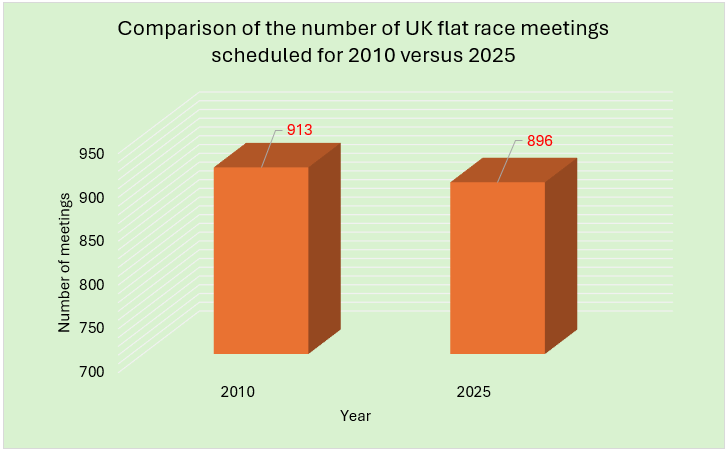
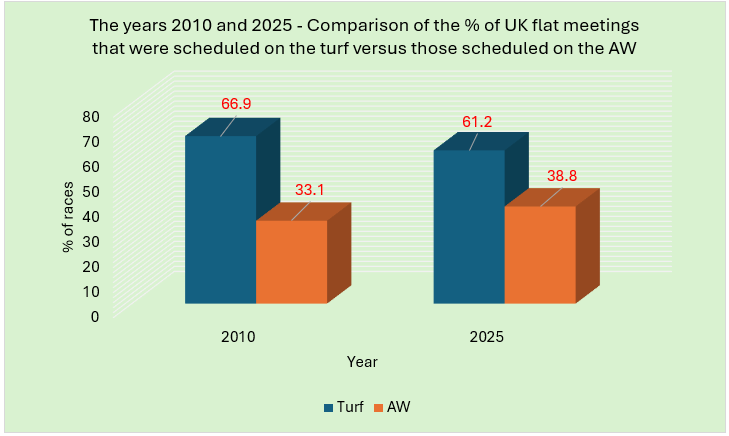
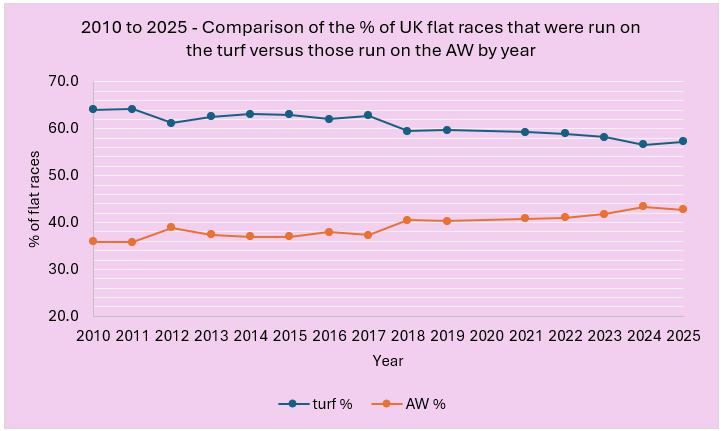
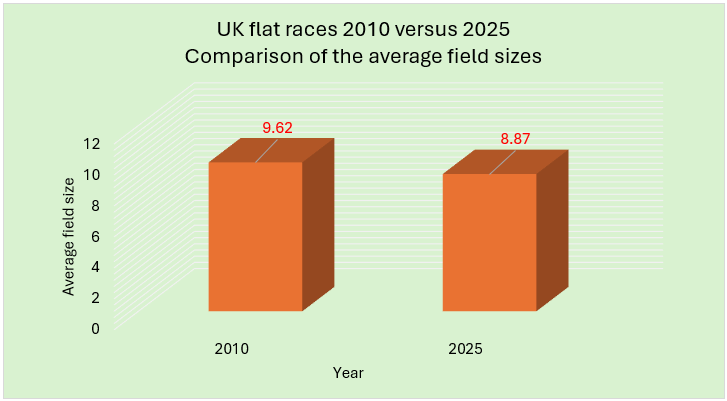
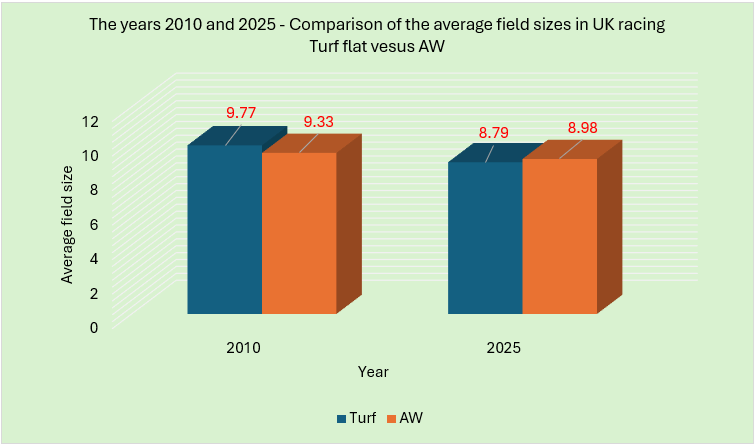
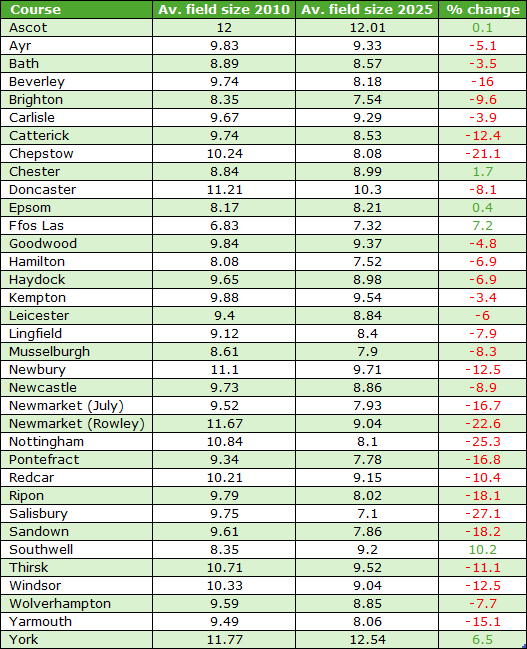
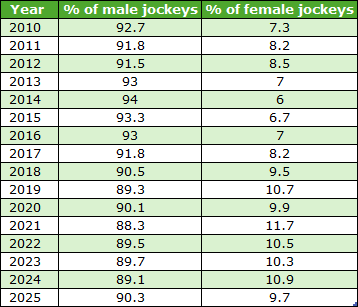
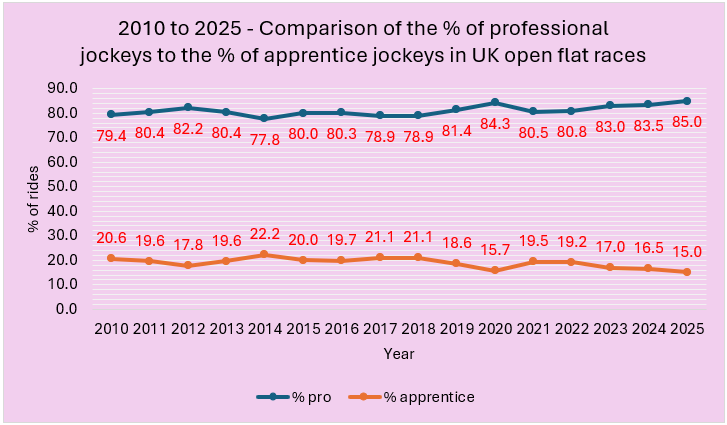

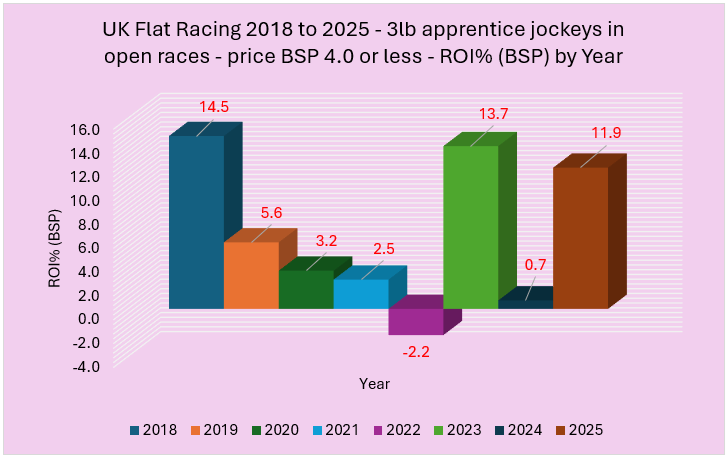
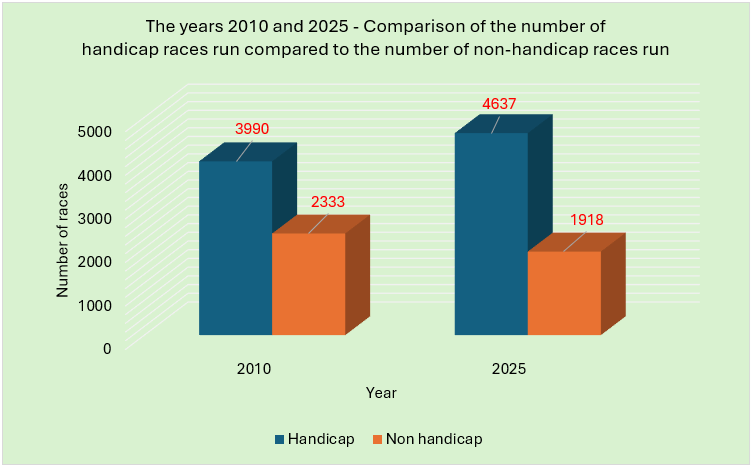


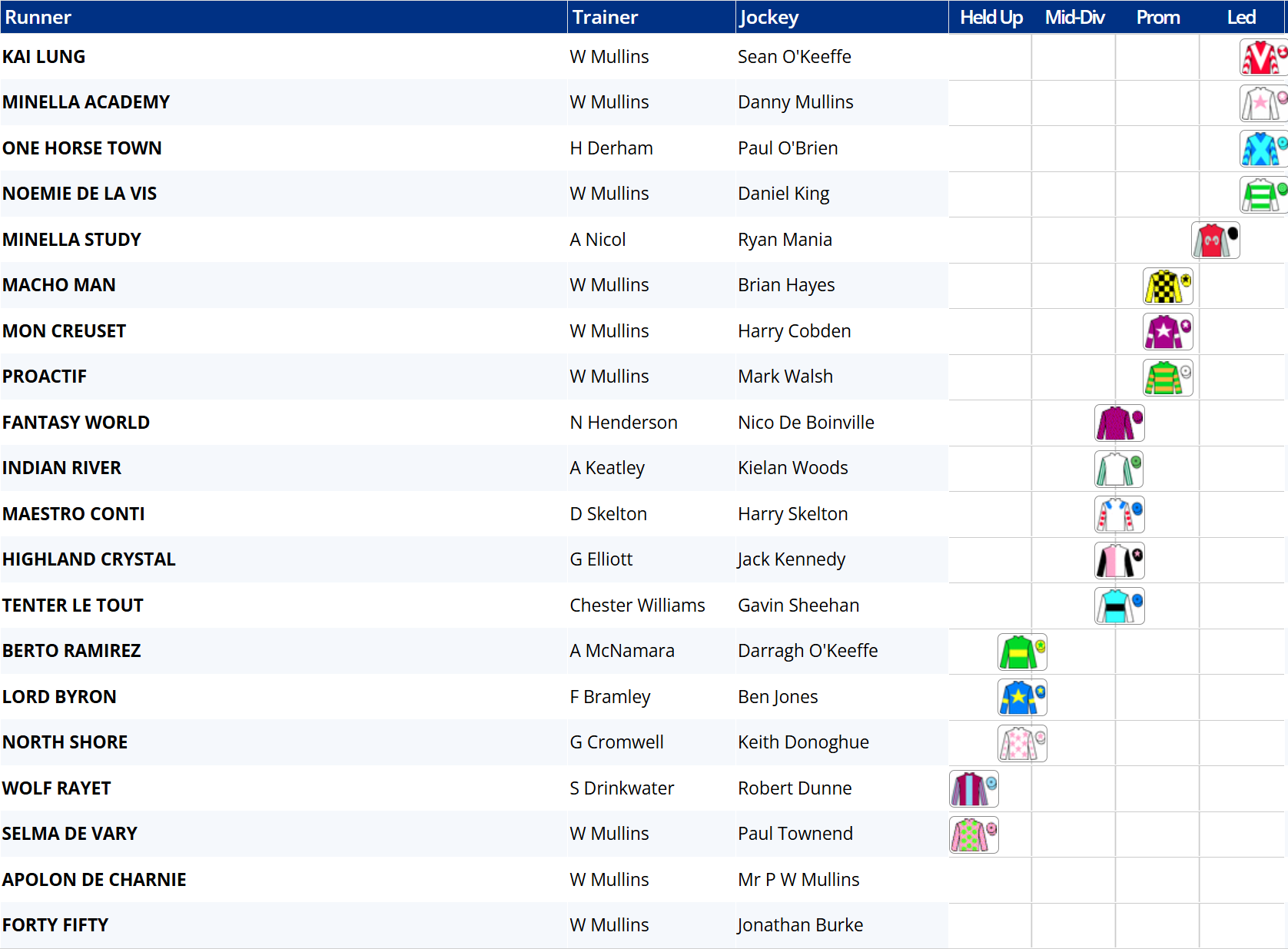


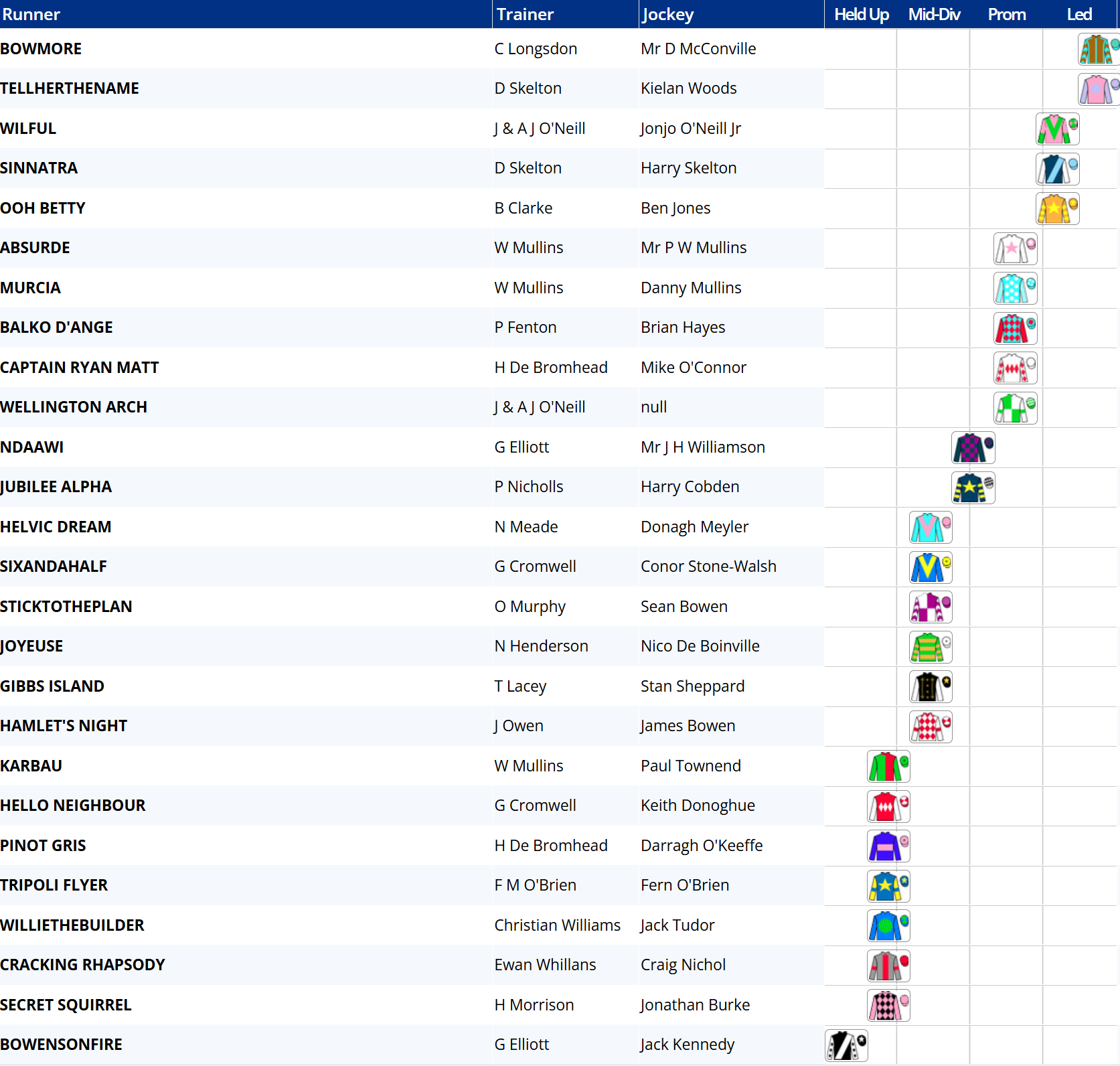

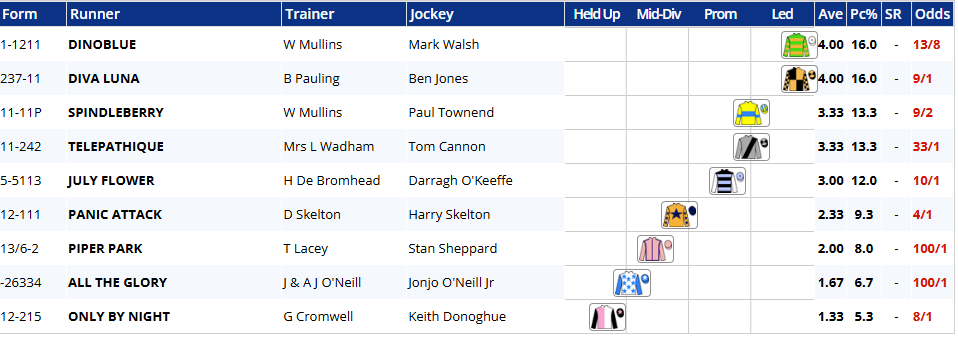


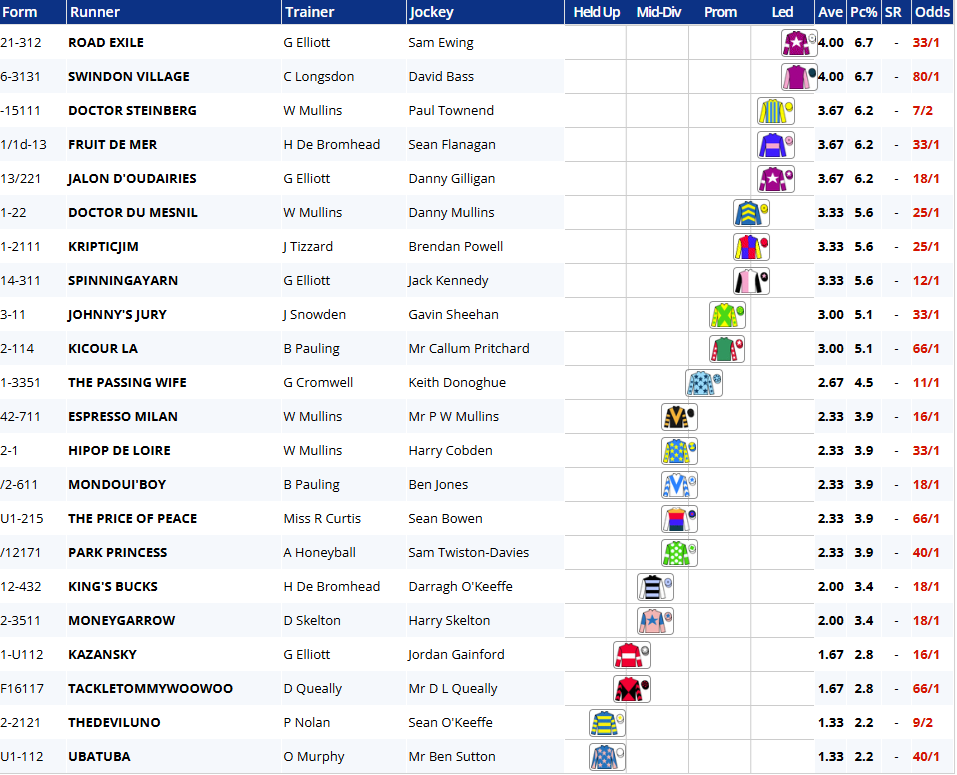

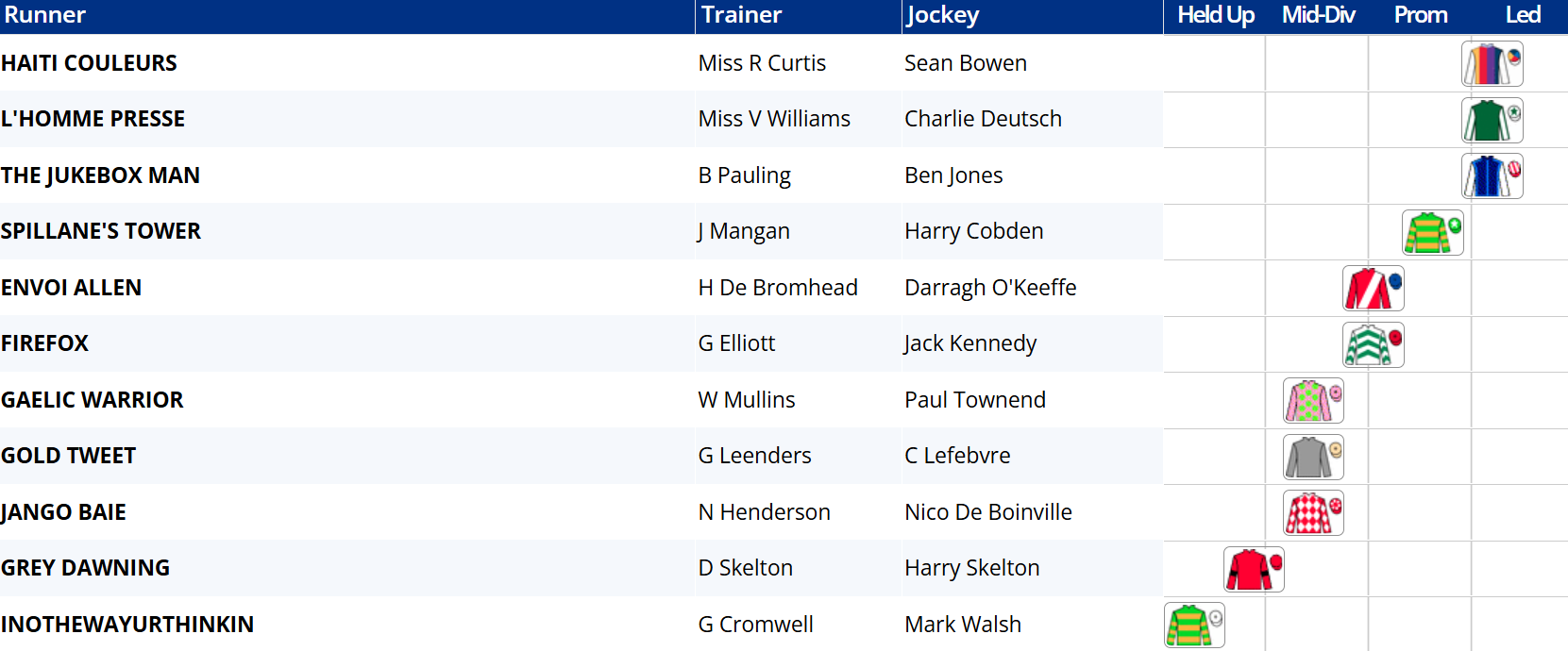


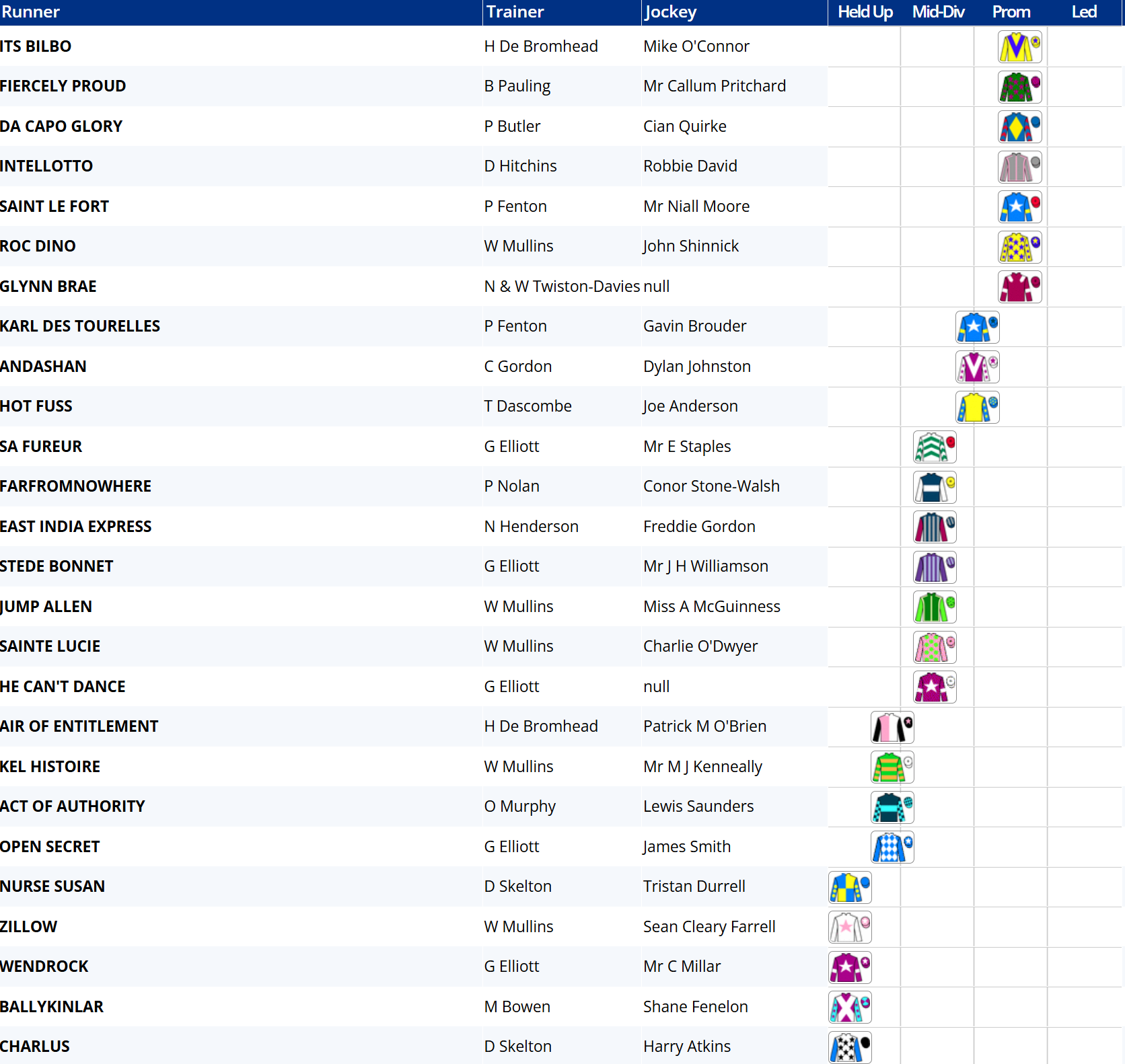
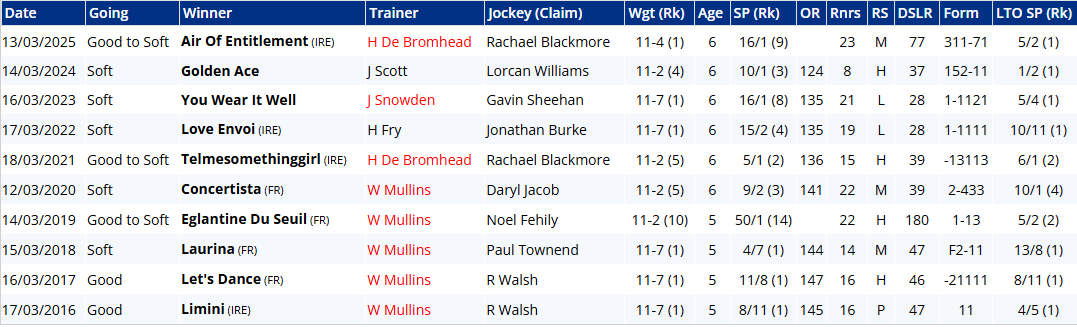
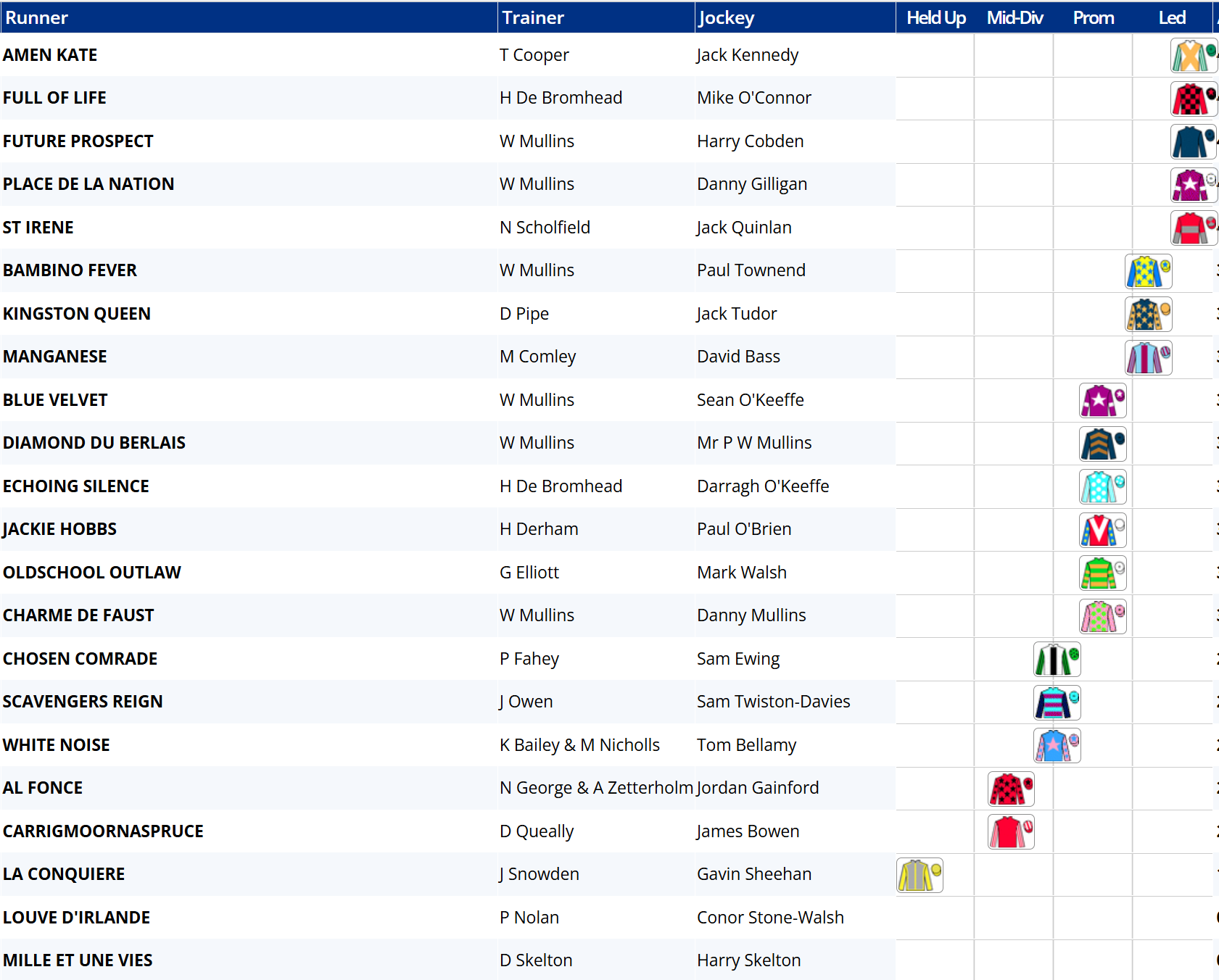
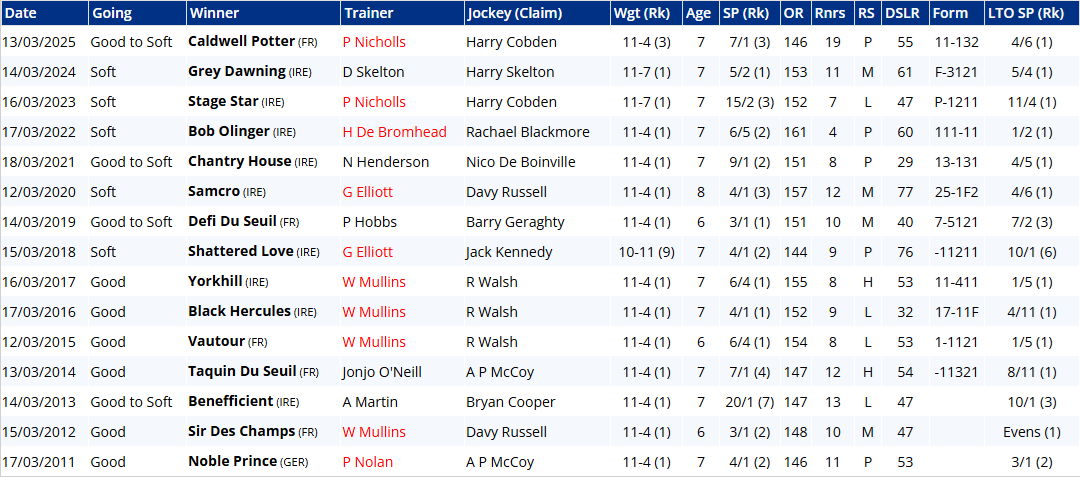
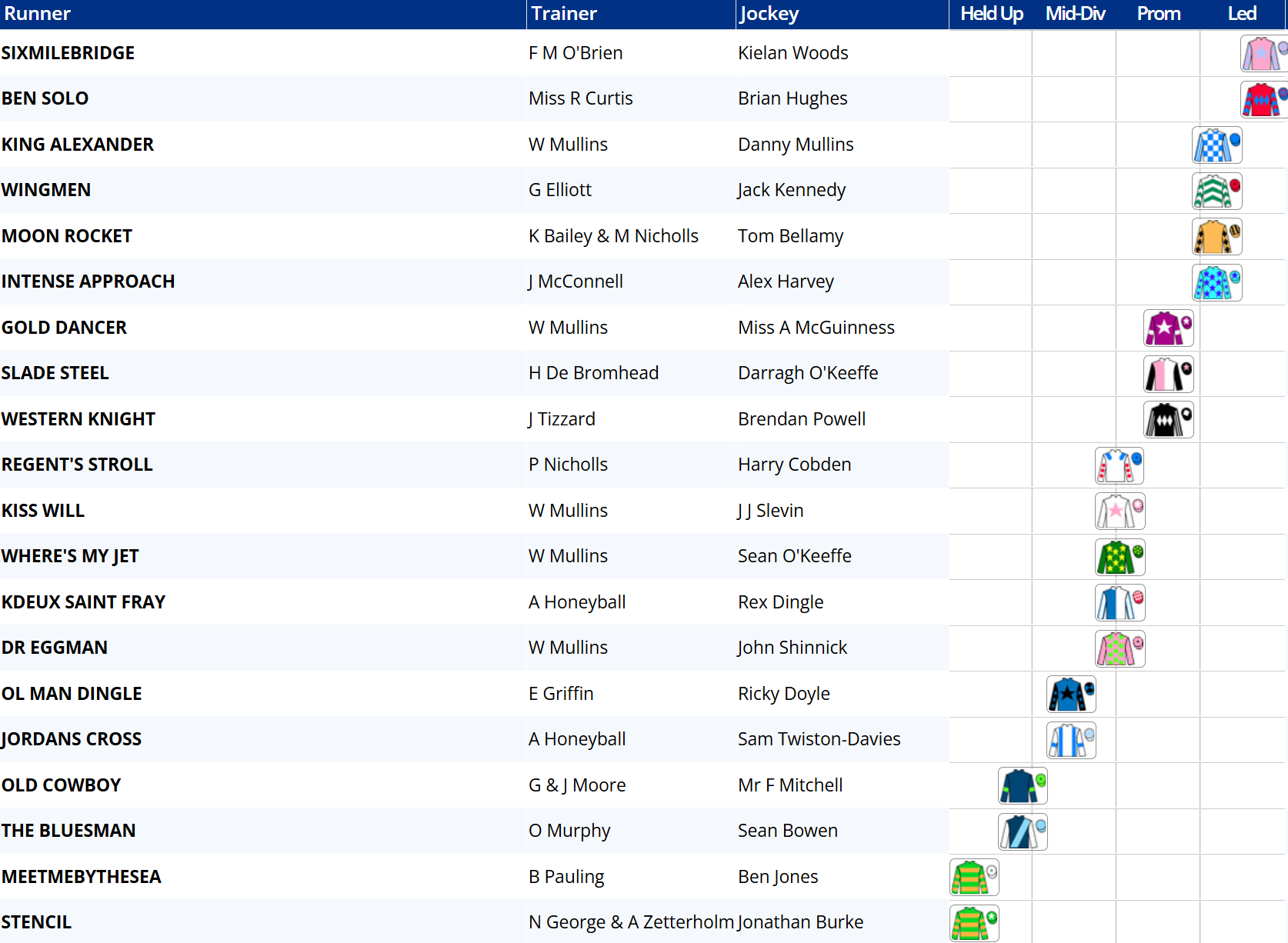
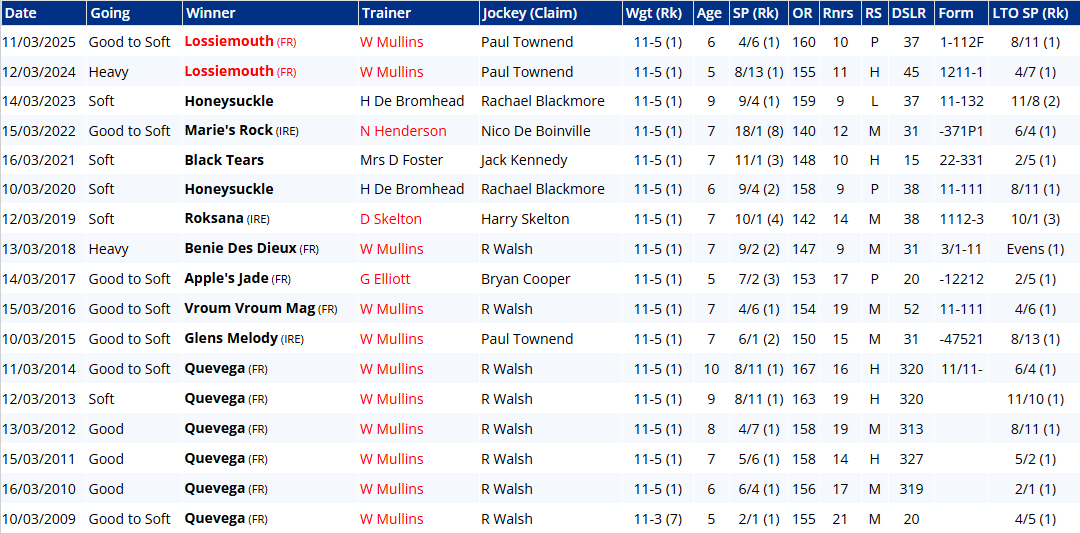
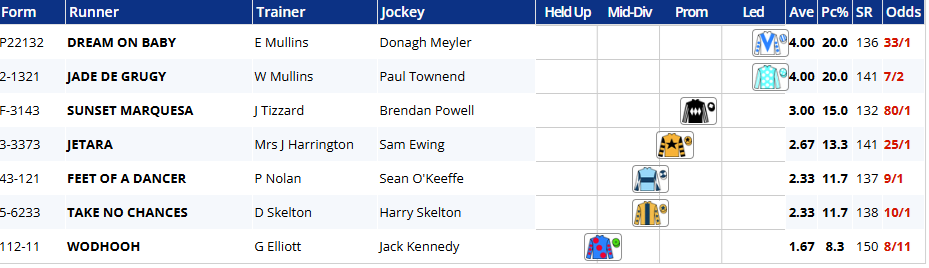
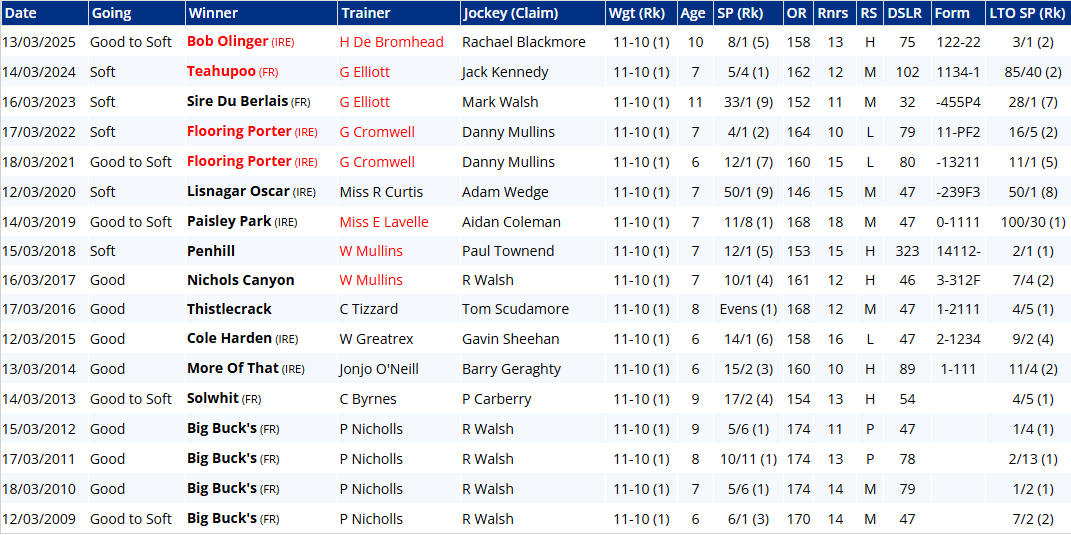
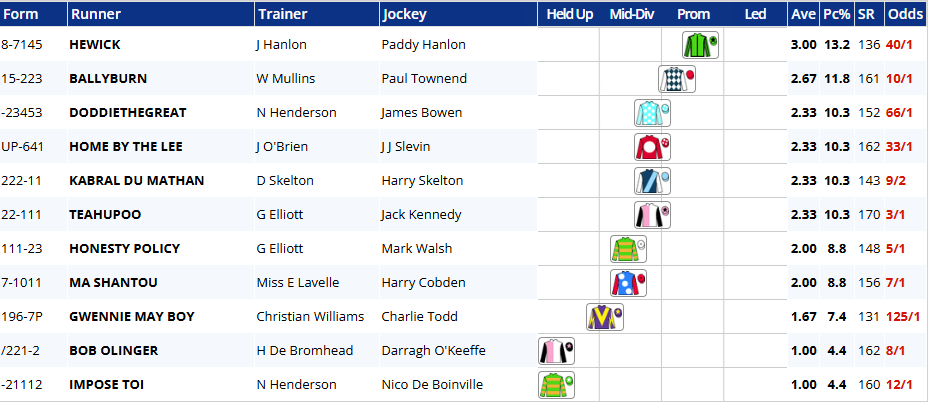
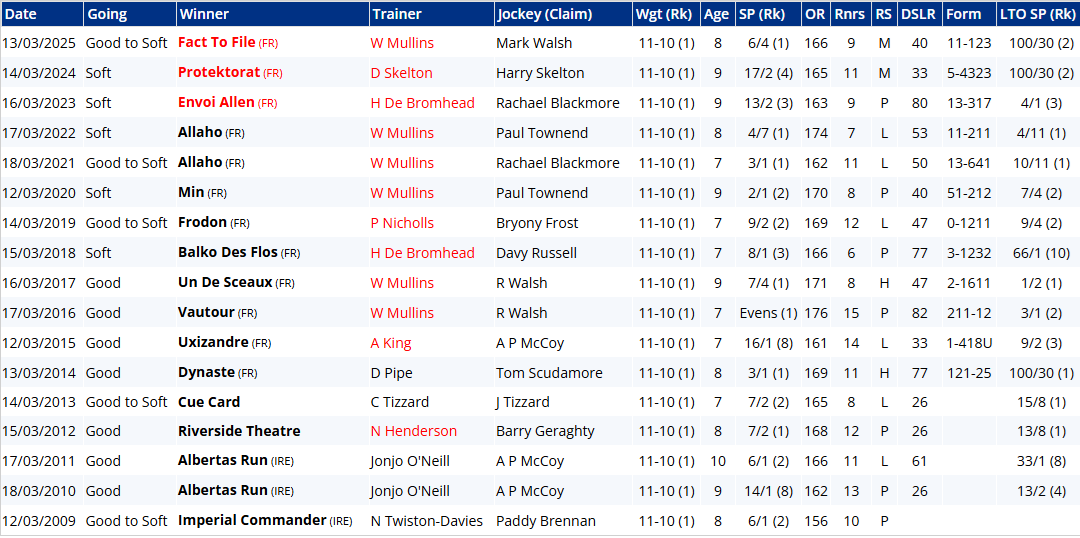
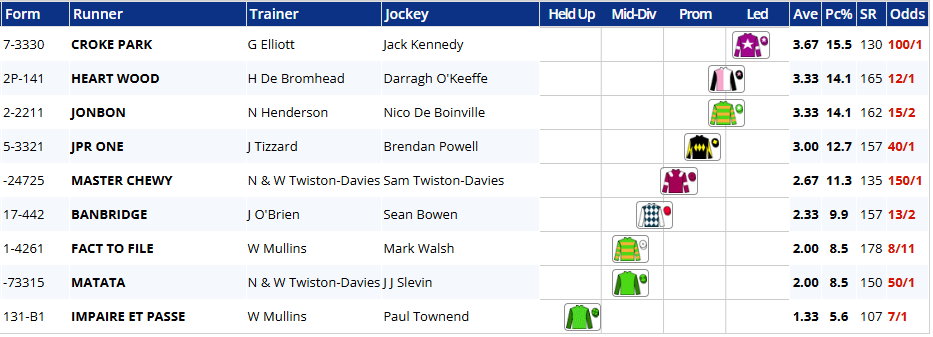
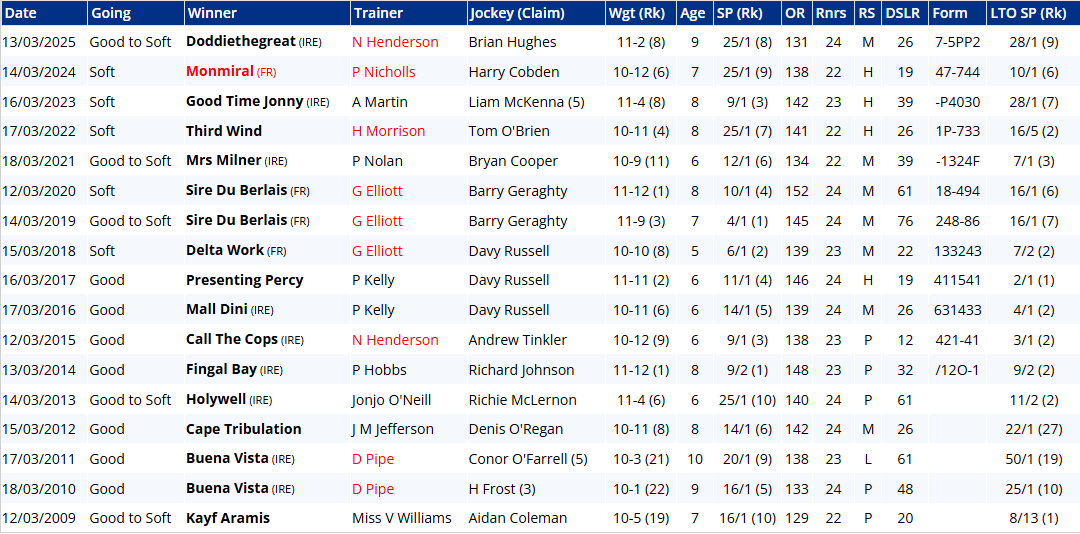
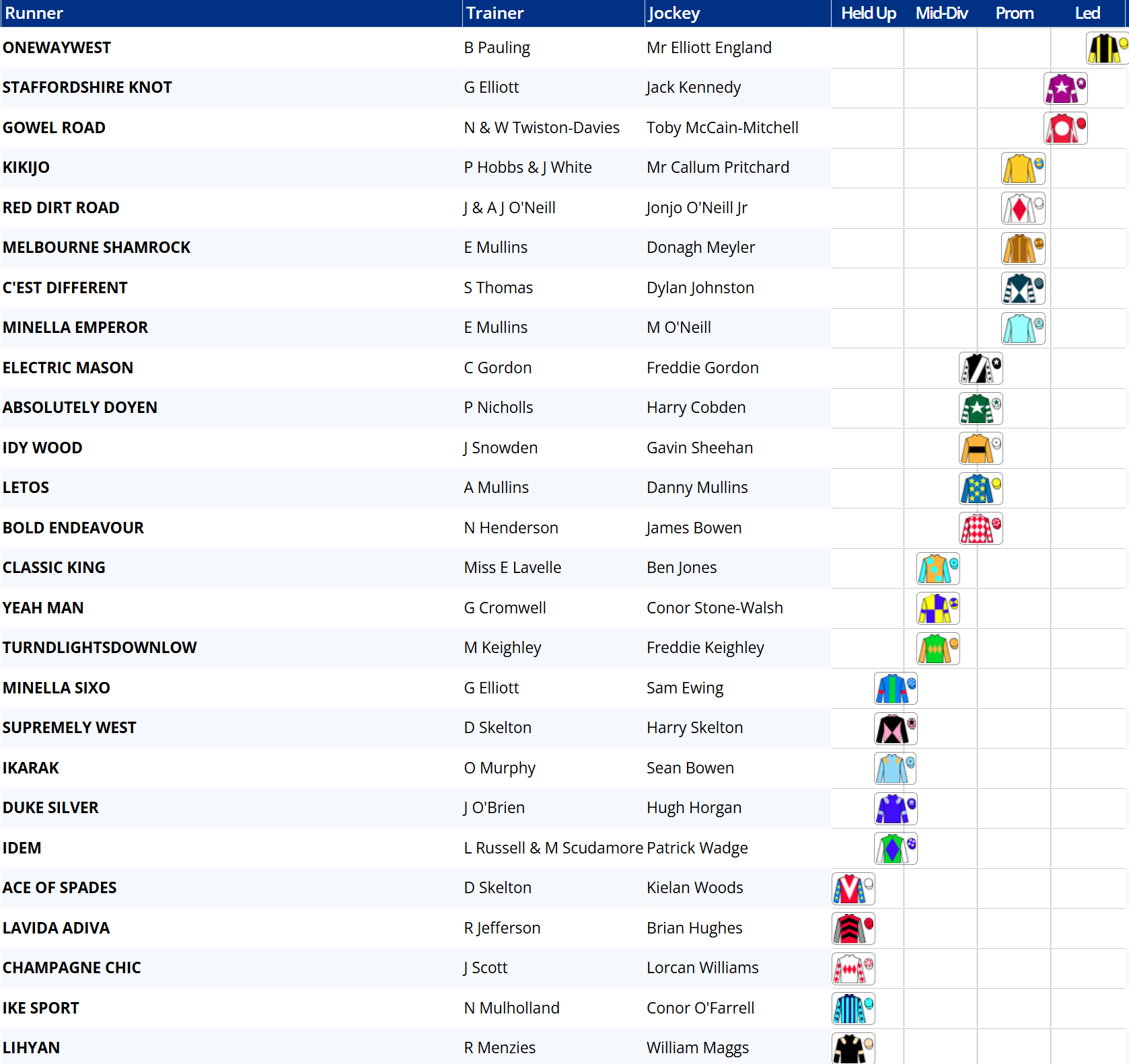
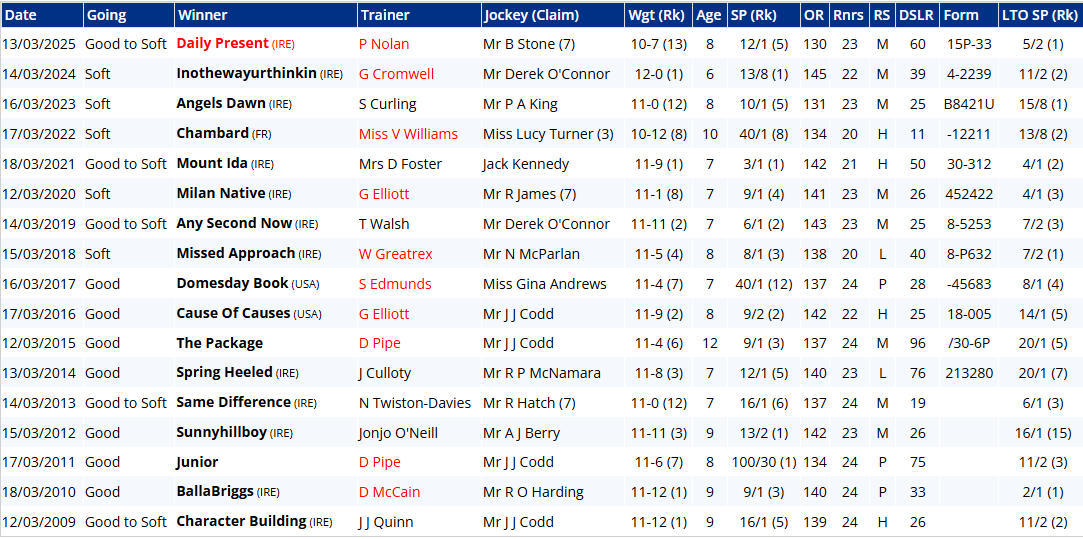
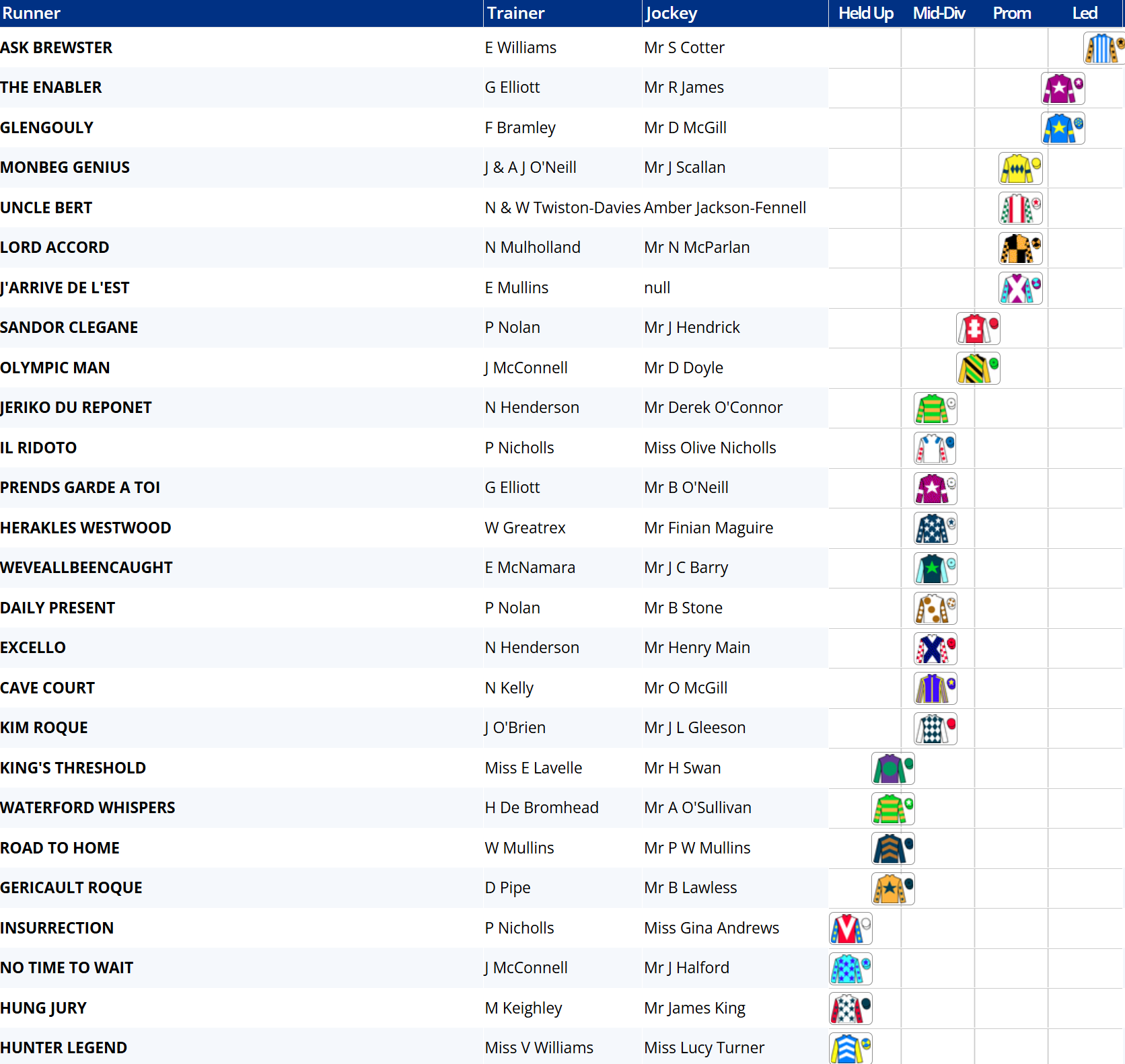
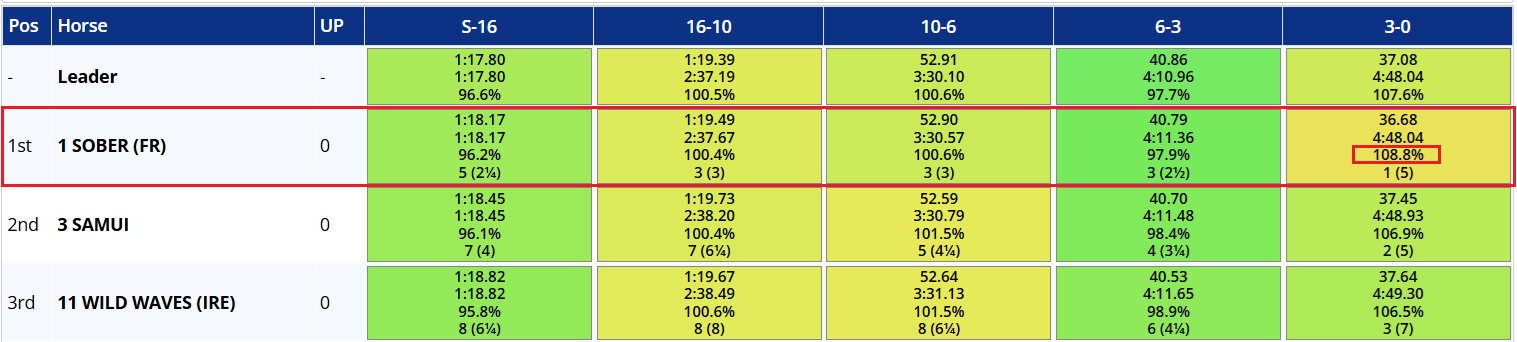
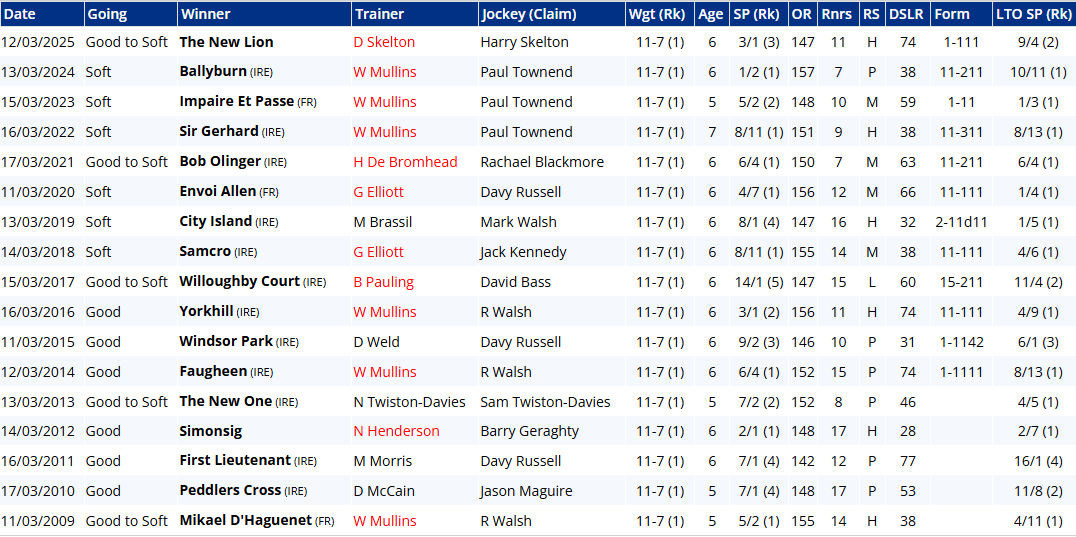
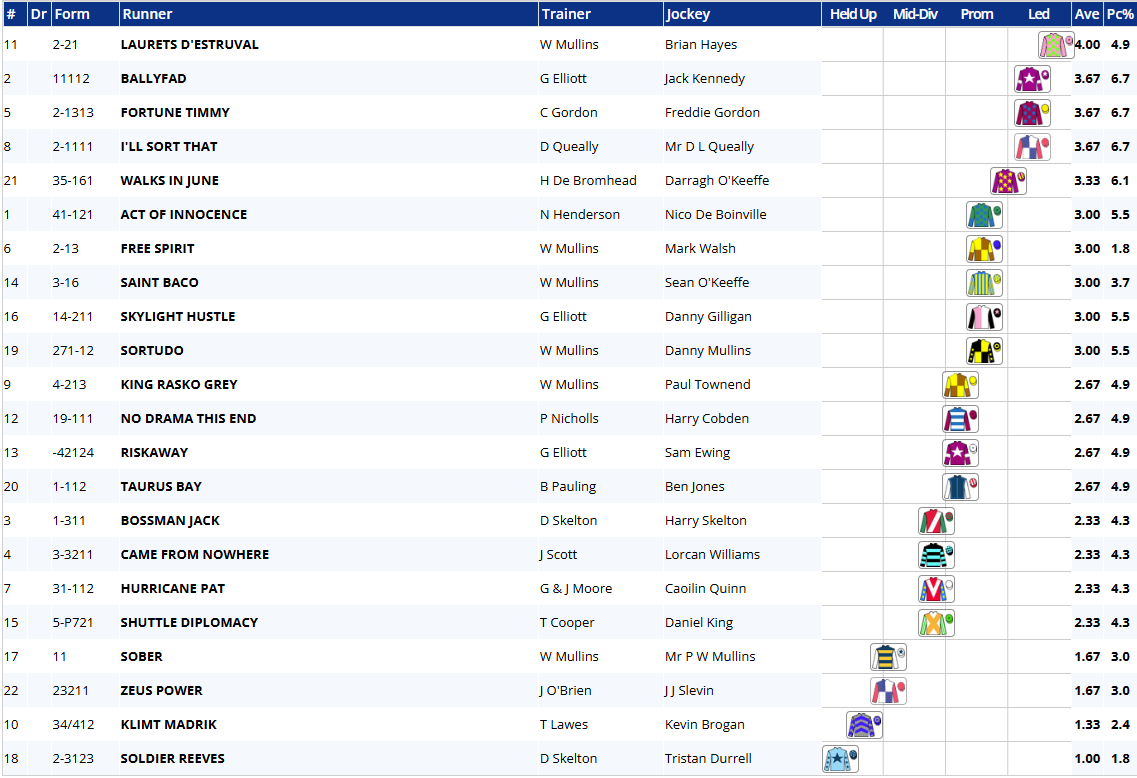
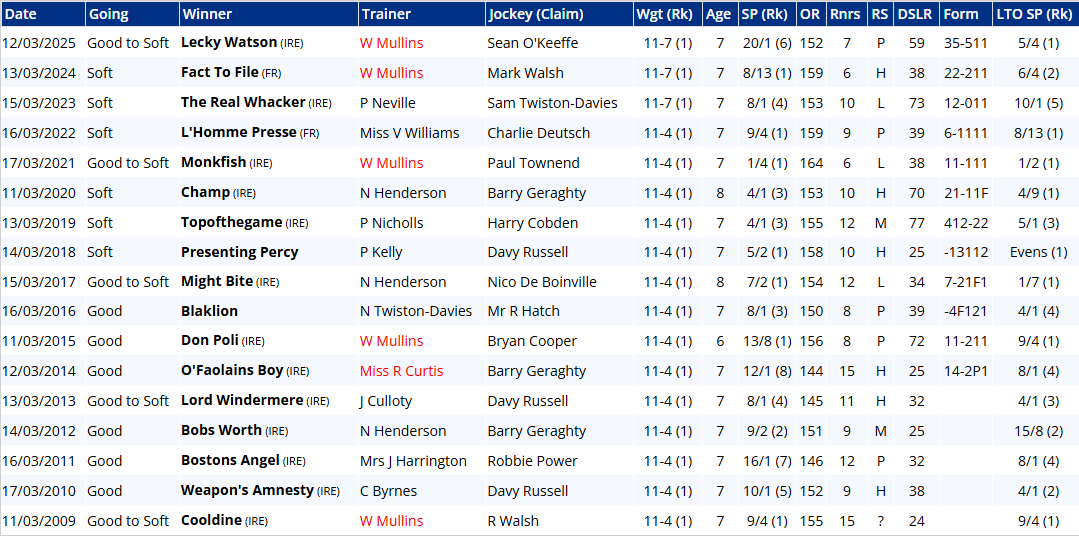
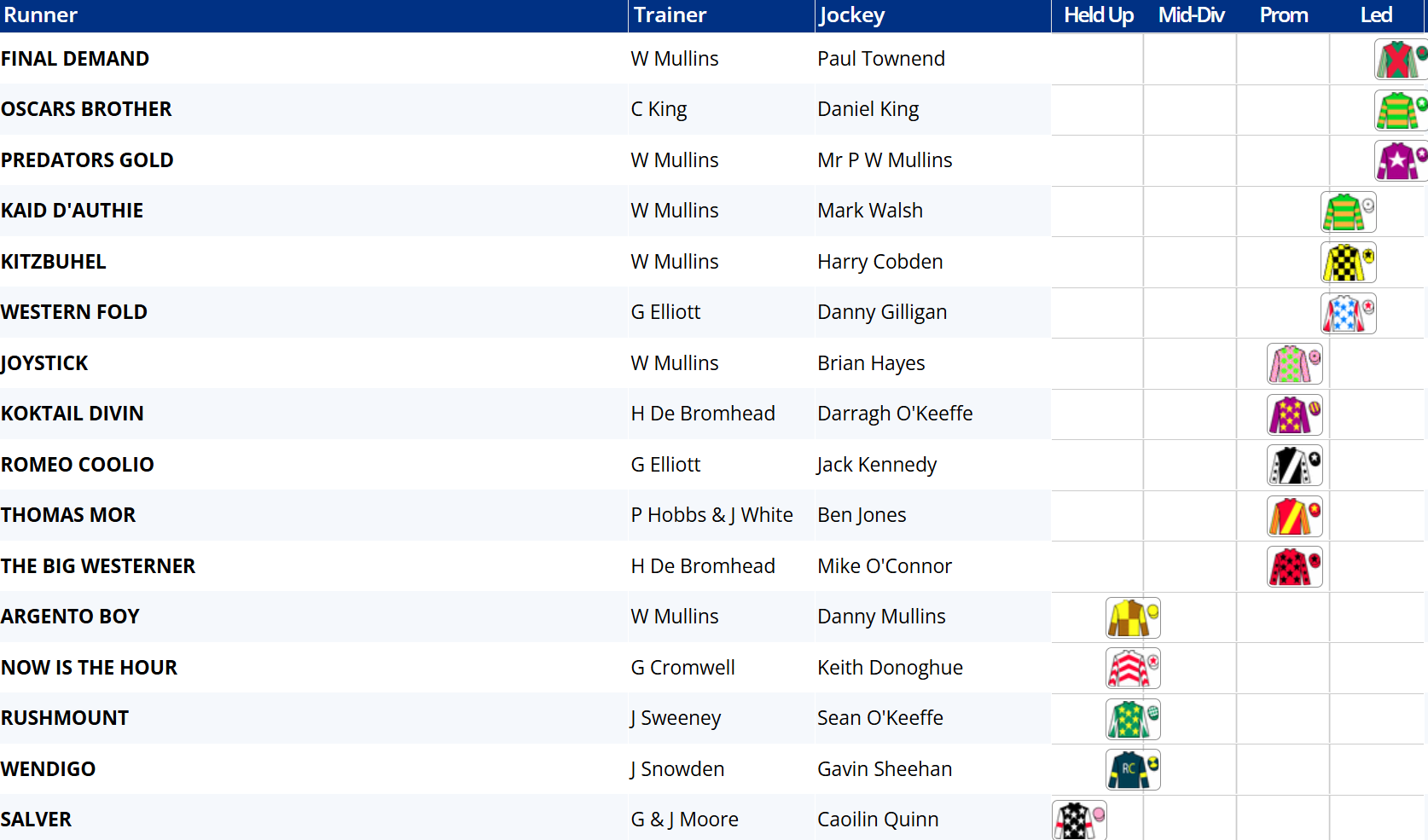
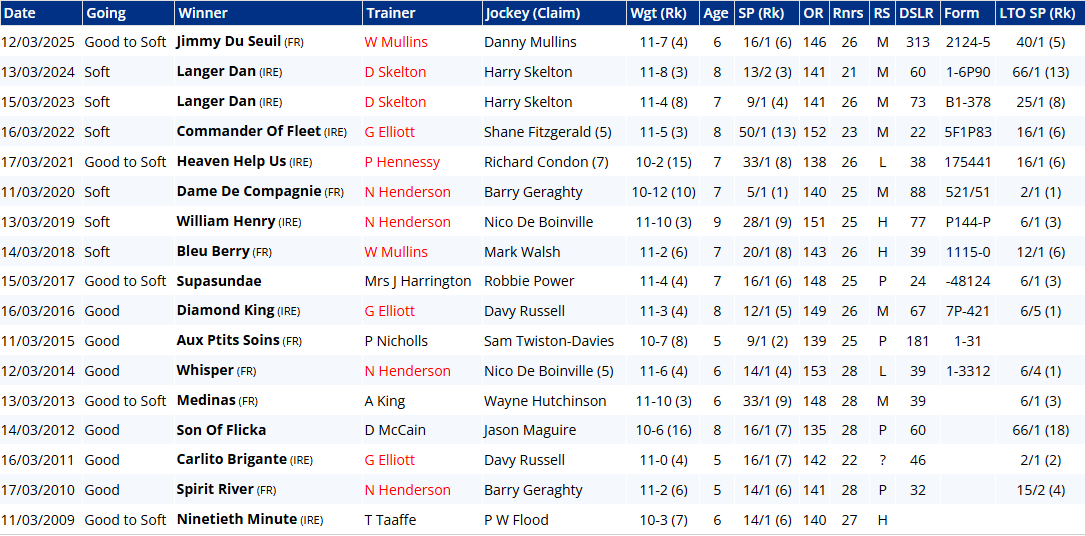
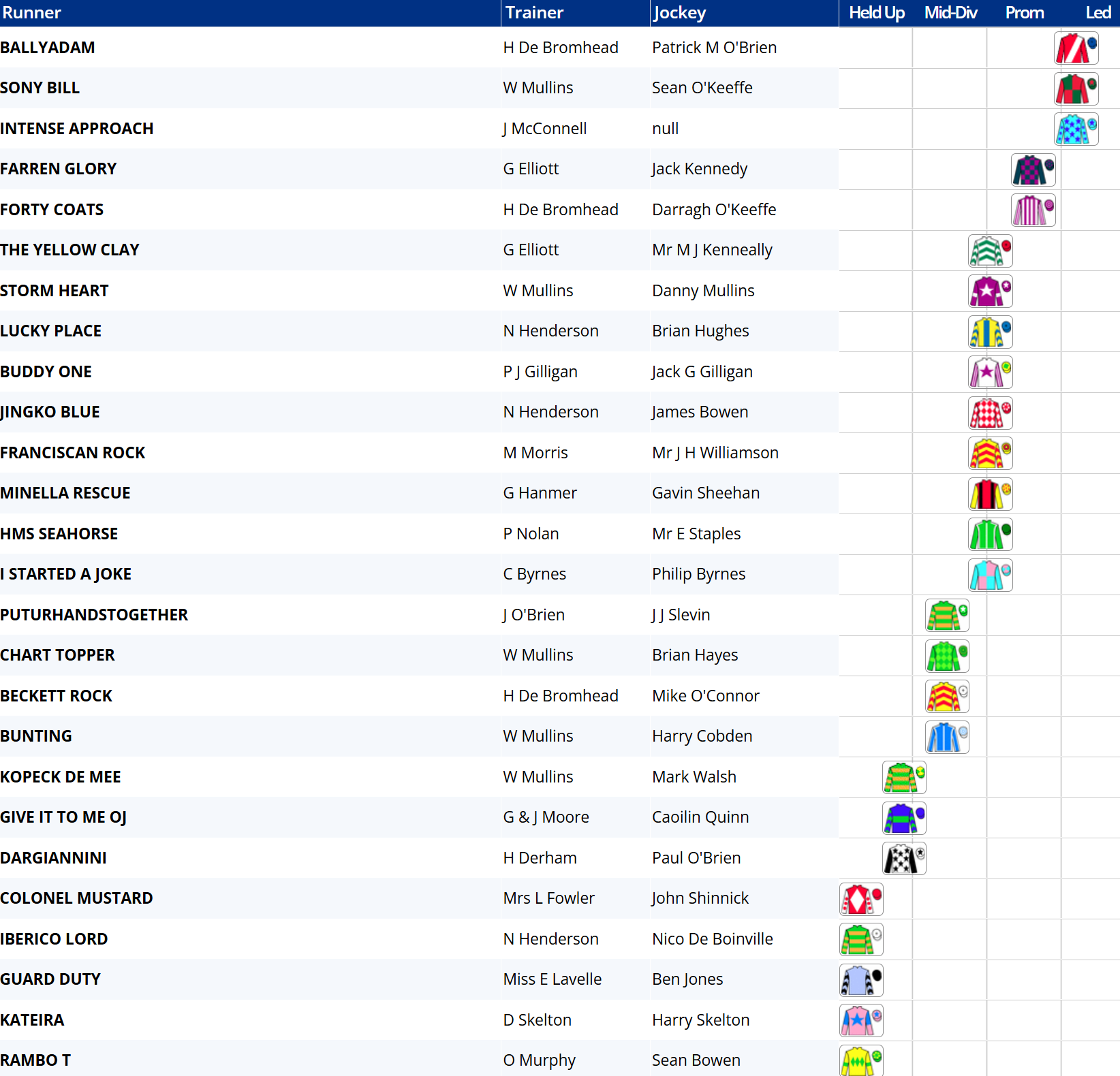
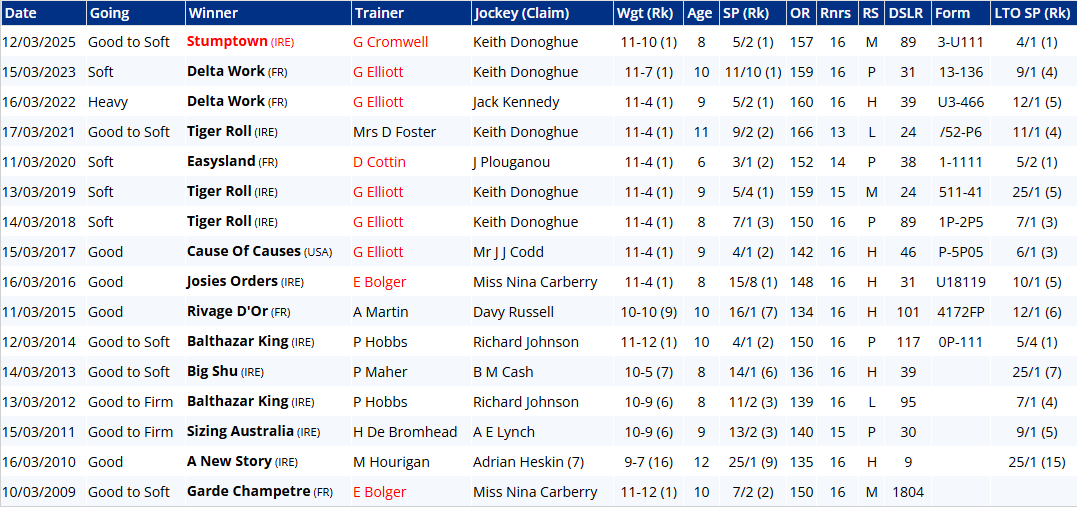
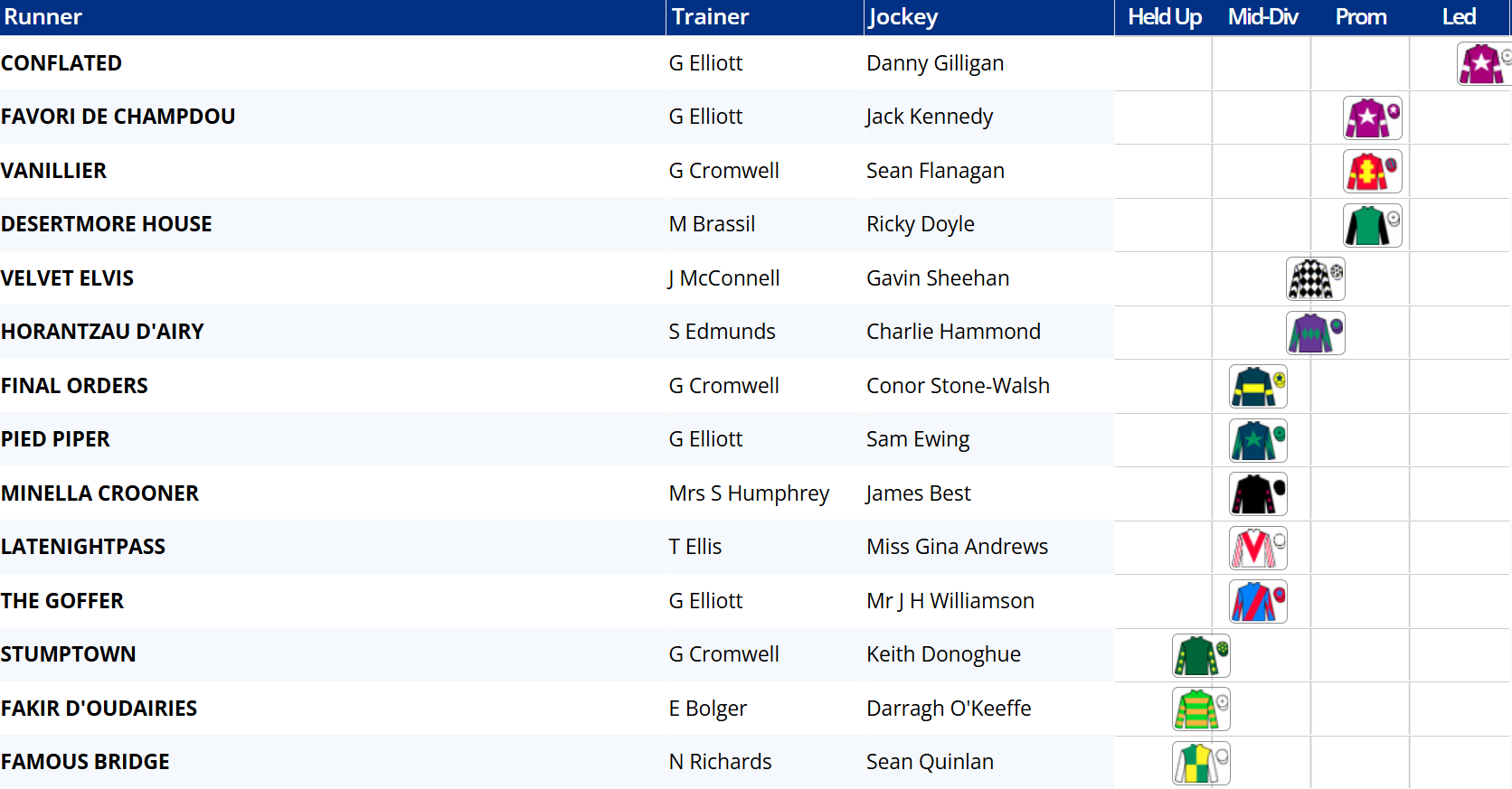
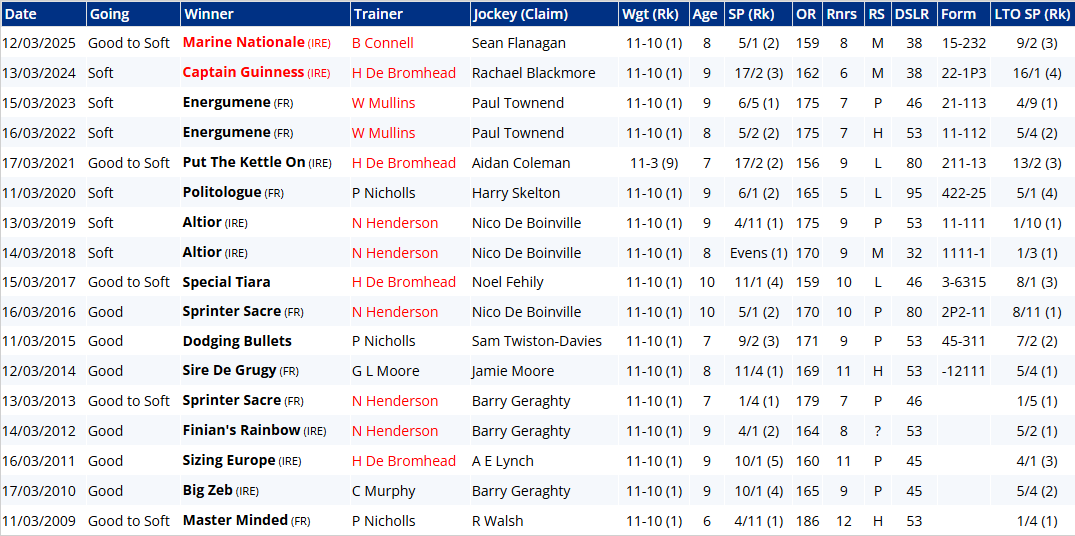
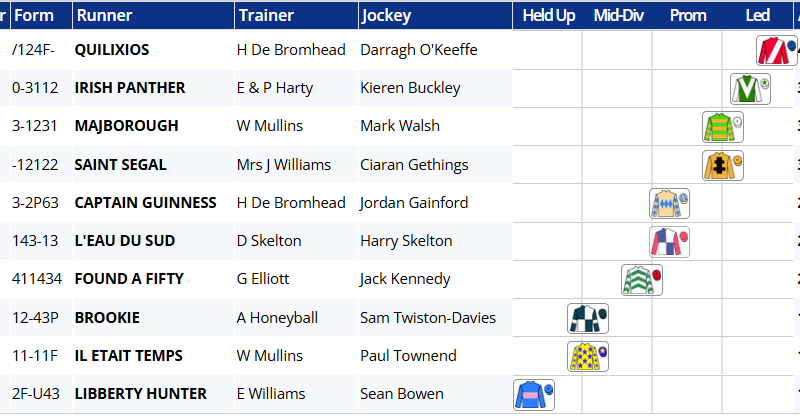

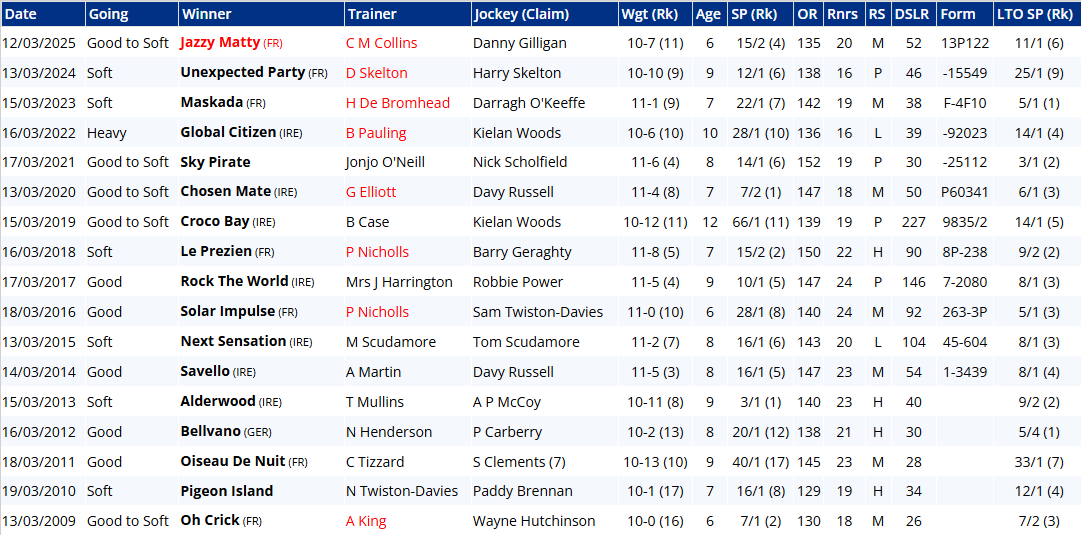
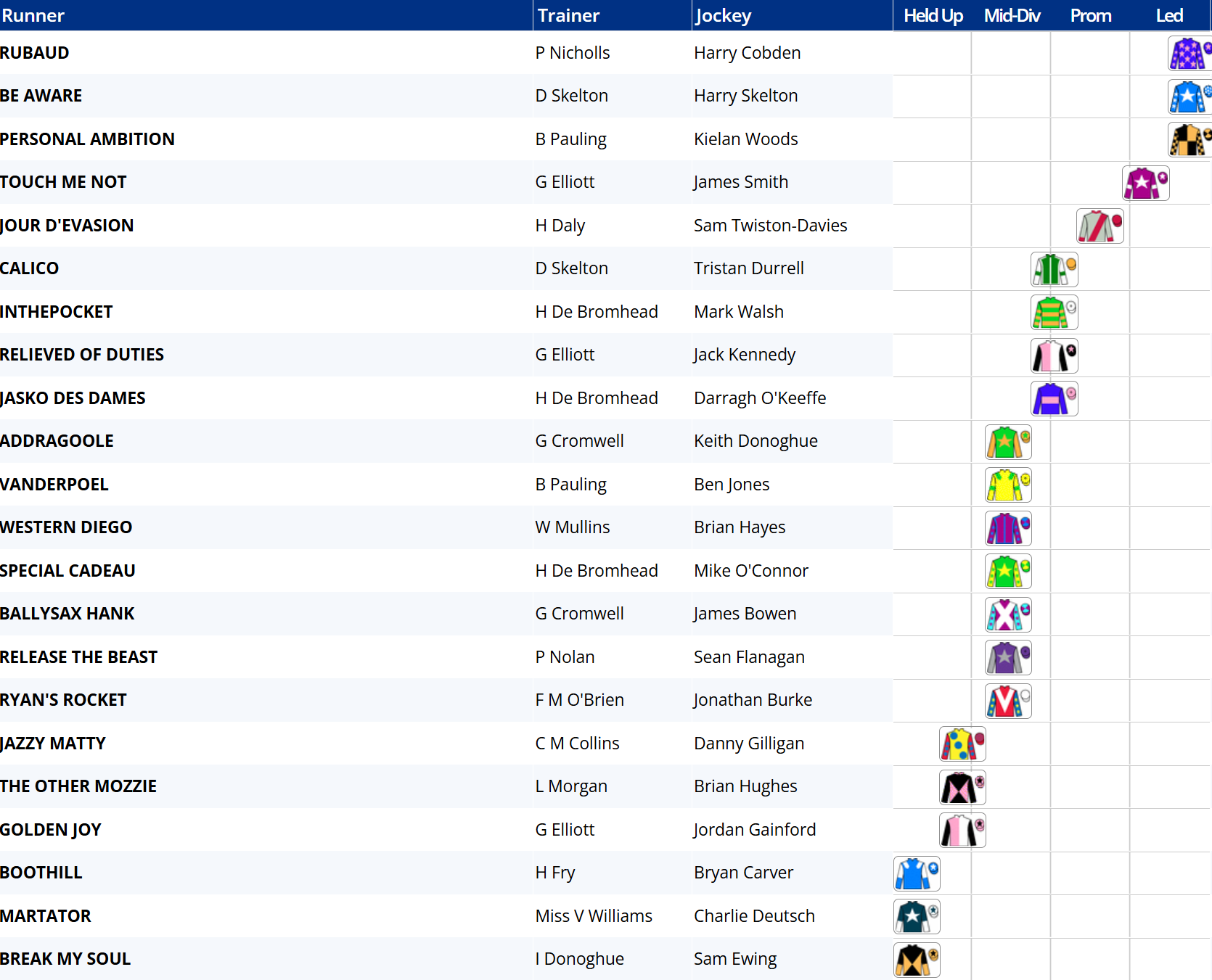
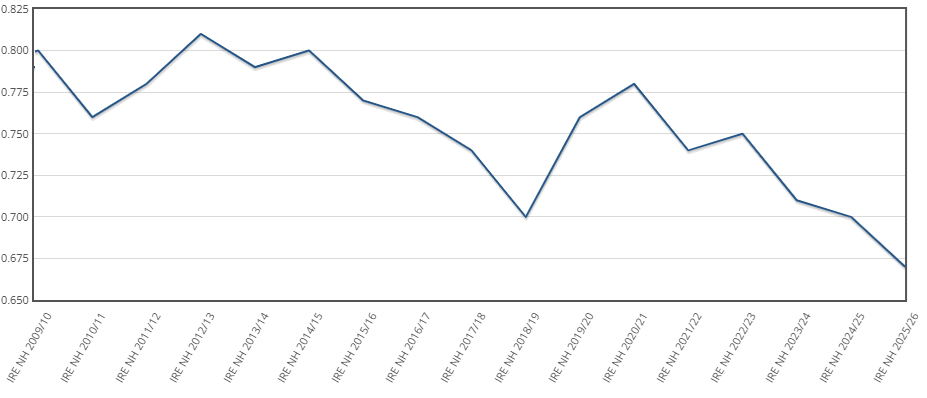
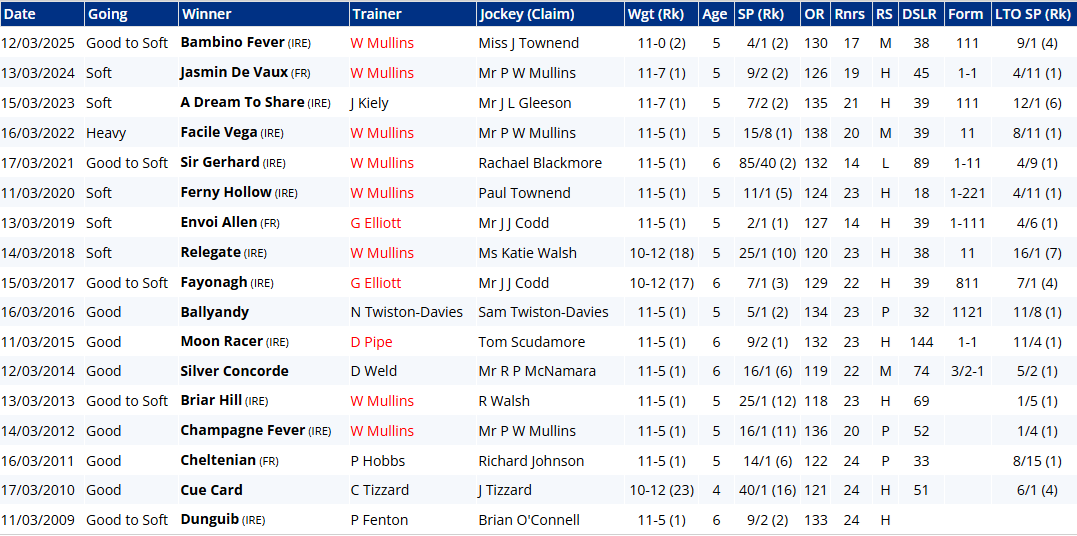
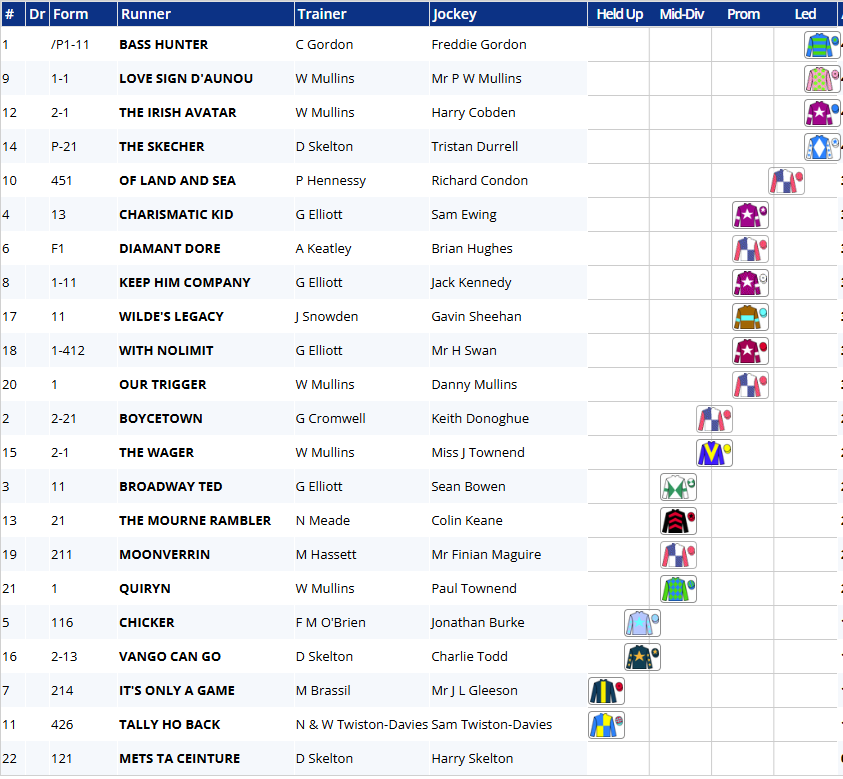

 The roar of the crowd. The excitement palpable. Jumpers for goalposts, hmm? Yes it's a little trite but that collective exhortation as the tapes rise really is a thing, and a wonderful one at that. We're off for the first of 28 top class equine ding-dongs. As Lesley Phillips might have said, ding dong indeed!










