Read all sorts of commentaries and tips across a range of racing disciplines on the most popular horse racing blog in Britain, from staff and guest writers.

The Vagaries of Early Speed: Soft Leads and Pace Collapses

The Vagaries of Early Speed: Soft Leads and Pace Collapses

In recent years the question of pace in a race has become much more on punter’s radars, writes Dave Renham. When we watch flat racing on the television, pundits or commentators will almost always include a discussion about where the pace in the race is, and who is likely to lead.

Introduction

The pace in a race is linked to run style, and I have written numerous articles analysing the run style of horses in both flat and National Hunt racing on this site. These articles, which can be found here, have often highlighted the edge front runners enjoy in races over certain distances at certain tracks. In this article I want to try as best I can to compare races where front runners get an uncontested lead, as opposed to races where there is strong competition for the early lead. I have decided to focus on handicaps of 1 mile or less in UK flat racing. I have looked at around 3000 races which is a very decent sized dataset.

I had two objectives. Firstly, to look at races where the leader got a ‘soft’ or ‘uncontested’ lead. In other words, a race where the front runner was not pestered in front and could potentially dictate the race. In an ideal world that would see the leader setting slow fractions thus saving more energy for later in the race, meaning there was more chance of the horse making all of the running to win. And secondly, I wanted to look at the opposite type of race, where there was strong competition for the lead with multiple horses up with or very close to the pace. In this type of scenario, the expectation is that those near the front will typically go off too hard, using too much energy, which makes it easier for a more conservatively ridden horse to come late and win from off the pace.

The problem with researching these ideas, is how to accurately determine which races fall into which category. It is not easy to do. If I had sectional timing for all courses and all races, with all the times for all horses at all call points in a database or spreadsheet, that would be a tool that could do the job. However, sadly I do not have access to such data. If I had the time to watch the replays of all 3000 or so races in this sample, then that potentially could help in analysing my ideas (although it would be subjective). That though is not a sensible use of my time, even if I had all the time in the world! Hence, I needed to come up with a different plan, one that could hopefully do the job...

Methodology

So I came up with a plan which, while I appreciate is not foolproof, I think it gives us a good overview if nothing else - a flavour, if you will - of how pace affects these types of races.

Firstly, I decided to find the average pace rating for every single race in the sample. To do this I used the same numerical values found on Geegeez where led (early leader) gets 4 points, prominent 3, mid division 2 and held up 1. Hence to get the average pace rating for each race I added up the pace scores of all the runners and divided it by the total number of runners in the race. Let me give a worked example to help explain it more clearly.

Below is a result from Chelmsford over 6f from July 2023:


As we can see there were 10 runners, one early leader (L), two prominent racers (P), four horses that raced mid-division (M), and three that were held up (H). Hence the calculation is as follows:


Thus, if we add up the total points column, we get 21 and then we divide it by 10 runners to give us the average pace rating for that race:


I did this calculation for each race using some Excel wizardry and the averages ranged between a lowest pace average of 1.96 and the highest standing at 3.50. The vast majority of race averages landed between 2.10 and 2.90.

The reason for creating these race pace averages was to help determine how much pace there was in each race. The lower the average, the more horses would have been held up or raced in mid pack. Hence, there was likely to be far less pressure on the early leader. Higher race pace averages would see more horses contesting for the early lead and/or being on the heels of the leader(s).

Although I could not be 100% certain for every race, logic dictated - and my working assumption was - that lower pace race averages would conform to races where the early leader gets a soft or uncontested lead, while the higher averages would have a greater chance of producing races where the early pace might collapse. I decided for any run style or pace comparison from now on I was going to lump together the results for mid-division horses with hold up horses. This makes sense to me as mid-division horses still have plenty of ground to make up in order to win. From now on this joint group will be referred to as simply 'the hold-up group' – making it less of a mouthful than to keep calling it the hold-up/mid-division  group.

Having calculated the race pace averages I needed to decide on the best way was to interpret the results. The problem we always have with any pace/run style data is how to calculate win rates etc. It is not as simple as what proportion of races are won by early leaders compared to hold up horses. This is because, on average, there are far more horses that are held up compared with horses that lead early. In my example Chelmsford race, there was one front runner, four midfield and three held up horses.

Normally, I simply divide the number of winners to runners within each run style group but when I did this looking across different pace race averages, I realised we could not compare strike rates in that way. I won’t go into the mathematical reasoning as it is quite complicated to understand - and even more difficult to explain!

I decided the only way to have a fair comparison was to create a type of impact value where I divided the win percentage of leaders within their leaders’ group by the win percentage of hold up runners within their hold up group. I will call it the Comparison Strike Rate, or CSR for short.

This way I could get a straight comparison, with the idea being that the CSR figure would help to show any significant differences in performance (according to the relative strike rates). Hence a CSR of 2 would suggest that a lone front runner has double the chance of winning as compared to one of the hold up horses. [I have used this CSR idea before in two 2yo articles back in 2019.]


All Distances (5f-1m)

I split the race pace averages up into four groups where there was a similar number of races within each group. Here are the CSR splits:


Essentially, the 2.39 or less group are the races where it is more likely that a front runner got an uncontested lead; and we can see that front runners have been far more successful within their run style group than hold up runners have within theirs, winning 2.44 times as often.

Fast forward to the races with the highest race pace averages (the 2.68+ group) and we can see the CSR drops to 1.34. It is in these races, where there is the most pace in the race, that we would expect an overly fast early tempo - and the numbers back this up. Front runners do still have an edge, but it is vastly diminished. Therefore, it does seem that what pundits and punters have believed for years is true: front runners that get an uncontested lead win far more often than front runners that have horses pressing them for the lead or snapping at their heels.

What is also pleasing when looking at the graph is that not only do both ends of the spectrum match the expectation, but there is excellent correlation as the race pace averages increase (from left to right on the graph). This gives me more confidence in the findings and my initial theory.

Having found the types of patterns that I was hoping for I felt I wanted to dig deeper and split the data further by looking at different distances, starting with the minimum distance.

For the rest of this article though I am just going to compare the two ‘extremes’ – the races with the lowest race pace average band (2.39 or less) with races with the highest (2.68 or more).

5f handicaps

Anyone who has read my run style/pace articles over the years will know that 5f races give front runners the strongest edge when taking all courses into account. Hence, I would expect the CSR figures for both groups to be higher than the average figures for all 5f-1m races we saw in the first graph. I would also hope that we still see a significant differential between the two CSR figures.

Here is what I found:


As the graph shows, front runners had a CSR figure of 3.68 in races where the early leader got an easy time of it. This is well above the 5f-1m average figure of 2.44. In 5f handicaps when there was plenty of competition up or near the front early, front runners were still 2.27 times more likely to win than one of the hold up horses.

Ultimately, punters should not be put off backing a potential front runner in a 5f handicap even if there is likely to be a lot of pace on. They still have a decent edge and offer value. If the shape of the pace suggests an easy lead, then we can be even more confident of a good run from the horse that takes the early lead.


6f handicaps

Front runners maintain a healthy edge generally over 6f, but it is nowhere near as potent as it is over 5f. Hence, we should expect a drop in both CSR figures. Here are my findings:


In six-furlong races where there is less competition for the lead, we see a strong CSR figure of 2.76. Front runners continue to enjoy a huge edge over hold up horses. However, when we get to races over 6f where there is plenty of early pace and possible battles up front, we see the figure drop markedly to just 1.27. Front runners still offer better value than hold ups under such conditions, but the edge is small. 


7f-1m handicaps

I am lumping together 7f and 1m handicaps simply because once we hit 7f, although front runners still hold sway, the advantage is much diminished when compared to the stats at 6f and especially 5f contests. There are a handful of courses where over 7f front runners enjoy a very strong edge; Beverley, Chelmsford, Epsom, Leicester and Musselburgh immediately spring to mind. However, overall, it is a more even playing field. Let’s see what the CSR figures show this time:


Races where the pace average was 2.39 or less still favoured front runners more than those where the pace average was 2.68 or higher. However, both figures have dropped further from those we saw over 6f. This is as we would expect but it always good to have it confirmed in black and white, or in this case red.

I would like to share one final graph which combines the preceding trio of charts so we can perhaps more easily compare the CSR figures across the different distances / race pace averages:


Conclusions

So, what has this research told us? Well, assuming that my theory is correct in terms of races with a pace average of 2.39 or lower being races where the early leader has an easier time of it, and that those 2.68 or higher are when there is more competition for the lead, then theories about easy leads and pace collapses are almost certainly true. At least the numbers shared suggest this is the case in handicaps of 1m or less. Moreover, the shorter the distance the easier it seems for front runners with uncontested leads to win.

Before I finish, what I have done for my own peace of mind is to watch back some replays of races where the pace race averages were 2.39 or less, and virtually all races saw the early leader lacking strong competition for its lead. Likewise, I did the same for some races averaging 2.68 or more and a high percentage of those saw some very strong competition for the lead early. This adds some qualitative confidence that my race pace averages do the job I was hoping for.

I appreciate that, until the race has been run, we are unable to calculate the race pace averages. However, the Geegeez racecards give us past running styles for each horse to a maximum of their most recent four runs so this is a tool we can use to try and work up the likely pace make-up for any race in question.

There is plenty more scope for me to keep researching races with different pace make-ups. I do have data for non-handicaps up to 1 mile, as well as data at longer distances. I also could try to look at other angles within the 5f-1m handicap bracket. Ideas include do front runners with uncontested leads win more often in lower class races? That has some logic behind the theory so I may test that. I may also analyse different courses in more detail, and I might expand to try and find any positives or negatives regarding prominent racers across different race pace averages.

So many ideas, why are days only 24 hours in length?!

- DR

An Analysis of Place Betting on Betfair

An Analysis of Place Betting on Betfair

One of the comments about an article I wrote a couple of months ago asked whether I could write an article on the subject of place betting on Betfair, writes Dave Renham. I have written around a thousand horse racing articles in my life and, consequently, have covered a fair few different topics; but I have never delved into the subject of place betting. So, thank you to Keith for requesting a piece on this subject.

This article covers ten full years of flat racing in the UK (2015 to 2024) across both turf and AW racing. All profits/losses are calculated to Betfair Place SP with 2% commission taken out. I have excluded races of 4 or fewer runners as only winners count under those circumstances.

Betfair Place SP: All Races

Overall, if we had bet every runner in every race in this ten-year time span to Betfair Place SP, we would have lost around 2.5 pence in the £. This is actually a smidge less than we would have lost if backing all horses to win. Let me split the BSP Place data up by individual year to see how it has panned out:


The worst yearly return was a loss of 4% in 2020, the best was a loss of 0.6% in 2022. For the record, the current figure for 2025, as of early July, is showing a loss of 2.2%. Looking at the graph, it could be argued that since 2021 betting on the Place market has offered punters better value than previously. Whether that has truly been the case, or the results are just down to variance, it is impossible to say.

Before moving on, I would like to point readers in the direction of an excellent and informative article written by Russell Clarke on here back in 2020. It explores each way betting with traditional bookmakers and, amongst many useful pointers, it highlights under what circumstances it is better value to bet each way. The link is here www.geegeez.co.uk/money-without-work-5-bookmaker-concessions-each-way-betting/


Betfair Place SP: Number of Runners

Having read that piece I wondered if there was a number of runners ‘edge’ we could find on the Betfair Place markets. Here is the breakdown of all races backing all runners across different field sizes:


Note that the fourth column, Place%, is different from traditional bookmaker place percent, because when there are non-runners that affect the number of placed positions, on Betfair this figure is not adjusted. Therefore, in a race with eight runners declared, if there was a non-runner, people betting with the bookmakers will see the number of places drop from three to two. On Betfair if an 8-runner race becomes a 7-runner one, they still pay three places. We could get 9-runner races having two non-runners and the same thing would happen. This is almost certainly why races with seven runners have almost broken even if betting all runners blind on the Betfair Place Market. Overall, 28.6% of runners in 7-runner contests would have paid two places with bookmakers, this figure increases to 35% on Betfair. And this is totally due to 7-runner races with non-runners paying out still on the extra place on Betfair. Now, of course, prices on the Betfair Place Market will contract a little under such circumstances but not enough it seems to give punters more chance of parity.

We see a similar thing occurring with 15-runner races. Losses are 1.12% for all 15-runner races, and more specifically for handicaps this drops further to 0.84%. Here we are seeing a similar dynamic where 16-runner handicaps that have one non-runner still pay four places on Betfair. Again, this scenario will occur in races with 17 runners declared and two non-runners, 18 declared and three non-runners, and so on. We can also see that 16-runner races have edged into profit. In terms of handicaps, it is not surprising perhaps to note, that races with 15 to 17 runners have offered the best value on the Betfair Place Market (losses of only 0.6% across all runners).

At this point it is worth sharing that non-handicaps with 12 or more runners have offered place betting Betfair players the worst value over the past ten years as losses move up from an overall average loss of 2.5% to a punishing 5.5%.

Betfair Place SP: By Course

I want to look at individual courses next to see if any patterns can be found. Firstly, let me look at the courses where placed runners did best in terms of returns:


I had wondered before starting this ‘course digging’ whether the bigger named tracks would produce better results. However, this is not the case with only Ascot and Newbury of the Grade 1 courses in the table. I’m not really seeing a pattern as yet so let me look at the worst performing courses from a Betfair place perspective:


No Grade 1 courses here, but a good mix of different calibre tracks with again no clear pattern. Sometimes we check ideas, and nothing can be found or indeed explained. That seems to be the case here.


Betfair Place SP: Actuall Odds

Moving swiftly on, one key area worth looking at is actual Betfair Place odds. I would hope this would give us some useful information. The graph below shows the Befair Place Returns to different BSP Place Odds Groupings:


Ahh! This is an extremely useful set of figures. The shorter BSP Place prices on the left of the graph have produced far better returns than the bigger priced groupings on the right. It seems that BSP Place prices of 5.0 or shorter gives punters the best chance of being profitable. Combining these runners at 5.0 or shorter would have seen us lose less than 1p in the £ for every £1 staked. Also, remember this is still sharing the data across all runners so we are talking about backing horses blind with no other considerations than price. We should be able to improve upon this with a bit of extra work.

Clearly, as with any BSP data be it win or place, we do not know the exact BSP price until the race has started, but as I have stated before betting seconds before the off will get us very similar results.

Betfair Place SP: Early Morning Odds to Opening Show Odds

I now would like to examine price movement based on William Hill prices in terms of Early Morning Odds to Opening Show Odds. The Early Morning Odds I've used are those available around 9am, while the Opening Show Odds occur roughly 10 minutes before race time. Does price movement between these time frames make any difference to the returns for placed runners? Let’s see:


Based on these figures, horses that shorten in price between Early Morning Odds and Opening Show Odds have provided the better returns. Still an overall loss as we would expect but only equating to just over one penny in the pound.

Digging a bit further with those horses that shortened in price from Early to Opening, if we restrict qualifiers to those that continued to shorten from Opening Odds to SP that would have produced a Betfair Place Profit of £213.09 from 68,778 qualifiers. Not a huge profit based on the number of qualifiers but a profit, nonetheless.

Betfair Place SP: Trainers

A look at trainers now, focusing first on the trainers with the highest placed percentages. Below are the top 20 in terms of place rank.


Nine of the 20 trainers have made profits in the Betfair Place Market. The Crisford stable have the best returns (an impressive 6.65% ROI), and they have had seven winning years out of ten. It should also be noted that their 3yo runners have returned over 10p in the £ if betting to BSP Place. Charlie Appleby’s figures are very solid when we drill down to the jockey data. There have been seven jockeys that have ridden 50 or more times for the stable and six have turned a place profit.

The Charlton stable on the other hand has very poor place returns. Betting their runners to place each year would have seen ten losing years out of ten. The Haggas stable has also struggled through this lens.

Other trainers to have made significant positive place returns over the past decade include Jane Chapple-Hyam (17% ROI), Grant Tuer (11% ROI), Bryan Smart (8% ROI), William Muir / Chris Grassick (7% ROI), and Paul and Oliver Cole (7% ROI).

Betfair Place SP: Trainers by Odds Band

I am now going to look at 75 trainers and their ROI Place Percentages across different Befair Place odds bands. The biggest place price in the table is 5.00, and I have split the prices into seven groupings. Figures in black show a positive return within that group, those in red show a negative return. The minimum number in each price band is 100 runners; if there a trainer saddled less than 100 runners in a price band the box is empty in the table:


You can pick out the detail of interest for yourself in this table, both positive and negative. But I will share a few personal observations to get you started:

C Appleby – we saw in the first table that he had shown a Betfair profit on his placed runners. In this table we perhaps see why, with five of the seven price bands turning a profit. His runners have offered the best value between place odds of 3.01 and 5.00.

R Beckett – all price bands have shown a negative ROI%. The 3.51 to 5.00 price band have shown the biggest losses.

Jane Chapple-Hyam – it was noted earlier that Jane Chapple-Hyam had secured a decent profit across all her runners on the place market. She had enough runners to qualify on six of the seven price bands and four showed a profit. For the record she showed good returns on bigger priced runners too.

H+R Charlton – seven reds out of seven. We saw earlier how poor the yard's place returns were overall.  This helps to explain why.

B Ellison – he has secured a positive ROI% in six of the seven price bands. Yard seems to offer solid value in the place markets.

J Goldie – some good stats especially with the shorter prices on the place market. Generally strong looking figures when horses are priced 3.50 or lower.

B Millman – five of the six bands to have enough runners have secured a profit for Millman. It should be noted however that his performance is poor once we get to prices of 6.5 or bigger.

G Tuer – as with Millman, Tuer has secured five profitable returns out of six. Tuer has also made significant returns with horses priced 9.00 or bigger on the place market.

I hope readers will get an opportunity to analyse the table in their own time and find further useful angles for other trainers.

------------------------

This has been my first foray into Betfair place betting, and I have been pleasantly surprised in terms of the overall stats. It's an area that certainly will demand more of my attention in future. Do please continue suggest any ideas for future place (or indeed other) articles in the comments. I can't guarantee to write to your specific request but, as this piece shows, if I feel there are sufficient data and angles then it'll get some focus.

- DR

Monday Musings: Deception

There are funny camera angles for close finishes on a number of tracks, but until the past week or so, I’d never put Newmarket’s July Course into that category, writes Tony Stafford. Then, three times at least, as the horses flashed over the line, the apparent leader in the race to the line, was usurped by a horse or horses racing nearer the stands side.

It happened when the horse I was cheering for, William Knight’s Royal Velvet, had control of her two closest rivals in the final strides before the conclusion in a race the week before last. What happened next, the shot actually on the line, told a totally different story.

The same thing transpired on Friday when the £1.9 million yearling, Charlie Appleby debutant Distant Storm, appeared to have been outdone (on his outside) by Aidan O’Brien’s fellow newcomer Constitution River, but again the online camera left us in no doubt.

Then again on Saturday, in the Bunbury Cup, a 13-runner affair rather than the usual maximum 20, resolved in favour of William Haggas’ More Thunder, who also had a narrow margin to spare. We’ve often mused how often William Haggas goes into big-money handicaps with short-priced favourites. More Thunder was a 6/5 shot in a race where they often go maybe 6/1 the field.

That he should so narrowly get the better of the Ian Williams-trained Aalto, a 40/1 outsider, means no doubt the rise in his mark can be if not minimal, too little to prevent a follow up in another big money handicap.

Williams, also, is a terrific target trainer and he certainly had his eye on the money on offer this last week. His Oneforthegutter picked up Friday’s big prize, the bet365 Trophy over 1m6f, having judiciously employed stablemate Dancing In Paris, runner-up previously in the Northumberland Plate, to ensure a strong gallop.

William Knight isn’t slow to learn. Just a week after Royal Velvet’s near miss he brought out Suzy Hartley’s four-year-old filly again and this time William Buick kept the stands side route for her challenge, again looking less emphatic in the running than at the conclusion.

After being on the conventional side of the track on Friday, I switched to the marquee side – something of an oasis – on Saturday and the ‘on the eye’ view offered no confusion at all. Buick was well in control on Royal Velvet throughout the last half-furlong.

Talking about in control, Buick and his principal employer Charlie Appleby had a meeting to savour, with three apiece on each of the first two days and a concluding double on Saturday, meaning the jockey had three trebles.

The O’Brien / Appleby and Ryan Moore / Buick battles also came down in favour of the home team when Superlative Stakes favourite Italy was easily upstaged by Saba River, both colts coming on after comfortable debut wins.

It was always going to be Italy, in the race where we first saw the true potential of City of Troy two years ago, that would be favourite to justify his status; but Saba River got the stands run while his rival was pushed into the middle of the course. More surprising perhaps than the result was the 6/1 starting price of the winner, who was less than half that price in the morning.

The future progress of the two principals on those two juvenile events on successive days will be something to savour for the rest of the year.

It’s probably a little unkind to leave mention of the July Cup to this stage of the article, so apologies for Richard Hughes not to register the trainer’s first Group 1 win courtesy of the hard-working and obviously talented No Half Measures in the Pat Gallagher colours to confound his 66/1 starting price. The winner’s rating of 105 was 13lb below that of favourite – and last year’s 2,000 Guineas winer – Notable Speech, but he didn’t ever look like joining in the Godolphin win spree.

Ratings and handicap form are too often taken literally when assessing the top sprints, but with around 3lb to the length at 5f and 6f, any minor interruption to a horse’s progress can bring apparent no-hopers into the argument.

Given a peach of a ride by veteran Neil Callan, who said he was amazed how well he was going coming to the last furlong, No Half Measures had to pounce on Mick Appleby’s Big Mojo, a worthy successor to the stable’s Big Evs, and just outstayed his rival.

Pondering the race afterwards, Mick was anything but depressed. “I’m sure if it had been 5f or today’s trip over a less testing course, I’ve no doubt Big Mojo would have won. He’ll be very hard to beat in the Nunthorpe next month.”

As I said earlier, I watched the early races, though not the July Cup, from the other side of the track and counted in excess of 40 strides across the full width. Of course, with its busy summer programme, the track is divided in two but is still more than wide enough. For some reason though, in bigger fields they seem to cluster up and cause each other unnecessary difficulties as the action hots up.

Richard Hughes was a brilliant rider at the top level and while his training career until Saturday has had fewer top-end triumphs, it has been one of unfussed steady progression.

From his third season, in 2017, Hughesie has never fallen below 41 wins, and six times he has been between 50 and last year’s highest figure of 64. The big prize on Saturday pushed him comfortably over the £1 million prizemoney figure for the first time and it’s now four years in a row that he has set new personal scores in that regard.

It is very likely that at his present strike rate, the tally of 42 wins could reach 65 and bring another personal best for this man who, as the son of Dessie Hughes, the long term top Irish jump jockey and then trainer, he therefore was bred for the top.

It was fitting that Neil Callan, whose young son Jack has already ridden 16 winners, would be the vehicle to give Hughes his first Group 1 win. They also teamed up with Richard’s best previous win with Calling The Wild in the 2023 Northumberland Plate.

The three (so far) 2025 heatwaves have brought fitness difficulties for trainers at home in getting their horses onto grass gallops and facing fast ground at most tracks. Most years, trainers have been up in arms when rain has fallen on watered tracks causing wildly different conditions than were anticipated beforehand.

Among the moans about ground being too firm, there was always a strand of complaint, usually drowned out by the majority, saying that the fast ground horses that undoubtedly do exist, were being victimised.

At least this summer the fast-ground horses can enjoy a rare time when opportunities abound. Anyone with a garden – unless you have a hosepipe ban – will tell you that when you water your lawn, later the same afternoon it will have dried out again.

Similarly, if your horse is in the last race at a track where they have put some water on and you don’t want it too firm, hard luck. My already mentioned walk across the July Course posted as “watered, good to firm”, revealed a healthy cushion of grass. Some trainers I’ve been speaking to of late have been surprised to find that some of the horses they had marked down as needing soft ground, surprisingly have won races on firm. Don’t knock it till you’ve tried it, as they used to say.

- TS

Newmarket July Meeting: A Ten Year View

Newmarket July Meeting – a look at the past 10 years

Later this week racing fans will enjoy the three-day Newmarket July Meeting, writes Dave Renham. Expect top quality action headlined by two Group 1s, the July Cup and the Falmouth Stakes, as well as four Group 2s. There will also be several decent handicaps to get stuck into. In this article I am going to look at stats for the most recent ten meetings going back to 2015. Profit / loss has been calculated to £1 level stakes using Betfair Starting Price (BSP), with 2% commission taken out of any winning selections.

Newmarket July Meeting: Market Rank (Exchange)

I would like to start by examining the betting market, more specifically the market rank of Betfair. Here are the splits:


It seems the sweet spot over the past decade was horses ranked third to fifth in betting preference. Favourites by contrast suffered fairly significant losses equating to more than 17 pence in the £. Splitting the favourite data into handicaps versus non-handicaps, it was handicaps that offered better results, albeit losses were still over 11p in the £. Losses in non-handicaps were over 23p in the £ for the jollies. Eye-watering stuff!

If we look at the Betfair A/E indices for Market Rank, we can see excellent correlation with the earlier table:


Horses ranked third to fifth in the betting have offered excellent value over the past ten years. It will be interesting to see if this pattern continues this year.


Newmarket July Meeting: Price movement

Now I want to look at price movement data comparing Early Morning Odds to final Starting Prices. I am going to share the win strike rates for horses that lengthened in price over the day, stayed the same price, and shortened in price.


Horses that shortened in price were the most successful, as is the norm, but the differential between ‘shorteners’ and those that drifted in price is huge. Horses that were backed over the day won more than 2.5 times more often than those that drifted. If we now look at the profit / loss for the three groups, based on their final BSP we see the following:


It seems that following the money would have been a good strategy over the past ten meetings. Despite the prices shortening, 'line trackers' still would have seen a 10p in the £ return to BSP on horses that were shorter prices at the off than they were in the morning.

There are two trainers in particular that were worth noting when the money was down: Andrew Balding and Ralph Beckett. Balding was 7 from 31 (SR 22.6%) with shorteners, just 2 from 28 (SR 7.1%) with drifters. Beckett meanwhile was 7 from 29 (SR 24.1%) with shorteners and just 1 from 21 (SR 4.8%) with drifters.


Newmarket July Meeting: Age in 3yo+ & 4yo+ races

Let me next look at the performance of different aged runners in races open to 3yos and over / 4yos and over. It should be noted that the vast majority (87% of them) were 3yo+ races. Here are the age splits:


This is illuminating. Three- and four-year olds have clearly outperformed their elders both from a win rate perspective as well as a profit / loss one. It looks like we can pretty much write off any horse aged seven or older based on these figures.

The contrast between younger and older has been strongest in non-handicaps where horses aged five or older have won just three times from 97 attempts (SR 3.1%) for losses of over 80 pence in the £. In handicaps three-year-olds fared extremely well as the graph for win strike rate below shows:


I would think the starting point for any all-age handicap would be the 3yos based on this data. It should be noted, too, that 3yos that shortened in price from Early Odds to SP in these races won over 24% for a healthy 18% ROI%.

Newmarket July Meeting : Recent form

Moving on to ‘last time out’ factors, let's start with recent form and the position the horse finished on their most recent start. Here is the breakdown:


It is unusual to see similar win rates for horses finishing first, second, third or fourth last time out (LTO). The LTO winners’ group made a BSP profit, but those figures are skewed somewhat by three decent priced winners – BSP 66.34, 50.0 and 40.0. All in all, I would not be paying too much heed to LTO performance as in the past, for this meeting at least, it has not been much of a guide.

Newmarket July Meeting: Course LTO

Another LTO factor is the course at which the horse ran last time. Below are the LTO courses that have provided at least 50 of the Newmarket July meeting runners:


A good chunk of the runners raced at Ascot last time, many of which were racing at the Royal meeting a few weeks previously. There were also a significant number of horses that raced at Newmarket LTO and these had the best record in terms of strike rate as well as delivering a fair profit. Sandown and York were the other two LTO courses to turn a profit here, and York’s figures look particularly solid. LTO York runners that started in the top three in the betting at the Newmarket July festival secured a 31% strike rate and returns of over 100p in the £. In contrast, the Newcastle and Windsor figures have been poor, and both have commensurately disappointing place percentages, too.

Newmarket July Meeting: Course form

Onto course form now and looking at the performance of past course winners compared to those that had not won at the track. To make this a fair comparison I will compare only horses that had already run at the track: clearly horses that were yet to run there could not have previously won! I am going to compare the win strike rates and the win & placed (Each Way) strike rates first:


It seems therefore that a previous course win is preferable both from a win and a place perspective. This is also reflected in the profit/loss and return columns in terms of win bets:


In terms of betting on the Place market on Betfair, there has been a big discrepancy there as well. Previous course winners produced a £38.41 profit to £1 level stakes; non-course winners lost £52.24.

With regards horses that raced at the course previously and had been placed before (includes winners of course), they too have a strong edge as these stats show:


Taking all these stats into account a previous win or placed effort at the track has been a definite positive at this meeting.


Newmarket July Meeting: Trainers

The final area I want to look at is trainers: which handlers have excelled at this meeting and which ones have found it a struggle? Only trainers with 30 runners or more are shown. As far as Charlie Johnston is concerned, I have combined his record with his father’s, Mark. The table is ordered by return on investment at Betfair Starting Price (BSP ROI).


Several trainers were in profit through the decade although Ralph Beckett, Michael Bell, Karl Burke and the Johnston stable's performance figures were boosted by a few bigger priced winners dropping in. Charlie Appleby, Andrew Balding, Richard Hannon, Aidan O’Brien and Saeed bin Suroor have more solid looking overall profiles and all five showed good profits with horses in the short to mid-price range.

There are a couple of extra stats worthy of note. Firstly, when William Buick rides for Appleby the strike rate has been a smidge under 30% for a 49p in the £ return. Secondly, Aidan O’Brien should be noted when any of his runners pivot from Royal Ascot. This cohort won 27% of the time for a 63p in the £ return.

The records of William Haggas, Charlie Hills, Hugo Palmer and Kevin Ryan have been poor, although Haggas has had plenty of near misses. Palmer and Hills have a poor record in terms of placed runners as well, and they may be two trainers worth avoiding at the fixture.

-----------

Newmarket July Meeting: Key Positives

The key positives are as follows:

  1. Horses third to fifth in the betting market
  2. Horses that shorten in price from Early Morning Odds to SP
  3. 3yos in 3yo+ handicaps
  4. Ran at Newmarket or York LTO
  5. Previous course form (both win and placed)
  6. Trainers - Appleby, Balding, Hannon, O’Brien and bin Suroor

-----------


I hope this piece has provided a few pointers that will prove useful over the three days of Newmarket's always excellent July meeting. Good luck to those punting, and don’t forget to use the Tix software if playing the Jackpot, Placepot, Scoop 6 or Quadpot.

- DR


Monday Musings: A Star Is Born

A star is born. That’s right, another from that dastardly Aidan O’Brien nursery, especially if your name is Gosden anyway, writes Tony Stafford. I noticed John, the elder of that father-son combine, bravely smiling straight after his hotpot Ombudsman had been mugged close to home by Ryan Moore and Delacroix in the 50th edition of the Coral-Eclipse Stakes at Sandown Park on Saturday.

Coral had done a splendid promo job, obliterating the previous 90 years’ existence of a race that has always been the province of Classic-standard horses. You wouldn’t get Doncaster, for example, minimising the St Leger’s two centuries’ plus existence for the minor detail of this year’s sponsor.

The racecard on Saturday listed previous winners, from Wollow in 1976 to City Of Troy last year, and that caused me to a momentary – “he wasn’t”.

Surely Wollow I thought was earlier than that, but no of course it was Wollow’s sire, Wolver Hollow, both colts trained by Henry Cecil, that had won the race in 1969. The 1976 champion, Italian-owned, was ridden by Frankie’s father, Gianfranco.

As me and my friend Dick McGinn, who sadly died of cancer a few years ago in Australia after emigrating there, waited at home to see the superb mare Park Top we thought would win that 1969 race, when along came Wolver Hollow and Lester Piggott to give the future Sir Henry his first big win. It was also my final losing bet as a single man – at that stage!

Everyone, including my parents, were already in place as best man Dick and I quickly left the house and sprinted down to St John-at-Hackney Church for my wedding. On arrival, as he searched his pockets for the ring, we learnt that the bridal car was on its third circuit! Sorry dear, better late than never!

I got rather excited last week about a ride in a handicap chase at Uttoxeter. Many were equally enthralled by Ryan Moore’s performance on Delacroix, whose chance coming to the furlong pole looked so remote that one exchange punter managed to secure £2 at 330/1!

But the last furlong at Sandown can seem almost as far as not-yet-forgotten Towcester where a ten-length lead over the last fence wouldn’t guarantee success up its Himalaya-like gradient. Sandown isn’t so steep, but when they’ve gone a solid pace and set out for home early enough, as William Buick did on impressive Royal Ascot winner Ombudsman, that can often be a recipe for disappointment.

While not disagreeing with the general view of Ryan’s latest Group 1 masterclass, he did have a more than willing ally in Delacroix. Neither jockey nor trainer seemed to have expected the sudden burst of speed he unleashed from 150 yards out, when coming from last in what seemed like a flash.

He certainly did flash home, passing all five opponents, including Classic winners Ruling Court (Charlie Appleby, 2,000 Guineas), and his stablemate Camille Pissarro (Prix du Jockey Club) in that final half-furlong. His display in the winner’s enclosure when he promised either to trample or squeeze into the rails anyone silly enough to get on the smaller than usual line in the winner’s photo, suggested he had the energy to have gone round again.

Reduced to an onlooker in the Derby after a troubled run as the race panned into another O’Brien/Coolmore colt in Lambourn’s favour - and that horse lost nothing in reputation by following up at the Curragh – now the more lucrative ten-furlong route for a future stallion is wide open for Delacroix.

The Gosdens and their other big owning connection, Juddmonte, could have taken Irish Guineas and superb St James’s Palace winner Field Of Gold to the Sandown race, but that superb grey colt is firmly on target and odds-on for the Sussex Stakes next month at Goodwood.

Then it will be off to York for the Juddmonte should all go to plan close to the Solent and another of those long sponsorships, at York, where the Juddmonte International will have a massive place in their affections. Watch out, that’s where they will undoubtedly be encountering Delacroix.

Who knows? Just a year on from City Of Troy’s disappointing showing in the Breeders’ Cup Classic, by November time, Delacroix might have forced his way into earning a similar challenge and finally win the race for O’Brien. It’s 25 years if you can believe it since the Iron Horse, Aidan’s 2000 Coral-Eclipse winner Giant’s Causeway, agonisingly failed by only a neck to hold off Tiznow at Churchill Downs.

These days, the old “keeping themselves to their own” breeding policy between Coolmore and Godolphin is no more. According to my chosen source of record, Delacroix is one of ten produce of Godolphin’s prime stallion Dubawi among the Ballydoyle three-year-old division and there are also 13 juveniles. His dam is the champion international miler Tepin, making him a fantastic out cross for all those Galileo mares.

Delacroix’s success will make this autumn’s auctions for his yearlings even more a competition between the two prime powers in racing, although of course Godolphin has all the home-breds of Dubawi it wants.

To counterbalance that, Coolmore’s star, the 300k a pop Wootton Bassett has five representatives among Charlie Appleby’s team of juveniles, but none of the Classic generation. The former French-based sire hadn’t yet announced his true talent before switching to Ireland for the 2022 breeding season.

Meanwhile, the principal Godolphin buying team of Anthony Stroud and David Loder will equally be scanning the sales to see which of the Wootton Bassetts is to be targeted. Loder, I heard from Charlie Appleby on Saturday, has had some successful surgery on his eyes and he’ll be seeing them coming, according to Charlie, from a mile off!

Sandown otherwise had a nice, varied programme backing up the big race and it was only by a neck that William Knight’s nine-year-old Sir Busker failed to match Delacroix’s last to first effort with a flying second at 22/1 in the finale. In his case there were seven horses to pass from last place a furlong from home, but as Brandon Wilkie brought him wide with that rattling finish, they were just foiled by the James Tate-trained Flying Frontier, whose trainer was quizzed afterwards.

Stewards habitually want to know why horses run better than expected, perform worse than expected or are beaten favourites. That’s racing, gents or ladies. I know that Kennet Valley Thoroughbreds’ syndicate owners of Sir Busker have had seven wins including at Royal Ascot, from 58 runs and 660k in earnings.

His later career was hampered by a freak injury when turf flicked up into an eye at Meydan but he came back as bravely as ever and can be a force in these handicaps for a while longer. I would hope the handicapper refrains from raising his mark above 100 once more, but sentiment isn’t much part of their make-up.

Dubawi is also the sire of another of Saturday’s winners, the Richard Hannon-trained Classic, running in the colours of Mrs Julie Wood. He won a £63k handicap in great style earlier on the card, making all under Sean Levey.

Mrs Wood normally recruits her horses in foal sales, but made an exception with Classic, sold as a yearling by Newsells Park Stud for 260,000gns, a price she would never expect to pay for a foal. On the way he won on Saturday there will be much more to come from him.

- TS

Roving Reports: A Royal Debrief

Ask anyone how their Royal Ascot 2025 was and you’ll pretty much get the same answer, writes David Massey. Hot. It was hot. Hot and sticky. Humid and sticky. Hot, and humid, and sticky. Perm any two from three, basically. We’ll come to that in a while but there’s no sign of that heat in my lovely air-conditioned car as I drive down to Windsor on Monday.

I go at 11am, to try and arrive around half three and meet up with Jason at our digs for the week. We’re staying near Bracknell, at Harman’s Water, which sounds like something you might treat with antibiotics. Having lost two Ascot Airbnb’s in the past couple of months (“twirled”, in bookmaking parlance - you book it early, then nearer the time you’re informed there’s a problem with your house, often something spurious and you know EXACTLY what’s actually happened, you’ve been gazumped by someone offering more money) we’re grateful to have somewhere to stay.

I arrive five minutes before Jason does and get the keys from the lockbox outside. Having opened the door and put the keys on the kitchen side, I start getting my gear in. There’s a room with two single beds which I’ll happily have, then Jason arrives. He starts getting his stuff in too, but as he goes to get his second lot of stuff, closes the door behind him.

It locks automatically.

I look at Jason and Jason looks at me, not realising what he’s done. Panic sets in as I try the door; it won’t open. I can see the keys on the kitchen side through the window but it’s no use, we’re stuffed. It’s taken us precisely four minutes to make our first error of the week.

Jason rings the property owner. He lives in Essex, it turns out, so can’t exactly drop the spare keys off, but he has someone local that does have a spare set. Unfortunately for us, he’s uncontactable until after 6pm, so there’s nothing we can do at this point except head down to Windsor, and get the keys later.

Windsor is full of bookmakers on a jolly night out, and I’m doing the Trackside service for a select few that have taken it for the evening. It’s nice to catch up with a few familiar faces I haven’t seen for a while, including a couple from abroad who come here for the week. This is the first time I’ve not worked for a bookmaker on Ascot week, choosing instead to help Vicki run Trackside. She’s more than capable of doing it on her own, in truth, but the bigger handicaps could use a helping hand, plus she’s other bits and pieces to write up and when that happens I can take over for a while. Come the winter and I’ll be more in the driving seat but Vicki steers on the level.

Having got the keys back (and this time split them up, one now safely attached to my keyring) we get into the digs properly and have a look round. It’s a pretty sparse Airbnb, there’s not much here. Neither has the back grass been cut for a few months. It’s the bare minimum of crockery in the cupboards, there’s hardly a mirror in the place, the TV doesn’t appear to have had any channels loaded onto it. There’s not even a toaster. The lamps in the bedrooms are the flimsiest of things that would go over in a good gust of wind; essentially, this is a student house with four bedrooms.

Thankfully I’ve brought my own fan down which I purchased only that morning from Argos and that at least enables me to get a decent night’s sleep. (It’ll turn out to be the best thirty quid I spend all week.)

The heat is already rising as I drive into Ascot on Tuesday. I try to arrive for around half eight - as many of you know, my first piece of work needs to be in by around half nine for the Life each day, and before that there’s the morning chat with Mr Delargy. It ought to take ten minutes but we’ll inevitably get sidetracked by something else and lose the thread at some point. I’m working in the middle of the track, in the media marquee near the winning post. It at least has a couple of air conditioning units, but is, in the words of one of the bookies reps, “like working in a massive cannabis farm.” I know what he means, not from personal experience you understand. I’ve also access, this year, to the media centre, which is by the paddock. I decide to give that a go Tuesday afternoon, but after a few hours in there, packed in like sardines in thirty degree heat, I decide the cannabis farm, rather than a sauna for battery chickens, is the better option for the rest of the week.

Those that read the Trackside columns will know I’ve been banging on about Docklands winning the Queen Anne since the Diomed, and he gets a right roar from me as he prevails by the narrowest of margins. It might only be race 1, day 1, but that almost ensures a decent Royal Ascot for your scribe, having backed it ante-post as well. I celebrate with a bottle of sparkling water. (Even by this point, those poor lads and lasses that are constantly restocking the fridges with water for us have given up trying to make it look neat by taking it out the plastic outer casing, preferring instead to throw packs of 24 in there and let us fight like caged tigers for them. It isn’t pretty, but it’s effective.)

Each day, before the Royal Parade arrives, you have to decide where you want to be, because at around 1.50 everything gets locked down, all gates are closed, and you have to stay where you are for about 30 minutes. Needless to say, I disappear off to the pre-parade ring nice and early each day, for two reasons; one, it’s obviously the best place for a first glance of the horses as they come in, and two, and arguably more importantly this week, there’s a lot of shade to hide away in up there. On the Thursday I’ve gone particularly early, around 1.20, well over an hour before the first, and unsurprisingly there’s nobody around. I’ve the pre-parade ring to myself until, from nowhere, a sunglasses-wearing figure appears, on his own. It’s Aidan O’Brien.

Aidan, as meticulous as he is, comes up each day to check the box he uses is spot on, that there’s water there for the staff, that everything is in its place. And here’s my chance to say hello to greatness himself. He finishes off his little jobs and walks toward where I’m standing. I wish him well for the day, and that he has luck on his side (like he needs it…). He puts his hand on my shoulder, thanks me for my kindness, and shakes my hand. I’m never washing this hand again. Charles Darwin then goes and wins the Norfolk, and clearly my wishing him luck played a huge part in that. Clearly.

That stay-where-you-are Royal Parade policy creates havoc for a couple of days. Some trainers and owners are caught behind a gate next to the pre-parade ring and aren’t being released as the horses go through to the parade ring. There’s a lot of angry trainers that want to be with their horses but the gate staff stand firm. Once released, it creates a huge bottleneck of connections trying to get into the parade ring (you have to use the walkway, not the horsewalk) and many trainers and owners simply give up, and use the horsewalk instead. The sight of just one attendant, arms spread wide open, trying to turn back a mob, Canute-like, has to be one of the most comedic images of the week. By Thursday this policy has been relaxed, and rightly so.

More on our digs. Rob, the bookmaker I’m staying with this week, comes back on Tuesday night. Let me add, at this point, Rob, and his partner Vanessa, who will be joining us later in the week, were in Vegas the previous week, staying at the Venetian. Now, it’s fair to say our digs are more menace than Venice, but Rob’s main concern is that he can’t find the remote for the telly. I tell him it’s a waste of time, as there’s no terrestrial channels on it, but he hunts down the remote, and finds a film on Netflix to watch instead. He’s asleep within ten minutes of putting it on. Rob can just about stomach the house - “it’s a bit basic, isn’t it?” - but I can’t wait to see what Vanessa makes of it. She’s going to hit the roof when she gets here on Thursday. I’m off to bed at ten, but the fan doesn’t work. It worked perfectly well last night, so what’s the issue? I have a look at the plug and only have to touch it to hear the whole socket fizzing and buzzing. Yep, the socket’s knackered. Add that to the ever-growing list of grumbles with this place.

I’ve already had a catch-up with my Australian bookmaker friend Erin, who comes over for Ascot each year to stand with the Rob Waterhouse crew, but that doesn’t stop me finding her again on Thursday. We have a good chat about the differences between British and Aussie bookmakers, which I always find interesting, before she asks me if I know anyone that might have some change going spare? They’ve already eaten into their stash. I hunt around and come up with a couple of hundred quids' worth, with the promise of some more tomorrow and Saturday if they need it. Erin, very grateful, promises me dinner next year as a thank you. Dinner with a gorgeous young lady, you say? It’s already in the diary, set in stone.

Back to some of the racing. Merchant is another nice winner for me on the week (and how good does that form look after runner-up Serious Contender pushed Lambourn all the way in the Irish Derby at the weekend) and Trawlerman, well, plenty of you probably saw the video I did with a certain Simon Nott that morning. I thought he was the bet of the week, and so it proved. Ascot is normally a tough week for me, but I’m nicely in front, and so it seems are most of the punters on the Thursday, with the bookmakers having to be carried out on stretchers after five winning favourites on the day. “Black armbands, gentleman”, as one bookie is heard to remark as he leaves the track.

Thursday night, and with Liam and Heather, who will be working for Rob the next two days, joining myself and Rob in the digs, they all decide to go down the pub to eat, whereas I’ve work to do, and have bought myself a microwave meal for one from Morrisons. (One of the many, many joys of working on the road.) I’m beavering away when the phone goes. It’s Rob, in the pub.

“Vanessa’s just arrived, but she says she can’t find the house. Can you ring her and direct her in?”. I’ve just realised - the crafty sods have all disappeared down the pub to leave me with Vanessa’s ire. I ring Vanessa and she’s just in the wrong part of the street. She parks up, gets out the car, looks at the unkempt garden and before I even get a hello, she looks at me and says one word. “Pi**hole.”

I just burst out laughing, as there’s no other reaction at this point. She rings Rob. “You’d better bring some wine back. And good wine, nothing cheap.” Vanessa is, let’s go with underwhelmed, with the place. I love Vanessa to bits, she’s actually from my neck of the woods and so we (literally) have some common ground between us, but I don’t think she’s in a particularly talkative mood at present! I leave her to explore the rest of the house, which takes her all of ten minutes.

Friday, and the heat reaches unbearable. I’d brought two suits along, thinking I’d change into the lighter linen one today, but that idea was abandoned after a day. However, I’m in the pre-parade ring when a fashion faux-pas is pointed out by photographer Debbie. I’ve had this suit three years now and never noticed the flaps are stitched together at the back. “They need releasing”, she says, “you’ll notice the benefits then.” She’s right, and after a bit of cutting using my keys, the airflow around my back is so much better. Three years, and I’ve never noticed. I’m a bit thick like that, sometimes. I can go into minute detail over a 0-100 handicap at Worcester but not spot two flaps stitched together that ought not to be for three years. My brain, like most men's brains, are wired up differently/wrongly (take your pick).

To top the week off, I’ve been playing low six/high six in the big straight-track handicaps all week, just for buttons, to see how I’d come out at the end of the week. By that I mean the lowest six drawn and the highest six drawn, just in case there’s a track bias. High draws seemed in charge for a day or two but that appears to have swung back a little, and when I hit 5p’s worth of the 11k trifecta in the Sandringham, it’ll ensure the best Ascot I’ve had for many a year. It’s almost worth putting up with the unbearable weather.

Friday night is fish’n’chip night at the digs, only when the food arrives we realise this place is not just short of crockery, but cutlery as well. There’s four of us (Liam has disappeared off to the pub to watch the rugby) and this place has - wait for it - only two forks. Thankfully Rob has some plastic cutlery in the van which saves the day, but the lack of utensils tips Vanessa over the edge again, and the not-cheap wine makes a reappearance. After food, Rob puts a film on and falls asleep (after the obligatory ten minutes) and myself, Vanessa and Heather get a pack of cards out. We teach Heather how to play rummy, and she learns quick, winning six of ten hands we play that night. This is actually the most relaxed we’ve been in this place since we got here. Maybe the wine (and my beer) has something to do with it. Or maybe it’s because we’re going home tomorrow.

Saturday, finally. Time to bid adieu, but not before the stifling weather has one more say. We pack up and leave the digs, vowing never to come anywhere near the place again (I think Vanessa has just about stopped short of torching it) and it’s by far my worst punting day of the week, giving a bit of the winnings back. I don’t have enough on the one success I do have, concentrating on the Wokingham instead, and get nowhere near the winner, or indeed places, and the exotics are a waste of time. Don’t worry, we can get it (or should that be Get It?) back on the Stewards Cup when Holkham Bay wins.

And that’s what’s next, Glorious Goodwood. Last year, we sweltered in the heat there, too. The highlight of that week was a dip in the sea at Bognor Regis. God, that felt good. It’s bound to rain this year, isn’t it?

See you all there.

- DM

How to Use Tix for Multi-Race (Placepot) Bets

Using Tix for Jackpots, Placepots, Quadpots & the Scoop 6, primarily focusing on Placepots

Geegeez readers should by now be aware of the online software called Tix, which Matt built in conjunction with the developer who built much of the coding for the original geegeez.co.uk racecards and form tools, writes Dave Renham. The Tix software is designed to be used for tote multi-race pool bets such as the Jackpot, Placepot, Quadpot and Scoop 6. It enables punters to produce more sophisticated and strategic permutations than the bog-standard perm approaches most punters use.

Tote Bets: A Quick Intro

Before discussing the software, it should be noted that the Tote take a percentage out of any final pool, the amount depending on the bet. Below is a table showing the percentage take-outs for the main pool bets:


Pool bet Percentage taken out
Jackpot 29%
Placepot 27%
Quadpot 26%
Scoop 6 30%

As we can see they are all in the same ballpark. If we consider the Placepot, therefore, if 27% is taken out that leaves 73% of the original pool being shared between winners.

To help understand the maths, here is an example. For a final total of £100,000 bet into a particular Placepot pool where there was £200 remaining at the end of the six races, the dividend would be worked out thus:

£100,000 x 73% = £73,000

£73,000 divided by 200 = £365

£365 is the dividend is to a £1 stake.

The lure of Placepots and Jackpots is the chance of a big payout for relatively small outlays. Personally, I have never regularly played the Jackpot but play plenty of Placepots. I’ve been fortunate enough to have enjoyed some reasonable wins, and one very big win, but of course there have been many occasions when I have lost all of my stake. As far as this article is concerned, I am going to focus on using Tix for Placepots, because it is the most commonly played of the tote multi-race bets.

Playing Placepots the Traditional Way

Let's first look at how we could play these pool bets without the aid of Tix.

One line 'Hail Mary'

The first method is to simply pick one horse in each race. In a Placepot, there are six legs and so that would be six horses. In order to win a share of the Placepot all six must either win or place. This would be the case even if we pick six favourites. For those wanting to put the favourite in as the only selection in each of the six races, this is possible because there is a Placepot option to back the unnamed favourite.

Tthere are plenty of races where the market is quite tight at the top and we would be guessing which horse is sent off favourite, so for ‘favourite’ fans this is a useful option. However, the chance of all six favourites winning or placing is surprisingly rare. Indeed, looking at the 177 flat race meetings held in the UK in April and May of this year only 13 times did six favourites win or place in each of the first six races on the card.

However, that did not mean there would have been 13 theoretical winning Placepots for favourite only backers. This is because three of these 13 did not count due to a situation where a joint favourite won or placed, but the other joint favourite did not. When this happens there can only be one horse deemed to be favourite so the horse with the lowest racecard number becomes the favourite for pool bet purposes. Hence, if we had gone down the unnamed favourite Placepot route in April and May we would have had 177 Placepots bets of which 10 won.

The problem with all favourites placing is that the dividend tends to be very low when this happens, and that was the case with all ten dividends as the table below shows:


Date Course Dividend to £1 stake
7th April 2025 Kempton £6.20
12th April 2025 Brighton £12.40
12th April 2025 Thirsk £8.00
1st May 2025 Redcar £11.50
3rd May 2025 Goodwood £9.90
5th May 2025 Windsor £10.50
9th May 2025 Nottingham £7.30
21st May 2025 Chepstow £13.20
23rd May 2025 Goodwood £5.90
26th May 2025 Windsor £8.00


If we had placed let’s say a £2 bet on each of the 177 Placepots our outlay would have been £354. Our returns would have been £185.80 showing a LOSS of £168.20. Ouch!

Favourites obviously command the most amount of money wagered in Placepots which is why, when all six win or place, the dividends are so low. Interestingly, there were two meetings in April and May where no favourites placed in any of the six races – the dividends for these meetings were somewhat different.


Date Course Dividend to £1 stake
19th April 2025 Musselburgh £1954.50
31st May 2025 Lingfield £4022


The '2x2'

For seasoned Placepot players selecting a single horse in each race is not a credible strategy. In the period discussed we have seen that putting the favourite as the only selection in each race secured a winning Placepot less than 6% of the time, and delivered significant losses.

An alternative and more popular approach is to choose two horses in each race giving players more coverage. We call this a permutation, or perm. If we choose two horses per race rather than one, the number of bets or lines goes up drastically from one to 64 because we multiply the number of selections per race to get the total number of selections.

1 x 1 x 1 x 1 x 1 x 1 = 1 while 2 x 2 x 2 x 2 x 2 x 2 = 64

Take three horses per race and we are looking at 729 bets or lines.

Obviously, the chances of winning part of the pot increase but the more bets/lines we have the more we are staking, which will have an impact on any final returns.

Variable perms

To try and reduce the number of perms, some Placepot players vary the number of horses chosen for each race. Hence, they may have a couple of races where they choose just one horse – a so called ‘banker’; perhaps they have three horses in two of the other races, and five in each of the final two races.

In this scenario the number of bets or lines would be calculated 1 x 1 x 3 x 3 x 5 x 5 which equals 225 bets. This idea covers 18 horses in total (the same as the three horses in every race perm) but cuts the number of bets/lines down considerably.

Thus, varying the number of horses chosen per race is the most sensible method discussed to date; but it is time to talk Tix and a more sophisticated approach to adjusting the Placepot perms.

Introducing Tix

The Tix software allows us to use what is known as the ‘ABCX’ approach. This approach essentially allows players to group horses by order of confidence / perceived chance. In terms of a Placepot the thinking would be along these sorts of lines (or at least this is the way I think!) -


A Horses – horses that I believe are genuine contenders to win or place; or horses that I perceive to be overpriced within the mid-range of prices such as a 10/1 shot that I think ought to be 5/1, or a 12/1 shot that is 6/1 on my reading of the race.

B Horses – the next best options that we can make a case for especially if one or more of the A contenders underperform.

C Horses – horses that are unlikely to win but have some chance of placing. An example may be a horse overpriced at 33/1 we perceive should half that price at least. Or a less fancied horse well drawn over a course and distance that has a strong bias.

X Horses – horses that are excluded from calculations as their win or place chance seems extremely unlikely or I feel they are significantly over-factored in the market.


For Placepots my preferred approach is to have more A’s than B’s and maybe one or two C’s. However, for bigger meetings such as Royal Ascot, I tend to load up on A’s and have more C’s than B’s. I am sure others will have alternative approaches that may well be better than mine. Hopefully the more I use the software the more I can finesse my methods.

In terms of the Tix software the A horses will occur in more bets/lines than the B’s that in turn occur in more bets/lines than the C’s. The table below shows all the possible combinations or perms for each individual Placepot ticket – I have colour coded them to help make it clearer. A rated selections are in red, B are in black and C are in green.


This way of combining the horses is far more efficient and a lot cheaper! The way Tix is designed is that we can have a maximum of 28 individual tickets and this only occurs if we pick at least one horse in each of A, B and C positions in every race - as per the image above.

Tix Selection Flexibility

Keeping to the ‘three horses in a race scenario’, here are total number of bets/lines based on the Tix options, assuming we keep to the same combination for all six races. It includes the two I have already shared:


Combos All 3 on A 2 on A, 1 on B 2 on A, 1 on C 1A, 1B, 1C 1 on A,  2 on B 1 on A, 2 on C
Total Bets 729 496 256 28 73 13


The table shows the flexibility of the Tix software in terms of being able to offer various ‘number of bet’ scenarios, and remember, these example numbers are based on choosing the same A, B and/or C combination for all six races. Assuming we wanted to put three horses into each race we of course could choose a different three-way combination for each race such as:


Race no. Column A (no. of selections) Column B (no. of selections) Column C (no. of selections) Total no. of horses in race
1 2 1 0 3
2 1 1 1 3
3 1 2 0 3
4 3 0 0 3
5 1 0 2 3
6 2 0 1 3


This particular Tix construction of three horses per race would equate to 138 lines. It would take several pages to list all possible Tix bet constructions of three horses in each of the six races, so I’ll spare readers that! On the Tix site, our ticket with this type of perm/construction would potentially look something like this:


To be clear, the green column is for A picks, the yellow is for B picks, and C picks are in the right hand sandy coloured column. And these numbers in the specific columns would give us the following ten tickets:


As we can see, for this example there are ten specific groupings (tickets), and we would need at least one of those of ten groupings to have a win or placed horse in each of the six races to get a return. Of course, we may achieve a return that is less than our original stake, so six ‘win or placers’ on one of the tickets does not guarantee a profit.

If all eighteen horses manage to place then we probably would be dreaming but in that unlikely scenario these ten specific groupings/tickets would combine to have all 138 bets/lines as winning ones.

Tix Staking Flexibility

So, one of the brilliant parts about using Tix is this selection flexibility. A further feature in terms of flexibility is that we can adjust our stakes in terms of the four main groupings. This is the default position with the same stakes on each:


However, anyone who has seen Matt post his Tix selections on the site (like he did brilliantly at Royal Ascot 2025, I might say) will know he has a favoured strategy thus:


- All A's: 4x unit stake

- Five A's with one B pick: 3x unit stake

- Four A's with two B picks: 2x unit stake

- Five A's with one C pick: 1x unit stake


Using the ‘Matt Method’ we would simply tick the relevant boxes thus:


Using the example of my ten tickets shared above, this means ticket 1 (all A's) has a 4x amplification, tickets 2 to 4 (any 5 A's with 1 B) are 3x unit stake, tickets 5 to 7 (any 4 A's with 2 B's) are 2x normal stakes, and tickets 8 to 10 (any 5 A's with 1 C) are 1x stakes.

Of course, this stake amplification on certain tickets will increase the overall outlay but we're pressing up our strongest opinions whilst mixing in some 'big dividend' prospects.

In this specific example based on an original 1p per bet/line, and having no increase in stakes (so betting all lines with the same stake of 1p), it would cost £1.38.

Using the 4-3-2-1 Matt method would increase stakes to £3.00. The reasoning behind Matt’s staking plan is logical. The A horses are more likely to win or place than the Bs, who in turn should outperform the Cs. Hence the all-A column should have the highest stake, the 5A 1B column should come next and so on.

This staking method is one option, possibly the best one; obviously there are plenty of others that could be used. Also, at this point, it should be noted there is another way to adjust our stakes. We can adjust individual tickets by clicking on the ‘stake’ box at the bottom of each ticket and changing the default stake.


For those readers who have yet to use Tix, how to use the software is specific to each individual. Some I’m sure will not adjust stakes, some will. Some will load up with A’s, some may spread their horses more evenly. However, it is important to appreciate that each race meeting is different, and we are likely to play a Placepot at Carlisle with very few runners on the card differently to one at Royal Ascot where field sizes are much bigger and very competitive.

Wider Coverage

Thinking of the bigger meetings like Royal Ascot with their huge and competitive fields, it is likely that there will be an increase in the number of horses that will be used in our placepots. Earlier I looked at an imaginary three horses per race scenario sharing how placing them in different columns affected the total number of lines. Now let's look at the same idea using four horses per race (24 horses in total). Again, I have assumed that we have split the horses into the same columns for each race. Obviously placing four horses in the exact same columns for each of the six races is something that in practice we would almost definitely not do, but my reasoning is two-fold. Firstly, it is easy for me to calculate and share the total number of bets for each grouping. And secondly it gives us a decent understanding of the ‘number of total bets’ differences we can get using this flexible software:


Combos All 4 on A 3 on A, 1 on B 3 on A, 1 on C 2 on A, 2 on B 2 on A,  2 on C
Total Bets 4096 3402 2187 1408 448
Combos 2 on A, 1 on B, 1 on C 1 on A,  3 on B 1 on A, 2 on B, 1 on C 1 on A, 1 on B, 2 on C 1 on A, 3 on C
Total Bets 688 154 79 34 19


We can see that if selecting all 24 horses in the A column (four in each race) the number of bets/lines is a massive 4096. However, when we spread them more evenly but keep mostly A’s, such as a 2A, 1B and 1C scenario for each race, this cuts the bets/lines down to 688.

As I mentioned earlier for ease of calculations, I have assumed that each race has the same A, B, C combo or grouping. But, of course, Tix players will play each race according to its make-up. Considerations will be affected by the number of runners, the individual strengths of the runners, the relative prices of those runners, etc. For example, a three-runner race with a 1/12 favourite could see us choose that favourite on A as a stand-alone banker. A three-runner race where all three horses are priced between 13/8 and 2/1 may mean we choose all three in the A column. Only one of them will count in a final Placepot dividend while the other two will be losers and all lines involving those two will ‘die’.

Example Tix Play: Royal Ascot

I now want to share my Tuesday Placepot at Royal Ascot this year and how I played it using Tix. In terms of staking, I didn’t use Matt’s 4-3-2-1 method, I simply kept to the same 1p stakes per ticket.

Leg 1 - Queen Anne Stakes:

This was the race I previewed for Geegeez on the Tuesday and happily my two selections came first and second. The winner, Docklands, returned 14/1 (backed in from 25/1) so that was a good start to the week on an individual punting front. The runner up Rosallion was favourite and pre-race I was tempted to leave him as the stand-alone ‘A’ selection in my Placepot; but the race did have a very competitive look about it. So I played safe taking five selections across two columns. I also split Rosallion and Docklands up putting Docklands on C – silly me as that turned out.

Leg 1 selections

A – numbers 4 and 10

C  - numbers 3, 5 and 6

Horses that won/placed: one A, and one C


Leg 2 - Coventry Stakes:

These 2yo races with loads of runners and little form are the ones I fear most in Placepots with only three places available (and so it proved here). I went big trying to cover as many bases as possible with four A’s and four C’s:

A – numbers 1, 2, 13 and 20

C  - numbers 8, 9, 11 and 17

Horses that won/placed: one C

This was frustrating from the point of view that two of my A selections finished fourth and fifth. On the flip side, I was still in the pot with one of my C’s placing, and two of the placers were 66/1 and 80/1 meaning very few tickets had those runners on them.

Having played just A’s and C’s I was now needing at least one A horse to win or place in the final four races.


Leg 3 - King Charles III Stakes:

This was another horrible race with 23 runners and only three places up for grabs. My only strong opinion on the race was that American Affair was overpriced and I was happy for that to be one of my A’s. I went four A’s and two C’s. American Affair won.

A – numbers 1, 7, 14 and 16

C  - numbers 3 and 12

Horses that won/placed: two A’s


Leg 4 - St James's Palace Stakes:

Although there were only two places available in this seven-runner race, there were four rags and an odds-on fav in Field Of Gold. I had him and Henri Matisse as my A’s. No need for any ‘C’ cover.

A – numbers 1, 3

Horses that won/placed: two A’s


Leg 5 - Ascot Stakes:

There were two at a price I liked here in Nurburgring and Ascending. I decided to split them with Nurburgring on A and Ascending on C. I put one of the well fancied Mullins pair on A and what I hoped was another live outsider on C.

A – numbers 13 and 20

C  - numbers 3 and 9

Horses that won/placed: one A, and one C

Ascending beat Nurburgring for a £665 exacta (and no I didn’t have it!). At least I had one A selection that counted so was still in the Placepot game with one to play.


Leg 6 - Wolferton Stakes:

With no eventual non-runners this 16-runner Listed race had only three horses to count in the Placepot. Before the race I was very keen on Sons And Lovers thinking this must finish in the frame. I decided two have two A’s and one C.

A – numbers 9 and 14

C  - number 15

Horses that won/placed: one A

Sons And Lovers faded into fifth annoyingly, but fortunately my other A got the job done.

Here's how these selections would have looked in the Tix columns.


Leg Column A Column B Column C
1 4, 10 3, 5, 6
2 1, 2, 13, 20 8, 9, 11, 17
3 1, 7, 14, 16 3, 12
4 1, 3
5 13, 20 3, 9
6 9, 14 15


The numbers in bold are the horses that won or placed, but two of them ended up being redundant (number 5 in leg 1 and number 9 in leg 5). The rest, in red, counted on one of the '5 on A, 1 on C' lines and, because I had two win/placed horses in two of the races, I ended up with four winning lines (1 x 1 x 2 x 2 x 1 x 1).

The Placepot to a £1 stake paid £2767.40 meaning each of my four 1p lines netted £27.67, so the overall return on that winning ticket was £110.68 (£27.67 x 4 winning lines). Taking my stake into account and the 5% bonus the Tote pays on winning Tix tickets (yet another reason for using Tix!), I ended up with a profit on the bet of just over £102.

What if?

One two-word phrase we are all too familiar with is ‘what if?’ - so, just for fun, I am going to play that game now. What if I had put six of my original selections in different columns? More specifically, what if my three ‘placers’ on C had been put on A instead; and three of my ‘losers’ from A had been put on C instead?

To achieve this scenario, I could have swapped horses 4 and 5 over in race one, horses 1 and 9 in race two, and horses 20 and 3 in race five. If I had instead done that, I would have had two places in legs 1, 3, 4 and 5, and one place each in legs 2 and 6. That would have given me 16 winning lines quadrupling the return to over £400. Considering all my selections were in A and C this scenario could have happened. Likewise, if a few of my winning A’s ended up as C's I would have won diddly!

Sticking with the ‘what if?’ line, what if my original ticket had been staked differently using Matt’s 4,3,2,1 method? Well, due to only having one successful 5A 1C combo the same payout of £110.68 would have occurred on that ticket (same 1p stake), but the cost of the overall bet would have increased by £7.68 meaning my overall profit would be slightly down at just over £94. (I appreciate that an extra £7.68 stake would have impacted the real-life pot, but it is such a small amount if I had played the bet this way instead my profit would have been virtually the same, give or take a penny or two).

I also looked at what would have happened if I had put all my C selections as B’s instead, sticking to my original 1p per line staking. This would have added an extra £20 or so to the overall stake but I would have had 12 winning lines so my return would have been around the £300 mark (allowing again for any marginal change in the actual Placepot payout due to the extra £20 of staked funds).

Summary

In this article I feel I have only scratched the surface when it comes to the potential and scope of the Tix software. In the first half of the article, I gave a general overview of how Tix works coupled with the flexibility it has in terms of limiting/varying the number of lines using certain configurations. In the second half I have delved into one of my recent Placepot plays looking at what happened, and what could have happened if I had made some slight alterations via Tix to the make-up of my Placepot.

Before writing this, I was a regular user of Tix. Having spent time researching and writing about it, my appreciation and confidence in Tix has improved even more. I am expecting Tix to help me profit further when tackling Placepots in the future. I might even be tempted into a few Jackpots too...

- DR

Monday Musings: Only The Bold

I know we’re only halfway through the year; halfway indeed through the decade and barely a quarter into the 21st Century, but I think I’ve just seen the ride of said 100 years, writes Tony Stafford. If you reckon you see one better the other side of 2050, don’t bother try telling me about it, I’ll no longer be here troubling anyone.

My candidate for this purely unbiased accolade was not on show riding the Irish Derby winner – indeed at time of starting this article, the Classic was more than an hour away from being run. I could have a cup of tea and a piece of cake after presenting my case and before sitting down to watch the main event.

The big one here from three jumps only cards – all to the west of the country – was the bet365 Summer Handicap Chase over 3m2f and 20 (to start with) obstacles. Uttoxeter, at 143 miles, was the nearest to London, Ffos Las is 212 miles and Cartmel in the Lake District is 269 miles, for whatever that useless statistic may be worth!

Sometimes it’s only when you’ve backed the recipient of such a ride, especially when the horse comes from out of the clouds as it were, that the degree of amazement is even noticed. I watched Only The Bold, mostly with minimal expectation during the running, purely as it had been my top bet (not supported by cash, I’m afraid) for my From The Stables line in the William Hill Radio Naps table (and, more importantly, for subscribers of a service with the same name, our dear editor being one of the directors).

The horse, a ten-year-old, was having its third run for the Jamie Snowden stable, having shown plenty earlier in its career but suffering from a lack of confidence which brought three consecutive pulled up runs most recently for David Pipe. It happens to the best of them and, sometimes, a change of yard can often be enough to remedy things.

First time for Snowden, Only The Bold was moving well when a mistake halted his progress at Ludlow – resulting in a fourth consecutive “P” on his form line.

But Jamie took heart from that and even more when he rattled home fast but too late into third at Aintree in May. Another two furlongs yesterday and a mark very much down on his peak figure of a couple of years ago meant the near 40 grand first prize had to come to the shrewd Jamie’s notice.

Fifteen horses lined up, soon to be reduced by one from an unseated, and as the leaders - including the Fergal O’Brien-trained Manothepeople - ensured a fast pace, Gavin Sheehan on Only The Bold never looked especially comfortable.

His horse showed little fluency in his jumping and after the first half circuit was firmly among the tailenders. The proximity for a while of the unseated horse didn’t appear to be helping and that might have been why Sheehan took him to the wide outside.

They were in the back three for most of the way, with the jockey manoeuvring widest of all on each of the pretty sharp left-hand bends. I wouldn’t be surprised if one of the many new winner-finding formulae available on the internet hasn’t physically tracked the paths of all the runners (it has - Ed.). I guess he would have gone much the furthest but enjoyed the clearest run thanks to Gavin’s steering.

Four from home at Uttoxeter isn’t all that far out, but Only The Bold was still last and on the outside. Then Gavin got going, and on each of the bends you could see his mount running past a few. Coming to two out the Irish-trained Digby had eased past Manothepeople and was still going well and looking impregnable.

A few lengths behind, Only The Bold was being gently switched inside and at the last fence he was within half a length of the not-stopping leader. Now, I was already expecting the miracle to happen, and indeed it did, the Snowden runner showing the better speed while at the same time stopping yet another Irish invader pilfering a hefty chunk of our prize money.

I say pilfering advisedly. Two runs prior Digby had been brought across to Bangor on the back of some ordinary home form and, supported from 40/1 to 22/1, bolted home, a run that brought a question from the stewards. It was accepted after trainer Dermot McLoughlin cited the longer trip as the reason for the improvement.

A win at home over hurdles in between would have boosted expectations and, apart from Only The Bold’s tenacity, Sheehan’s in-race flexibility, and Snowden’s rejuvenation of an apparently lost cause, they would have been on another 16/1 triumph as well as a nice haul of cash.

If you don’t believe me how unlikely it was until the last fence, have a look at the film, but I’m not bothered either way. Eighteen-to-one winners are like rocking horse’s teeth! [26.0 Betfair Starting Price, traded at 140 in running!]

Next, I’m bringing in an event that was run a few minutes after the Irish Derby as up at Cartmel one trainer listed as having only 18 horses in her care in this year’s Horses in Training book, made it two big-race wins on successive days, one in either discipline.

Dianne Sayer and her assistant, the former jumping amateur rider and daughter of the trainer, Emma, were understandably delighted when their Savrola stayed on too strongly for his opponents to win the two-mile Northumberland Vase, consolation race on the flat to the time-honoured Plate, won by Andrew Balding’s Spirit Mixer.

The Vase carried a big cash upgrade from last year and was worth equal to the prize won by Only The Bold at Uttoxeter. Then, yesterday, the Sayers’ Charlie Uberalles went down to Cartmel and took the Oakmere Homes Handicap Chase and its £22k pot, fending off a trio of well-fancied Irish raiders in the process.

At least there was a numerically strong team from the UK vying for the main prizes in the Irish Derby but, predictably, Ryan Moore and Lambourn landed the odds and added to the horse’s Betfred Derby victory at Epsom.

Lambourn did not make all at the Curragh this time; indeed he was unable to as he was challenged on his inside from the early stages by Richard Kingscote on Sir Dinadan, very much the Ralph Beckett stable’s second string as far as the market was concerned. He kept a ridden Lambourn company until well into the straight when the favourite took over. If we had expected him to draw away from that point we were mistaken, as a later challenge came but not from any of the beaten Epsom contenders, rather from much closer to home.

Serious Contender, another of the Aidan O’Brien/Coolmore contingent, was reappearing only ten days after he was beaten from a mark of 92 in one of the Royal Ascot three-year-old handicaps, and he gave favourite backers a serious fright. One trainer I was speaking to last week was suggesting that finishing even tenth in that mile and a half race or in the Britannia over a mile at the fixture meant you were probably a good way ahead of your handicap mark.

William Haggas, not afraid to run Group 1 horses in handicaps, won the race with Merchant off 90. He went up to 103 last Tuesday and, with his nearest victim then getting so close to the Derby winner in the Irish Derby, he’ll get another jump. I doubt Haggas or the owners, one of Highclere’s syndicates, will mind. If a deal hasn’t already been done, he’ll be on his way before long for a nice few quid.

The last 50 yards or so of the Irish Derby was extraordinary. As the winner edged away from his stablemate, it was only then that Lazy Griff, under William Buick got running for Charlie Johnston and Middleham Park Racing, losing one spot on his Epsom runner-up position. He again had the better of Epsom third Tennessee Stud by a neck while Sir Dinadan was another neck away fifth and Green Impact a nose back in sixth.

That last gasp effort made a €100k difference to the Middleham Park shareholders, but up front another one-two in an Irish Derby brought a heady €950k to the home team. It was O’Brien’s 17th Irish Derby victory, his first coming in 1997. Surely no top-level race anywhere in the world can ever have been so dominated by one stable over such a length of time.

- TS

Evaluating Jockeys by Percentage of Rivals Beaten, Part 2

This is the second half of an analysis of jockey performance using the Percentage of Rivals Beaten metric, following this one I wrote back at the beginning of June, writes Dave Renham. This time, I will put the same 35 jockeys – those that have had the greatest number of rides on average per year over the past four years - under the microscope.

Introduction

The data has been taken from UK flat racing (turf + AW) from 2021 to 2024. I have also limited findings to horses the jockeys rode sent off at an Industry Starting Price of 20/1 or less in order to try and eliminate most of the horses that had little or no chance. Also, very big priced winners skew the data.

In the first article I primarily examined the data by using and comparing numbers based on Percentage of Rivals Beaten (PRB). PRB is a calculation based on a horse's finishing position in relation to field size. It makes key distinctions between a horse finishing, say, fourth in seven-horse race (PRB 50%, three rivals beaten, beaten by three rivals) and finishing fourth in a sixteen-horse race (PRB 80%, twelve rivals beaten, beaten by three rivals). We express the PRB as a number between 0 and 1. So, in the examples above, 50% is 0.5 and 80% is 0.8.

For this piece I will be primarily using PRB once more, and I will also be looking at strike rates, profit/loss, returns and A/E indices where appropriate. Using other metrics in conjunction with the PRBs should help to give us a clearer overall picture.

Before I start, I noted last time that certain jockey to jockey comparisons were difficult to evaluate from a PRB perspective due to what I will call ‘jockey price bias’. Essentially, some jockeys have more shorter priced rides than others, and thus conversely, other jockeys have more bigger priced rides. This could potentially skew the PRB, so it is something I am aware of and will address in what follows.

My starting point today is going to field size.

Number of race runners

It should be noted that in races of 2 to 6 runners the average PRB figure for all jockeys riding horses priced 20/1 or shorter stands at 0.55; for 7 to 9 runners, it is 0.57; for 10 to 12 it is 0.59 and for 13+ runner races it is 0.60. Knowing these figures is important to help evaluate each jockeys’ performance within each 'number of runners' grouping. However, based on my findings last time connected with jockey price bias, I also need to consider the average PRB for each jockey to provide better context. Using these two factors in tandem I have used a mathematical formula to establish what are positive PRBs and which are negative for each individual. As in the first article, positives will be highlighted in green, negatives in red:


Let’s look at the very small field size of 2 to 6 runners first. The PRB positives highlight Ghiani, Havlin, Loughnane, Stott and Watson. Let’s see if that translates into an overall profit:


Four of the five made a blind profit with only Rob Havlin in the red. When digging deeper into Jason Watson’s figures it is impressive to note that he made a profit in three of the four years, and his losing year was only 5p in the £. Also, most of Watson's winners were at the shorter priced end of market; if we restrict to runners priced 8/1 or less his record actually improves further to 63 wins from 233 (SR 27.04%) for a profit of £ 50.78 (ROI +21.79).

Meanwhile, Kevin Stott managed four profitable years in a row which is even more eye-catching. Finally for this group of jockeys, geegeez-sponsored rider Marco Ghiani proved himself to be an exceptional judge of pace in these smaller field contests winning 19 of 46 (SR 41.3%) on horses that took the lead early.

Time to look at the jockeys that had a negative PRB. Here are their figures:


All six made a loss although Oisin Murphy and Sean Levey's deficits were modest. Murphy and Danny Muscutt struggled when the runners were bigger prices: restricting to horses priced 10/1 to 20/1 saw Murphy win just once from 40 for losses of 68p in the £, and Muscutt was beaten on all 40 horses he rode in that price range.

There are four other jockeys I would like to highlight when racing in field sizes of 2 to 6 runners and they are Joe Fanning, Paul Mulrennan, Saffie Osborne and David Probert. The ‘graph’ below shows they all had very similar win strike rates (red numbers) and made decent returns (BSP ROI%, black numbers) too:


It should be noted that both Saffie Osborne and Paul Mulrennan were very good from the front in small fields. Both won 35%  of the time in such small field races when taking the early lead. It seems likely, then, that both are good judges of pace.

I am not going to go into any depth regarding the 7 to 9 and 10 to 12 runner stats. However, I will take a quick look at the bigger field contests of 13 or more runners in terms of the jockeys who achieved a positive PRB. In bigger fields, being poorly positioned and/or avoiding trouble in running becomes far more relevant. I am guessing that some jockeys are simply better than others at avoiding trouble in running or being poorly positioned.

In terms of those who had positive PRBs the table below shows the splits:


Despite the positive PRBs the results of Callum Shepherd, and particularly Kieran O’Neill, were not good for punters. We cannot really expect all eight to have returned a profit, but the losses for those two were steeper than I expected. On the flip side four made a blind profit, of which three (Jason Hart, Billy Loughnane and Rossa Ryan) produced a very significant profit. The other two made a small loss.

These figures do highlight that PRBs on their own, for this type of research at least, can be flawed. This is the same for any metric – for example a high strike rate does not guarantee profits, a good return on investment can be skewed due to a single big priced winner, and so on. That's why reviewing different metrics where possible is the ideal.

Going back to the table, Rossa Ryan’s figures are outstanding across the board. His returns (ROI%) to BSP by year are shown below:


I believe that one of the reasons for his success in bigger fields has been his ability to win on hold up horses. The win percentage for all jockeys combined in 13+ runner events when they held their mounts up stood at just 7.5% in the study period; Ryan’s was nearly double that on 14.2%. Not surprisingly, his strike rate on hold ups was the highest of all the jockeys. There is definitely something in this because Jason Hart, who also made significant profits in 13+ runner events recorded a strike of 13.6% on hold ups which is the second best of all the jockeys. Being able to manoeuvre your mount successfully through traffic in bigger fields will naturally lead to more wins overall.

Race Class

I want to look at class of race next with the starting focus on the better quality Class 1 and 2 races. I have split their results by price in order to help eliminate any bias. Combining the data for both classes, as some jockeys have limited Class 1 data within certain price bands, helps to get more meaningful datasets. I have chosen four ISP price bands – 7/2 or shorter, 4/1 to 7/1, 15/2 to 10/1, and 11/1 or bigger.

The average figures for all jockeys in the list are shown in blue at the bottom of each column and, because we are dealing with price bands, we have a more level playing field to compare one jockey’s PRB with another. Therefore, I have highlighted any PRB that is at least 3% above the average or at least 3% below the average. The 3% ‘above group’ (positive) are highlighted in green, the 3% ‘below group’ (negative) in red. Any PRB with an asterisk (*) means the dataset was limited so we should probably ignore that number. Here are the findings:


Connor Beasley and Danny Tudhope stand out with three greens and no reds. Those two jockeys seem to have excelled in the better class races, at least according to the PRBs. If we look at their profit and loss figures, we see that Beasley was +£90.43 (ROI +34.8%); while Tudhope was +£60.11 (ROI +9.6%).  At the other end of the scale David Allen and Sam James have three reds and no greens. Overall, they lost 17p and 12p in the £ respectively.

What this PRB research is telling us is that some jockeys are almost certainly better than their win rates suggest, they just don’t ride enough horses with good chances. Take Saffie Osborne as an example in Class 1 and 2 races when riding bigger priced runners. Her PRB for the 11/1 to 20/1 price band was an excellent 0.52 qualifying for a ‘green’. However, when you look at her actual overall record with these runners she has won just once in 75 attempts for huge losses if you were backing them all to win. However, if you had backed her horses to place on Betfair she would have made a profit! Her rides within this subset have been outperforming their odds more often than not.

Let's now look  at the lower end of the class scale, namely Class 5 and 6 races. I'm using the same price splits and the same colour coding:


There are fewer reds and greens here in total compared to the higher grade of race. James Doyle, David Egan and Rob Havlin have hit two greens, while Joe Fanning's performance looks more modest with three reds.

Courses by Jockey

Finally, in this piece, although there are still plenty of stats to share, I am looking at a selection of the 35 jockeys and comparing their PRB figures at different courses. This should be a very effective use of PRB data as a comparison tool because the comparison is with the individual jockey themselves. I am only using courses where a jockey had enough rides to be meaningful. I am not sharing the course data of all 35 jockeys due to space, but more importantly due to personal time constraints!

David Allan

A look at Allan’s PRBs – the graph below shows the results:


The PRBs range from 0.53 at Haydock and Musselburgh to 0.63 at Pontefract and Southwell. Indeed, Southwell is the course where Allen fared best in terms of profitability having had 25 winners from 97 rides (SR 25.8%) for a BSP profit of £98.13 (ROI +101.16). He did not made a blind profit at Pontefract, but this is probably more down to luck as he had numerous seconds (22 second places compared with 12 wins from 104 rides). Some of those seconds were at fair prices such as BSP 10.63, 11.83, 18.5, 21 and 30. Going back to Haydock and Musselburgh where he had his lowest PRBs, both showed significant losses of 52p and 25p in the £ respectively.

Connor Beasley

A look at Connor Beasley now:


The one course well below the rest in terms of PRBs, Carlisle, has been a poor hunting ground for winners for Beasley, too. He had just had five winners from 68 (SR 7.4%) for losses of £37.33 (ROI -54.9%). The highest PRB came from Southwell, but Beasley made a loss there; although he made an 18% profit if backing place only to Betfair Place SP. Beasley hit a PRB of 0.61 at Beverley, Doncaster and Thirsk, the first two named both producing a blind profit. His record at Doncaster was the best with 16 wins from 82 (SR 19.5%) for a profit of £38.29 (ROI +46.7%).

William Buick

William Buick is the next jockey to share – for his figures I have put them in a table. The five highest have been highlighted in green:


The five greens (Haydock 0.66, Kempton 0.68, Leicester 0.66, Windsor 0.66, Yarmouth 0.69) have produced the following:


Four of the five saw a blind profit with only Kempton failing. However, in the better races (Class 1 and 2) at the Sunbury track he made a small profit thanks to 10 wins from 28 (SR 35.7%) for a profit of £4.65 (ROI +16.6%). There are five more positive course angles for Buick to share which I will share in the following table:


Hollie Doyle

Hollie’s PRBs were perhaps a tad disappointing as I’m a big advocate of hers and of women’s sport generally. Having said that, her overall record speaks for itself and her win percentages across different price bands match up well with other leading jockeys. For her course PRB data I am sharing all the qualifying courses combined with other key metrics. The courses are ordered by PRB highest to lowest:


What this table illustrates, other than Doyle’s individual course PRBs, is that four of the five courses with the highest PRBs produced a blind profit – Bath, Chepstow, Brighton and Kempton. Not only that, the further you go down the list the redder the BSP PL and ROI columns become. The correlation between PRBs and profit/loss and return on investment is more positive than negative.

There are a few extras to share as far as Hollie is concerned - at Bath her record in handicaps has been excellent with 14 wins from 61 (SR 23%) for a profit of £21.58 (ROI +35.4%). Sticking with Bath her 15 winners came from 14 different trainers. Not only that, but her boss Archie Watson is not one of them! At Chepstow she is 8 from 23 for Watson producing a return of 91p in the £, and on favourites at the same track she won 13 of 25 (SR 52%) for a profit of £12.50 (ROI +36.7%).

Joe Fanning

Joe Fanning is still going strong at 54 years old. The PRBs for the courses he rides the most are shown below:


Let’s look at more metrics at the four courses with PRB figures of over 0.60:


As we can see there is excellent correlation between the PRB figures and profit/return columns with all four in profit. Three of the four had very high A/E indices which is equally positive.

In terms of negatives the two courses with the lowest PRBs Hamilton (0.49) and Wolves (0.50) produced the following overall results:


There have been significant losses at both courses, with Hamilton’s win rate particularly poor also.

Oisin Murphy

Oisin Murphy has been Champion jockey four times in the last six years, and he is undoubtably one of the top riders around. There are 18 courses where he has had enough rides / rivals and the PRBs are as follows (courses with a PRB figure of 0.67 or higher are highlighted in green):


The 0.71 figure for Newcastle stands out and his overall record there is impressive as can be seen in the table below. The table shows the results for the six courses with his highest PRBs:


Four of the six secured a profit to BSP, with two (Kempton and Yarmouth) showing very small losses. It is interesting that four of the six courses were all-weather tracks. It is also worth noting that when riding for Andrew Balding at Newcastle Murphy had a 50% strike rate (9 wins from 18) for a profit of £30.50 (ROI +169.5%). For Hugo Palmer he rode six times at Salisbury, winning five, while at Wolves the pair were five from 10. Admittedly these are small samples but eye-catching, nonetheless.

Saffie Osborne

Saffie Osborne has had some solid looking PRBs across both articles and it will be interesting to drill down into her course PRBs. The graph below shows the different course figures:


The four courses with the highest PRBs were Southwell (0.66), Newmarket (0.65), Brighton (0.64) and Newcastle (0.62). The table shows the results for these four courses:


Osborne recorded excellent profits at all four, with very high A/E indices showing positive correlation with the PRBs. She has ridden those four courses very well in the past four years.

The three courses with the lowest PRBs - Doncaster (0.50), Bath (0.51) and Chelmsford (0.52) - saw returns correlate positively too as each showed significant losses. Losses stood at 30p, 49p and 26p in the £ respectively.

Rossa Ryan

Ryan is the last jockey I am looking at here and his course PRB figures are shown in the table below:


The four highest PRBs are highlighted in green, Chelmsford (0.65), Newbury (0.64), Wolverhampton (0.64) and Lingfield (0.63). Here were his overall results at these four tracks.


All four again were in profit suggesting positive correlation once more between the PRBs and other key metrics. For the record most of his rides at Lingfield came on the all-weather (AW) and his AW ROI% at the track stood at 11%.

The lowest PRB occurred when racing at Sandown (0.51) – his overall record there has been relatively poor, as one might suspect. He had 11 winners from 89 (SR 12.4%) for a loss of £30.71 (ROI 34.5%).

-

Phew! That was a lot of research and a lot of stats.

Ultimately, as punters we 'live or die' by our final profit/loss figure. Having a high PRB does not necessarily equal profit, but this article has shown that higher PRBs tend to outperform lower ones on the ledger front. As I have always said, the more metrics we can use the better. PRBs are definitely a metric we should use where possible in combination with others: they add a lot more depth, especially in smaller sample sizes.

- DR

Monday Musings: Ten Grand Poms

After the Betfred Derby, I catalogued the astonishing price drop of what was no doubt expected to be one of the jewels of the Coolmore breeding operation, writes Tony Stafford. Australia, winner of the 2014 Epsom and Irish Derby, started the 2025 breeding season with a tag of €10,000 with only a couple of his flat-race oriented shed-mates offered at a lower figure.
When you consider he was the son of Galileo and another Classic winner, and a good one at that in Oaks heroine Ouija Board, his slump in popularity was way outside the norm for a Coolmore stallion.
His price was just 3.3%, for example, of that required for the services of Wootton Bassett in the same results-based academy. His lack of attention is generally put down to less than ideal precocity of his progeny, but Derby winner Lambourn would have pricked up a few industry ears. If he follows up in next Sunday’s Irish Derby, for which he is currently a 4/6 shot, the rehabilitation would have scurried along a little further.
I related how I’d heard that Aidan and Anne Marie O’Brien had been his staunchest followers, contrary to the perceived industry wisdom at the time, and Royal Ascot’s final two days would have given the champion trainer and his wife further cause for satisfaction.
On Saturday at Ascot, I bumped into someone who reckoned we’d met in the same spot there probably three years ago. His Royal Enclosure name tag, Shane B Stafford, inevitably caught my eye, and when this big Australian guy told me he owned a chunk of Friday’s Coronation Stakes winner Cercene, a nice story began to unfold.
My “cousin”, or more probably “nephew”, has extensive racing interests back home in Aus but has Cercene trained by Joseph Murphy in Ireland where he has a couple of properties.
There wasn’t the slightest fluke in her win on Friday, Gary Carroll sending the 33/1 shot off in front. When she appeared to have been bested by the promoted French 1.000 Guineas winner Zarzana and Mickael Barzalona, who came with apparently a perfectly-timed challenge, she simply battled back in the closing stages up the inside rail to win by a neck.
It didn’t take long for Shane in true Aussie style to downplay the achievement (unlike so many in the racing game). “Lake Victoria wasn’t here, so we might have been lucky.”
Lucky or not, she picked up the first prize of £411,572, adding to one previous win and four places in a seven-race career to date. Her 33/1 price seemed over-generous, considering she was only a 20/1 shot the previous time out when third to said Lake Victoria in the Irish 1,000 Guineas.
Just as we were finishing off our conversation, marvelling that Australia, regarded solely as a stamina influence by many, could have had a Group 1 success – and a big one at that – at a mile, there was another notification that his star is firmly in the ascendency.
Saturday’s top sprint, the 6f Queen Elizabeth II Jubilee Stakes was won by Jerome Reynier’s Lazzat. The 4yo by Territories was winning for the eighth time from only 11 career starts. His dam, Lastochka, you guessed it, is by Australia! She won over a mile on debut for Roger Varian but had just two more runs before retiring. Those speed genes, so hidden for so long, are coming to the fore. Not unnaturally as Australia won two of his three two-year-old starts at seven furlongs and a mile.
M Reynier caused something of a stir before his win. After his Facteur Cheval (a 25/1 shot) had finished sixth in Wednesday’s Prince Of Wales’s Stakes behind impressive Gosden-trained Ombudsman, the youthful monsieur, offered some Gallic fire to the proceedings.
He suggested that Flavien Prat, his fellow countryman, although one that has plied his trade in the United Stakes for many years, had made a right Flavien of himself, giving the horse one of the worst rides any horse of his has had since he started training. Nice to get a bit of fire and enthusiasm into the deal.
There was fire and heat aplenty all week with temperatures approaching 30 degrees Celsius at times. Sensational performances by the Ballydoyle juvenile colts Gstaad (not entirely anticipated in the Coventry) and Charles Darwin, massively so in the Norfolk. The money was shovelled rather than lumped on and the style of the win was mind-boggling.
Now it’s left for us to wait for the absent from Ascot Albert Einstein to show his face (and pace) when he recovers from the setback that ruled him out of the piece, causing a re-shuffle which made no difference. In between two very easy wins, I reckon we saw a Ryan Moore masterclass on True Love in the Queen Mary Stakes.
Stuck on the flank while the action was all out in the middle, Ryan needed to humour the filly, rousting her along though not resorting to the whip until she got level and then went away to win well. The end of the week juveniles from the team were not quite up to that standard but, as I mentioned earlier, it’s Irish Derby weekend upcoming and we’re sure to see some more smart juvenile talent on show as the master handler sorts his team for that fixture.
Top trainer honours for the meeting deservedly went to the Gosdens, with Field Of Gold seamlessly adding to his Irish 2,000 Guineas success with a romp in the St James’s Palace Stakes. Such is his finishing power, ten furlongs should not be a problem, and you would imagine he’d be hard to beat in the Juddmonte at York in August, probably after a crack at Goodwood’s Sussex Stakes. He’s a proper horse and new retained rider Colin Keane is pretty good too.
There has to be a congratulation though for Field Of Gold's former but now displaced partner Kieran Shoemark, who responded to the uncomfortable sight of his one-time ride picking up another big prize after the Curragh. Ed Walker expressed his delight that he can now use Kieran more often and they did each other a mutual turn with a double on the week, 22/1 shot Never Let Go in Friday’s Sandringham Handicap being followed by Noble Champion, 25/1, in the Jersey Stakes on Saturday.
Back to the Gosdens. The absence of Kyprios after his retirement left the way clear for a new staying star and yet the Gold Cup provided such a triumph for the hardly-new Trawlerman. The seven-year-old is in his sixth season’s racing but has been sparingly and shrewdly campaigned by his trainers, here winning for the ninth time in just 20 starts.
Illinois had been asked to step up to fill his departed mate’s shoes but after getting within reach at the bend, he had no answer to the leader as, under William Buick, he came up the straight in remorseless fashion to win by seven lengths with another seven back to the third, Dubai Future, a nine-year-old gelding. That veteran is trained by Saeed bin Suroor and also for Godolphin.
I could go on forever, but on a week where the honours - riding, training and owning - were spread around nicely, it ended with a general gamble that everyone knew was about to happen.
Willie Mullins booked Ryan Moore for last year’s 115k purchase Sober in the Queen Alexandra Stakes that concluded the meeting. A six-year-old, the gelded son of Camelot has already seen a hurdle, scoring comfortably on debut as befits a previous Group 2 winner in France.
Allowed to take his time, Sober appeared to have three authentic challengers coming to the last furlong, but Ryan opened him up and he went clear to give Mullins a fifth win in the race and the seventh of the week for his jockey. A great week. Don’t know how I stayed sober, but I did.
 - TS

Royal Ascot Tix Picks 2025, Day 4

This week, as part of our Royal Ascot content, I'm making a suggested placepot permutation each day. Today is the final day of four where I'll offer my thoughts; tomorrow, you should now understand the process enough to 'fly solo'. So how's it been going?

It started well on Tuesday: although the perm only caught 2% of the dividend, that was enough to return £58.11 from a £24.96 stake, including 5% Tix bonus. That's a profit of £33.15.

It got better on Wednesday: a £22.68 stake returned £146.47 from 13% of the dividend. That's two four-figure dividends we've managed to get a slice of, which is very, very hard using traditional 'caveman' perms. This is the beauty of ABCX and Tix!

It was less good, but still good, on Thursday: we staked £25.44 and caught exactly £1 of the dividend which, including Tix 5% extra, came to £44.94, a profit of £19.50.

Totals on the week to date are £73.08 staked and £249.52 returned, for a profit of £176.44. Given approximately £25 stake again today, we're guaranteed to clear north of £150 profit from Tix Picks and placepots on the week (again, no Tix Picks on Saturday). Not bad for a bit of fun!

It was easier than it looked yesterday but is normally trappy on Ascot Friday. And there's another £50 prize giveaway today before 'double bubble' tomorrow - see below.

I'll be using the ABCX approach, outlined here, and some online software called Tix which I built in conjunction with Nige, the guy who coded most of the original geegeez.co.uk racecards and form tools. [It is excellent software, though I say so myself]

Basically, I'm creating a number of different placepot bets based around how strongly I fancy various horses; and I'm weighting my stakes accordingly.

When I say 'I', I mean Tix is doing all of that; I'm just picking horses and choosing whether they're A (strongest fancy), B (fair chance) or C (dark horse/lively outsider). X are the horses I'm discarding from contention.

Tix Bonus

Every winning ticket placed through Tix benefits from a 5% bonus return. Win £100? You'll get £105. Win £500? Enjoy an extra £25. Just for placing your bets through Tix.

Prizes to be won

And, throughout Royal Ascot week, we're giving away some Tix prizes.

Tuesday to Friday / Saturday

For the first four days of the Royal meeting, the Tix player with the highest return on investment on a single ticket will win £50.

On the final day of Royal Ascot, Saturday, the Tix player netting top ROI will win £100, credited to their tote account.

So that's £300 in prizes this week!

Congratulations to Mick C, who won £50 on Tuesday; and to Paul M, who won £50 on Wednesday; and to Vincent M, who won yesterday.

What do you need?

You simply need a tote account. Get one here if you don't already have one. [You'll probably be eligible for extra bonuses when signing up, but obviously do check the T's and C's]

**

To Friday, Day 4.

Leg 1 - Albany Stakes:

Aidan O'Brien and Ryan Moore are three from four in juvenile races this week, the winners all being shortish and the loser being 18/1. They have the shortish Signora here, who is obviously highly thought of as she debuted in a Group 3 where she finished third. A. But the fastest filly so far is probably Fitzella, who ran a blinder against boys over five on debut and then ran away with a maiden over six against her own sex last time. She tends to go forward and will need something in reserve on this stiffer straight, but I'm pretty sure she's smart.

The draw was highly significant yesterday - high being the operative word - and if things manifest similarly this afternoon, the cheaply bought (but presumably expensively sold on) Ipanema Queen will go well. Adrian Murray has an excellent juvenile record at Ascot and this filly won a big field maiden on debut. Gold Digger is also drawn high and her closing sectionals on debut at Yarmouth mark her out as having more to come: she's likely to get a 'Jamie come lately' ride.

A - 5 Fitzella, 14 Signora
B - 6 Gold Digger, 9 Ipanema Queen

Leg 2 - Commonwealth Cup:

We have to go narrow somewhere and, though Charlie Appleby has had a quiet week so far, his horses have run largely in line with market expectation. Shadow Of Light drops back from the Guineas mile to a testing six and that looks optimal. I'm banking on him here from his high draw - and will be place laying for half my stake most likely. It's a really good race and there are plenty of credible threats but his juvenile form, including 6f and 7f G1 wins, and his 2000 Guineas third set the standard.

A - 9 Shadow Of Light

Leg 3 - Duke Of Edinburgh Stakes:

You'll have got the memo about high draws in big field 1m4f Ascot handicaps by now and, though it will go awry sooner or later, it's the percentage call. Crystal Black won from 4 last year but the next quartet home were berthed in 16,13,18,17. Three of the highest drawn four finished top five in 2023, and it was 18,10,16,4,15,17 in 2022. Midfield or held up have been optimal run styles. Almosh'her probably needs to be ridden more patiently than recently, Stressfree has a perfect draw/pace profile, ditto Mount Atlas and French Duke. That'll do. Look out for War Rooms as well, for last year's shrewd winning connections, though he misses the ticket this time.

A - 8 Mount Atlas, 9 Stressfree, 12 French Duke, 14 Almosh'her

Leg 4 - Coronation Stakes:

Rightly or wrongly - probably the latter - I didn't make this as open and shut as the bookies currently do. Zarigana has been quietly unimpressive in winning her races, though she tends to get it done, even with a little help from her amis. Falakeyah looks a star filly in the making but this is big step up on only her third career start. They are the A ticket pair but I'm taking insurance on B in the form of January, the pick of Ryan Moore and expected to show her Irish 1000 Guineas run to be all wrong; and also Chantilly Lace, another inexperienced filly who was close enought to Desert Flower in the 2000 Guineas to give her a squeak.

A - 6 Falakeyah, 11 Zarigana
B - 3 Chantilly Lace, 8 January

Leg 5 - Sandringham Stakes:

The straight seven and mile handicaps yesterday were exclusively the province of very high drawn runners, and I nicked some nice trifecta swag from that simple 'in' (I'll be trying again today but lightning rarely strikes three times!). It's the place to start here, then, and we'll take three of the top four stalls on A: Alfareqa, Miss Nightfall and Zgharta. We'll also take six from the rail Betty Clover. On C, I'll lob a few middle and low draws, in case it plays differently from 24 hours ago - plus UNF.

A - 2 Betty Clover, 11 Miss Nightfall, 13 Zgharta, 25 Alfareqa
C - 1 Tabiti, 5 Bountiful, 6 Silver Ghost, 12 Never Let Go, 15 Oolong Poobong, Unnamed favourite

Leg 6 - King Edward VII Stakes:

Calandagan won this in breathtaking fashion a year ago and his colours - those of the Aga Khan estate - will be worn by Ben Coen atop Zahrann this time. He's progressed with each step up in trip, winning his maiden over ten by seven lengths and a Listed race at this mile and a half range last time by more than two lengths. If he's as effective on very fast ground, and shows even a small hop forward form wise, he'll be tough to beat. Amiloc has a similar profile, unbeaten in four for Ralph Beckett, and winner of a Listed race when upped three furlongs most recently. He's bred for this job - by Postponed out of an Authorized mare, would definitely jump a hurdle! - and rounds out A tickets.

I'm not mad keen on Puppet Master but he's the only other one at a single figure price, and he's taking support; that's enough for solo B status. And I'm flinging some mud at the C wall way more in hope of a result than expectation.

A - 1 Amiloc, 11 Zahrann
B - 8 Puppet Master
C - 4 Green Storm, 6 Nightwalker, 7 Opportunity, 9 Regal Ulixes, Unnamed favourite

Full ticket view

Again keeping things sub-£25, we'll get 4p change!

Full disclosure: as always, even if this perm gets 'winning' tickets, there's a chance it pays less than the total stakes. We're really trying to get something interesting to happen at some point in the sequence!

The full A (green) B (yellow) C (tan) view looks like this:


And the breakdown by ticket is like this:


Remember, you need to have a placed selection in each leg on at least one ticket. That means at least four races with A picks placing.

Place your Tix bets here - and you'll be in line for a 5% bonus on winning tickets, and a chance to win £50 again today (and £100 tomorrow, Saturday) at Royal Ascot.

Royal Ascot 2025: Day Four Preview, Tips

On we go, to the fourth day of Royal Ascot and the final day of our full preview coverage. Win, lose or draw, I hope you've enjoyed the contributions of our assembled panel. Victor Value, aka John Burke, and Gavin Priestley would very much appreciate you checking out their pages (through the banner images in the post) if you'd liked their style/work.

Let's go to Friday's card!

2.30 THE ALBANY STAKES (CLASS 1) (Group 3)
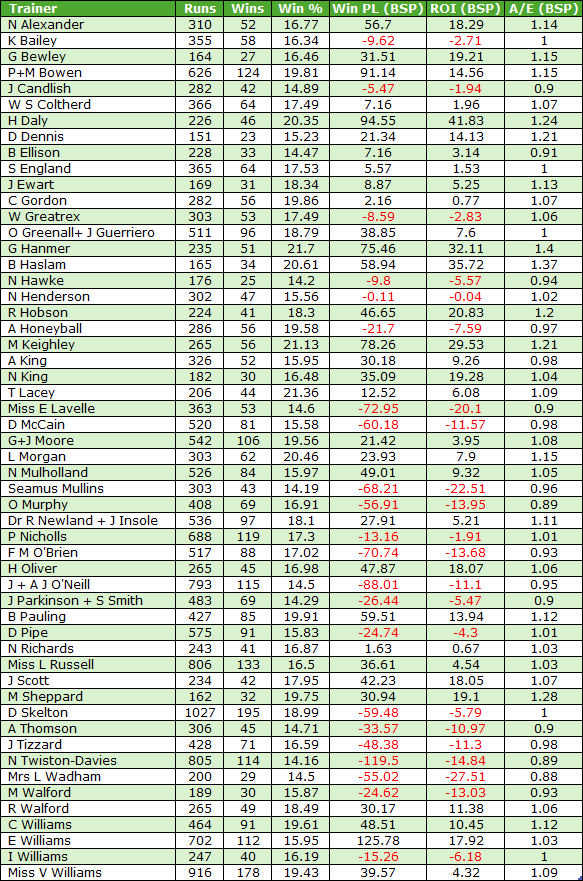
Presented by Victor Value

The Albany Stakes is a Group 3 contest open to two-year-old fillies only. It’s a relatively new race to  Royal Ascot being first run in 2002. Initially Listed status, it became a Group 3 in 2005.

Some useful fillies have won the race before going onto better things including:

Samitar (2011) - Went onto win the following year’s Irish 1,000 Guineas.

Cursory Glance (2014) – Won the Group 1 Moyglare Stakes later that season.

Brave Anna (2016) – Landed the Group 1 Cheveley Park Stakes that year.

Porto Fortuna (2023) – Proved even better as a 3-year-old winning three Group 1’s including the Coronation Stakes here.


Trends to Note

Taking a quick look at the ten-year trends, unlike some of the juvenile races at the meeting there hasn’t been a real surprise result. Horses sent off 22/1 & bigger are 0 winners from 86 runners, 3 places.

The ten most recent winners all shared the following trends:

- Won their last start (non-winners last time out are 0 winners from 60 runners, 6 places)
- Returned 17/2 or shorter on their previous start (those sent off 9/1 & bigger are 0 winners from 42 runners, 3 places)

Finally, delving into the draw, winners have come from all over the track in the past ten years. However, if you we look at the last five years in isolation, 10 of the 15 placed horses were drawn in stalls 1 to 8 including four of the five winners.


Contenders

Seventeen were declared for this year’s race.  Despite the size of the field, I like just five.

Balantina stepped up markedly on her debut run when making all to win Curragh maiden 26 days ago. Connections won that Curragh race with Porta Fortuna in 2023. I doubt she will prove as good as that multiple Group 1-winning filly, but she has each way claims from stall 4.

Signora was weak in the betting when a 2½ lengths 3rd of 6 to the useful Lady Iman in a Group 3 at Naas on her racecourse debut last month.  Tenderly handled in the closing stages there, she can win races on the evidence of that run. Her dam won the 2017 Queen Mary Stakes and trainer Aidan O’Brien has won this three times since 2016. Strong claims from stall 11.

Green Sense was a winner on her debut at the Curragh in April and improved again when a ¾-length second to Lady Iman in that Naas Group 3.  She’s likely capable of a bit more improvement albeit might not have the upside of the third.

Oisin Murphy rode Balantina and Fitzella last time and has opted for the latter. The daughter of Too Darn Hot built on her racecourse debut promise when winning at Haydock 28 days ago. That performance marked her down as a useful juvenile prospect and she should be in the mix.

Gold Digger was an expensive (260,000gns) purchase at the Craven Breeze Up sales in April. The daughter of Starman overcame a slow start to win at Yarmouth on her debut 37 days ago. Well backed last time, like many of the fillies in the line-up she’s capable of more improvement.

Albany Stakes Verdict

Aidan O’Brien has already landed two of the Royal Ascot juveniles - prior to racing on Thursday - so one must respect the claims of Signora who was thrown in at the deep end on her racecourse debut. Balantina bids to follow in the hoofprints of stablemate Porta Fortuna who won this race two years ago. I think she's a solid each way chance. Fitzella and Gold Digger might prove the best of the British-trained fillies.

Selection: Try Balantina each way at 12/1 @ Coral & Ladbrokes


3.05 THE COMMONWEALTH CUP (CLASS 1) (Group 1)

Presented by Matt Bisogno

A whopping 22 runners for this fantastic addition to the racing calendar generally, and to Royal Ascot more specifically. It's already produced some terrific races - and winners - and this year's renewal looks likely to continue in that vein. However, is it an open and shut case?

The favourite, at shorter than 2/1, is Guineas third and dual juvenile Group 1 winner including at 6f, Shadow Of Light. He shaped like a non-stayer at Newmarket, the mile always being the question mark (along with whether he'd trained on), but ran a cracker before fading in the final half furlong or so. This stiff straight six ought to be ideal, and stall 19 is probably helpful, too. He has a very obvious chance.

Against him are massed ranks, led by the filly Babouche. Classics were never entertained for this Ger Lyons-trained juvenile G1 winner, and she stepped up on a seasonal debut effort when winning the Group 3 Lacken Stakes, comfortably from Whistlejacket, last time out.

Whistlejacket reopposes here, and was also second the day Babouche bagged her Group 1, in the Phoenix Stakes over this trip. He's a very consistent horse, a G1 winner himself in France, and his form ties in closely with both the filly and Shadow Of Light for all that he's been beaten respectful distances by both as his head to head record shows:


Jonquil's profile is slightly different. Lightly raced, he's run three times at seven furlongs - winning either side of a Listed flop, firstly in a maiden and most recently in the Group 3 Greenham on seasonal debut - before stepping up to a mile last time. That was in the Poulains, the French 2000 Guineas and he was but a head shy of Henri Matisse, so the question is whether he has the speed for this assignment. He will be staying on when others can't but I'm not sure about the trip for all that he's clearly classy and progressive. Connections had Field Of Gold for the St James's Palace or presumably he'd have gone there.

The consistent Ides Of March could easily be on the premises again, but he's got a bit to find with a couple other than Shadow Of Light; ditto Big Mojo, who I half expected to go up in trip this season: this stiffer track will certainly suit - he's a course and distance winner from the trial race earlier this year - and his trainer is a master at getting the best out of sprinters.

The raiding party are headed by French-trained Rayevka and the US sprinter Shisospicy. The former has raced exclusively on the soft side of good and produced a huge career best last time in a Chantilly G3; that form, or a bit more if the faster ground helps, could grab her a podium spot.

Shisospicy has no going concerns, but will be running in a straight line in a race for the first time. She has a stone to find with Shadow Of Light and, though I'm glad she is here to add to the international flavour, I don't fancy her chances especially.

Of the rest, it's always dangerous writing off an Adrian Murray-trained sprinter, and Arizona Blaze was third in the Norfolk last year and ran a slightly unlucky second in the Breeders' Cup Juvenile Turf Sprint. He's a well drawn pace angle and can take them along to the quarter pole and beyond - holding on to the finish will be trickier, of course.

Two more worth a mention are last year's Queen Mary winner, Leovanni, and the Nick Luck and Kevin Blake co-owned Lady With The Lamp. The first named is probably better at five furlongs and may not have trained on - bit too early to say - but she obviously fared well here previously; the latter has been unfancied, to some degree at least, on her most recent pair of starts, rallying from far back each time to score. She'll get a similar setup here and may not be a forlorn hope: it's hard to peg the form of deep closers.

It's a cracking race and one that revolves around SHADOW OF LIGHT. I think he probably just wins, tracking Arizona Blaze in the adjacent stall, and finishing strong. He's probably not even a terrible price given there's plenty of dead wood in the context of the grade in this field. A far more speculative each way alternative is Rayevka: she'll need the ground to eke out a bit more but, as a 'now' filly - coming off a big career top - a small win/place play might reward.

Suggestion: Back SHADOW OF LIGHT to win at 2/1 or bigger. Try a tiny e/w on Rayevka at 22/1 with all the extra places.


3.40 THE DUKE OF EDINBURGH STAKES (CLASS 2) (Handicap) (GBBPLUS RACE)

Presented by Rory Delargy

There’s a growing sense of déjà vu here. Having suggested that high was the place to be in the King George V Handicap on Thursday, I ploughed into stall 17 as a win bet only to watch Sing Us A Song ruin his chance with a dreadful beginning, only made worse by seeing stalls 20 and 21 land the exacta. Arrrgggh!!

Here we are again, then. A big-field handicap where those who can finish off up the centre of the track are at an advantage, and I might just narrow the runners with a view to getting the exacta – or the swinger for the less adventurous (surely the swinger should be for the more adventurous?! No sniggering at the back!)

Long List: Horses who could reasonably be described as hold-up types drawn 12 or higher are as follows:

War Rooms
Siege of Troy
Teumessias Fox
French Duke
Mount Atlas
Stressfree
Flight Leader

Of that group, I have a clear preference for French Duke who I thought was unlucky here last year in the King George V Handicap, while I’d happily throw out Teumessias Fox who has been well beaten twice before at this meeting.

War Rooms represents last year’s winning connections and is worth including as he will be suited by a very strong pace having proven his stamina over further, while Siege of Troy is dropping in class having run in Listed and Group 3 contests. She’s exposed but a tongue tie could help here and I’m loth to throw her out.

Mount Atlas is probably too high in the weights, with a course and distance win coming off 15lb lower. He’ll run his race but might find at least two better at the wire. Stressfree has a win and a second from two runs over the trip this term and definitely merits his place, leaving Flight Leader of those drawn high. He has the draw and the run style, but his form is at shorter and I’m not sure he has the requisite stamina for the job.


Wildcards:

I’m never entirely sure about front runners from wide draws, but Almosh’her is unexposed and coming off a career best at the trip. Beaten by only one horse in his career, he’s widest of all in 22 and ticks enough boxes to make himself indispensable. Hand Of God came high, wide and handsome when winning over 1¼m here last year and should progress further. I’m not certain he wants 1½m but he was strong at the finish 12 months ago and merits respect as a previous Royal Ascot winner.


Verdict:

Perm the following in the exotic of your choice, depending on how risk-averse you are, included in order of preference:

French Duke
Stressfree
Almosh’her
War Rooms
Hand of God


4.20 THE CORONATION STAKES (CLASS 1) (Group 1)

Presented by Matt Bisogno

The traditional clash of the 1000 Guineas fillies from across Europe. With the Newmarket and Curragh winners, Desert Flower and Lake Victoria, both absent, it falls to promoted Pouliches scorer Zarigana to uphold the Classic form.

In that French 1000, she got the nod in a highly contentious stewards' decision from the syndicate-owned Charlie Fellowes-trained Shes Perfect. I've watched that replay from all angles countless times, and it genuinely felt like a stitch up to me for all that we know the French interference rules are far stricter (and, in my view, better) than ours. Anyway, to the form more generally. It's hard to say that that Classic race hasn't worked out because the disqualified winner and third and fifth all went up markedly in trip for the Prix de Diane. They made little impression there, shaping like none of them stayed. Still, Zarigana has won her last three races by a nose, a neck, and minus a nose! She looks one to take on at the prices.

Falakeyah is unbeaten in her two starts to date, both this season, and she's no sort of profile fit for a Coronation Stakes. But her form is a) good and b) very likely less than she's capable of. She laughed at Life Is Beautiful in a Listed race at Newmarket last time - that one was only two lengths behind the second in the Ribblesdale yesterday. While LIB stepped up a quarter mile, Falakeyah steps back the same distance and, on a turning track with a short straight like Ascot, which places more emphasis on speed than stamina unless they go a million, that's a niggle. Owen Burrows is highly selective and rarely places his horses in the wrong slot, but she again looks short given those reservations.

Another lightly raced unbeaten filly with form tie ins to Life Is Beautiful is Kon Tiki, trained by Jane Chapple-Hyam. Three from three so far, most recently in the mile Michael Seeley Memorial at York (Listed), she's got plenty more to offer but is a stone behind the highest rated on her performances thus far.

Ralph Beckett sends Chantilly Lace, lobbed in at the deep end in the manner of a Mexican cliff dive last time when going from Newbury novice to the 1000 Guineas. She ran a belter there to be two and a half lengths fifth, and has every right to make further progress here on just her third lifetime start.

January's juvenile form was strong - twice getting close to 1000 Guineas winner Desert Flower - but she flopped on her seasonal bow and comes here needing to show she's trained on. The fact Ballydoyle have myriad fillies to pick from and Ryan lands on her implies she had; if that's right, and you can forgive her Irish Guineas flop, she's a fair price.

Stablemate Exactly has a higher rating than January, courtesy of her length defeat by Zarigana in the French 1000; it must be noteworthy that Ryan has shunned this one having ridden her in Paris. Exactly's form profile does hint that a softer sward would be preferable.

Ollie Sangster's 2-3 from Newmarket's 1000 Guineas ran 6th and 11th in the Curragh follow up, and perhaps Flight is the one that will prefer these rapid conditions. It was good to firm when she was second at HQ and she ought again to finish in front of Simmering, who will be having her fourth run of the campaign.

At a massive price, Duty First took a step forward from Newmarket (9th, beaten 12 lengths) to the Curragh (4th, beaten less than five lengths) in two Classic outings, and had earlier won the Fred Darling on her first 2025 outing. Archie Watson has an excellent Royal Ascot record so this filly could be a small bit of value at 66/1.

I'm not sure the market has this race right yet, and I was not surprised that the three I think are over-priced (or three of the four excluding the massive outsider) are showing blue on the odds grids. Still, you can have 8/1 about January, 11/1 Chantilly Lace, and 16/1 Flight. 66/1 is the price for Duty First and she's getting a tiny speculative from me also.

Suggestion: Split a point or two on January at 8/1 and Chantilly Lace at 11/1. Split a penny win and place on Duty First at 66/1.


5.00 THE SANDRINGHAM STAKES (CLASS 2) (Handicap)

Presented by Dave Renham

A 3yo fillies handicap over the straight mile to finish my week’s work. I’ll start by taking a look at the 15-year trends, which are a bit sparse as far as strong patterns go.


Market Rank

Six wins for favourites and three for second favourites so despite having big fields generally (10 of the races with 20+ runners) the market has proved a good guide.


Weight Rank

Eight of the last 15 winners have come from the top four in the weights (inc. joint 4th). This equates to 53% of the winners from just 20% of the total runners. Also, a further 15 were placed.


Position LTO

Eight of the last 15 winners won LTO. This equates to 53% of the winners from just 27% of the total runners.


Price LTO

14 of the last 15 winners returned an SP of 8/1 or less LTO (from 200 runners). A further 31 were placed. Horses priced 17/2 or bigger LTO have won just once from 128 runners (11 placed).


Draw

The number of runners each year has fluctuated massively between 15 and 30 runners so for my draw analysis I am doing what I did yesterday, using the Nick Mordin technique of ‘reversing’ the draw because the very highest draws are berthed next to the stands’ rail.  Hence, I am looking at how far the stall position has been away from the stands’ rail to hopefully give the most accurate draw history.

Looking at the last 15 years of this race, I have collated Percentage of Rivals Beaten figures (PRBs) for different sections of the draw. I have looked at the PRBs for all runners and then focused on those 33/1 or shorter in price, ignoring the complete rags. For the record, non-runners have been taken into account so the draw positions have been adjusted to allow for this. My findings are as follows:


Draw position in relation to stands rail PRB (All) PRB (33/1 or shorter)
1 to 5  stalls away 0.51 0.56
6 to 10  stalls away 0.52 0.57
11 to 15  stalls away 0.52 0.52
16 to 20  stalls away 0.42 0.42
21 or more stalls away 0.51 0.62


These figures give us a real conundrum as there is no clear pattern. It does seem that more fancied horses furthest away from the stands rail (the low draws) have performed the best.


Run Style

Now I am looking at the PRBs for each run style group based on the last 15 years. The splits are:


Run Style PRB (All) PRB (33/1 or shorter)
Led / disputed lead / led group 0.36 0.48
Prominent 0.44 0.46
Mid Division 0.49 0.52
Held up 0.59 0.62


A clear edge to hold up horses – a pattern we have seen before this week in the mile handicaps. In terms of wins we have seven wins for hold ups, six for mid pack runners and one apiece for prominent /early leaders.


Form Preview

I have four runners in this year's field that I particularly like:

Supermodel – Two wins from three starts including a comfortable success on seasonal reappearance at Nottingham. All three starts the horse has been held up which, as the trends show, has been a strong positive. Trainer William Haggas has not had the greatest record in handicaps at this meeting but in each of the last three years he has saddled one handicap winner, and I think Supermodel could make it four years running. Drawn 3.

Better Clover – She has run twice as Ascot, finishing eighth in the Queen Mary last year and then second beaten a neck a month later in the Group 3 Queen Margaret Stakes. She has run three times this year and shaped with promise in each, finishing fourth, second and third. The last run in France, in Group 2 company, was an eye-catching effort. William Buick was booked early for this one so I am guessing Eve Johnson Houghton  is very hopeful. In terms of run style Betty Clover tends to race mid pack or further back early which is ideal. Drawn 23 and second in the weights is a plus from the 15-year trends.

Silver Ghost – Is two from two this year with wins at Newmarket and Goodwood. She has gone up 8lb for that Goodwood win but that was impressive, especially considering that her draw may have been lower than ideal: she was in stall 6 and horses finishing second to seventh were drawn 12, 9, 16, 10, 13, 15; those finishing eighth to last were drawn 1, 5, 2, 7, 8, 4, 3. Drawn 20 here. In both of her wins this year she has been held up in rear early.

Miss Nightfall – She finished second to Silver Ghost at Goodwood. She was well beaten that day but would have finished closer if granted a clearer run between the one and the two pole. Drawn 28 and looks a lively outsider.


Suggestion

Try Supermodel to win at 8/1 & Betty Clover e/w at 12/1 (several bookies going six places again, Sky Bet seven)


5.35 THE KING EDWARD VII STAKES (CLASS 1) (Group 2)

Presented by Gavin Priestley

For the purposes of the trends we'll overlook the result from 2020 because, due to Covid, the Derby was actually run after Royal Ascot that year.

So, as is usual for this race we have a field made up of a couple of also rans from Epsom, a few that missed it for one reason or another, a number of lesser lights from the O'Brien stable, a couple of winners stepping up from novice company, and a few trainers tilting at windmills hoping to pick up some black type and place money.

Traditionally sandwiched in the middle of the Epsom and Irish Derby's, the 'Ascot Derby' is a poor shadow of either of those Group 1's and the Epsom winner hasn't shown up here in a very long time. However, the Epsom second did run, and win, in 2023. In fact, 5 of the last 8 winners had their last start at Epsom where they had finished 2nd, 3rd, 5th and 10th (twice).

This year we have just two runners from the Derby taking part, Nightwalker and Green Storm, neither of whom looked like getting competitive at Epsom. The pair had met previously when a distant 3rd and 4th in the Fielden Stakes at Newmarket back in April with Nightwalker doing best there but it was Green Storm who won their private battle at Epsom when finishing 7th. As a 2yo Green Storm had finished within 2 lengths of the likely favourite here, Amiloc, in a Kempton maiden and was 1 1/2 length behind the Derby 3rd Tennessee Stud in a French Group 1 at the back end of last season.

Of the two that ran in the Derby I'd side with Green Storm to do the best and he does look a pretty big price if able to reproduce some of that 2yo form. He hasn't managed it yet but the stable remain convinced he's still got it in him and this is nowhere near as competitive as that headline G1. I'd expect him to seriously outrun his current 40/1 odds and I'll probably have a little side bet on him.

The trends say we need a run as a 2yo, 1-3 seasonal runs, 2-7 career starts and the most recent within the last 12-56 days in a class 1-3 race with a top four finish (unless it was the Epsom Derby). All of the last nine winners were rated 103+ and interestingly, 13 of the last 17 winners had yet to win a Group race. It also hasn't paid to get too fancy in this race recently with all of the last 7 non-Covid renewals having gone to horses at 6/1 or under from the top three in the betting.

Which leads me to the selection. I'm going to make my main bet another horse that looks majorly overpriced. In fact, his odds look so wrong it's making me think I've missed something because in my mind there is no way this horse should be 14/1 on what we've seen from him so far this Season. I'm expecting him to be gambled on and go off at single figure odds.

CONVERGENT has had three races, two novice races at Redcar that have worked out very well with multiple winners coming out of both races, and the Group 3 Chester Vase where he ran 3rd to the Aidan O'Brien trained Lambourn: the same Lambourn that skated home in the Derby where he beat the Chester Vase second Lazy Griff. Not only have the front two from that race confirmed the form in the best possible way, the 15 length 6th from the race has also come out and won a Group 3 since. 14/1 is massive for a horse who ticks the boxes, has the ideal profile for this race and has top form to back it up. Clifford Lee is back onboard, who has a 100% 2-2 record on him, and the trainer has been knocking on the door with a few of his runners this week. Everything is in place for a big run... Non-runner, aaaargh

SELECTION: CONVERGENT 1pt EW 14/1 (Paddypower) Small each way on Green Storm at 40/1

6.10 THE PALACE OF HOLYROODHOUSE STAKES (CLASS 2) (Handicap)

Presented by David Massey

I’ve enjoyed doing these write-ups for Geegeez this week but there’s not been a lot of big-priced ones that I’ve fancied for readers to get stuck into. Well, it might have taken until Friday, but I’ve found three I like and if I can bag the winner from them, I’m hopeful I might get called back to have another go next year… [you're in! - Ed.]

I started by looking at Redorange, trained by Clive Cox, as he’s a gelding I’ve been keen on since I saw him win at Yarmouth last year. He won well that day, and I decided he’d be a horse I’d follow this year. I wasn’t the only one, as he was backed off the boards to win at Chester on his second start of the season, the 9-4 in the morning evaporating to just 11-10 at the off. Chester suited him down to the ground; in greyhound parlance, quickly away, early pace, led late on, always doing enough. 

I wonder whether Ascot will suit him as well, and in any case let’s revisit Redorange’s first run of the year at Sandown where he still ran well but only finished third. In front of him that day in second was Brosay, who finished off well and, whilst not an unlucky loser, jumping the path late on certainly didn’t help his cause. He finished ¾ length in front of Redorange there, yet is 7lb better in here, and is over twice the price. That, to me, makes no sense, and given Ascot should suit, and the fast ground will hold no fears, at 20-1 and bigger he heads up my list. 

The other two both come from the Queen Mary last year, and both look overpriced, given Royal Ascot form - much like Cheltenham Festival form it often translates well from year to year. 

Karl Burke’s Miss Lamai finished fourth to Leovanni last year, and the theory was that she’d be a speedy 2yo and no more. To be fair to her she was highly tried after that, taking in a couple of Grade 3s in France and, whilst not disgraced in either, it did look as if that might be her lot. 

However, on her latest start, in the Westow Stakes at York, she took a good step forward running on in taking style to finish third to the useful Tropical Storm and in front of good sorts like Aesterius and Mr Lightside. It would appear, on that, she’s not done yet, and I can see this test suiting her well. We know she acts on fast ground at Ascot so that’s not a concern, and with the handicapper leaving her alone after York when he could have very easily given her another couple of pounds, 25-1 looks a price I can get involved with. 

And finally… We come to the 2024 Queen Mary third Maw Lam. Now, at first glance she’s a harder one to love, as her form this year hasn’t been as good as it was last year; but I think you can find excuses - not that she needs one for her seasonal reappearance, a fifth in the Fred Darling, a perfectly acceptable effort. At Cork next time, she didn’t get the best of runs as she came from the rear but still finished sixth, and at Haydock last time she ran too free, and was a spent force late. With Jack Nicholls taking a useful 7lb off, she looks on a fair mark and, like Miss Lamai, we know these conditions suit her well. 40/1? Yep, add her to the shortlist…

Three against the field: Brosay 22/1, Miss Lamai 18/1, Maw Lam 40/1


Royal Ascot Tix Picks 2025, Day 3

This week, as part of our Royal Ascot content, I'm making a suggested placepot permutation each day.

It started well on Tuesday: although the perm only caught 2% of the dividend, that was enough to return £58.11 from a £24.96 stake, including 5% Tix bonus. That's a profit of £33.15.

It got better yesterday: a £22.68 stake returned £146.47 from 13% of the dividend. That's two four-figure dividends we've managed to get a slice of, which is very, very hard using traditional 'caveman' perms. This is the beauty of ABCX and Tix!

With £47.64 staked and £204.58 returned, for a profit of £156.94, we'll be winning better than £100 from Tix and placepots on the week (no Tix Picks on Saturday).

Gold Cup day, Thursday, looks super tricky. But remember, there's another prize giveaway today - see below.

I'll be using the ABCX approach, outlined here, and some online software called Tix which I built in conjunction with Nige, the guy who coded most of the original geegeez.co.uk racecards and form tools. [It is excellent software, though I say so myself]

Basically, I'm creating a number of different placepot bets based around how strongly I fancy various horses; and I'm weighting my stakes accordingly.

When I say 'I', I mean Tix is doing all of that; I'm just picking horses and choosing whether they're A (strongest fancy), B (fair chance) or C (dark horse/lively outsider). X are the horses I'm discarding from contention.

Tix Bonus

Every winning ticket placed through Tix benefits from a 5% bonus return. Win £100? You'll get £105. Win £500? Enjoy an extra £25. Just for placing your bets through Tix.

Prizes to be won

And, because it's Royal Ascot week, we've got some Tix prizes to give away.

Tuesday to Friday / Saturday

For the first four days of the Royal meeting, the Tix player with the highest return on investment on a single ticket will win £50.

On the final day of Royal Ascot, Saturday, the Tix player netting top ROI will win £100, credited to their tote account.

So that's £300 in prizes this week!

Congratulations to Mick C, who won £50 on Tuesday; and to Paul M, who won £50 yesterday.

What do you need?

You simply need a tote account. Get one here if you don't already have one. [You'll probably be eligible for extra bonuses when signing up, but obviously do check the T's and C's]

**

To day three. It's risky banking on the the favourite in the opener but, if not there, then where?

Leg 1 - Norfolk Stakes:

Aidan O'Brien and Ryan Moore have won the two main juvenile races so far this week and have odds-on Charles Darwin here. But odds-on Whistlejacket was off the ticket for him last year, and they've missed the board every year since Land Force was third in 2018, including with three favourites. Karl Burke's recent record in the race is excellent and, though he's not hit the heights with his juveniles this week yet, Naval Light could change that. I'm taking a bigger chance than the market suggests because I need bullets to fire elsewhere. Will be place laying Charles Darwin to cover at least a part of my stakes.

A - 3 Charles Darwin
B - 1 Afjan, 13 Naval Light
C - 5 Comical Boy, 7 First Legion, 12 London Boy, 14 Sandal's Song, 16 Wise Approach, Unnamed favourite

Leg 2 - King George V Stakes:

As Rory very well articulated in his preview of this race, low is generally unfavoured with middle to high the places to be. Only Hukum (stall 4) has won this from lower than stall 8 (of 16 and 19 runners), and Hukum went on to win two Group 1's, including the King George itself over the same course and distance! You have to be good to overcome a low post. Hoping the market has this right.

A - 5 Serious Contender, 6 Sing Us A Song, 8 Merchant

Leg 3 - Ribblesdale Stakes:

The one I wanted to be with, Garden Of Eden, is friendless this morning; that said, the market seems utterly clueless here with the top six all mainly pink on the odds grids. I'm guessing here and using plenty of ammo.

A - 1 Caspi Star, 2 Catalina Delcarpio, 4 Garden Of Eden, 9 Life Is Beautiful

Leg 4 - Gold Cup:

Eight runners so we don't need any defections! On the face of it, this is a three horse race, with old boy Trawlerman the chuck out. But he is the proven one under these conditions and the trainers are in incedible form. I have had a good bet on the French horse, Candelari, but he'll never have raced on ground this quick; and Illinois is stepping up six furlongs in trip. Not trying to be clever here, just hoping to be lucky - may place lay Illinois to cover stakes if all eight run.

A - 8 Illinois
B - 4 Trawlerman

Leg 5 - Britannia Stakes:

Possibly the toughest race of the week. We're often looking at a midfield to held up runner drawn high, and that's the direction my prayer mat is facing. Hayley gave Docklands 'a Jamie' for Harry Eustace to win this a couple of years ago, and this time Jamie rides for Harry on La Botte (the barrel, used to be a great Italian restaurant in Boscombe). His form ties in with Field Of Gold through Cosmic Year, so he's an auto A. Teroomm is an obvious A pick, too, getting a hold up ride to notch the hat-trick last time and drawn highest of all.

Shout and Fearnot will come from further back, while Raafedd and Parole d'Oro have clear form claims if not optimal draw/run style profiles. This feels like 'goodnight Vienna' territory if we've not already put the cat out (hat tip to the late great Leonard Rossiter, for all that this show hasn't aged well - the jokes, of course, were all at his expense).

A - 2 La Botte, 8 Teroomm
B - 18 Fearnot, 22 Shout, 25 Raafedd, 26 Parole d'Oro
C - 6 Afentiko, 12 Consolidation, 15 Serengeti, 28 Brave Mission, 29 Arctic Grey

Leg 6 - Hampton Court Stakes:

Crikey, when will it end? Well, here, mercifully, as the sixth of six very challenging legs. Tornado Alert looks like he's been asking for ten furlongs all season, though he's backing up quickly after the Derby; Detain brings Prix du Jockey Club placed form but has to show he acts on very quick turf. Trinity College's form ties in with Detain's and he's solid if unspectacular - the sort that wins this race - and that'll do. Throwing some C's into the mix, too, because I fear middle to high might be slightly favoured.

A - 3 Detain, 13 Tornado Alert
B - 14 Trinity College
C - 2 Arabian Force, 5 Glittering Legend, 7 High Stock, 9 Reyenzi, Unnamed favourite

Full ticket view

The truth is that we'll definitely need to be lucky to score today, and on my own tickets - as well as these I've placed below - I'll be 'squeezing the topology', moving a couple more on to A in some places and taking risky bankers in others. But I'm happy to take a wider swipe and try to limit stakes here to £25. Anyhoo...

For pennies today, stakes are £25.44.

Full disclosure: as always, even if this perm gets 'winning' tickets, there's a chance it pays less than the total stakes. We're really trying to get something interesting to happen at some point in the sequence!

The full A (green) B (yellow) C (tan) view looks like this:


And the breakdown by ticket is like this:


Remember, you need to have a placed selection in each leg on at least one ticket. That means at least four races with A picks placing.

Place your Tix bets here - and you'll be in line for a 5% bonus on winning tickets, and a chance to win £50 daily through Royal Ascot.

Royal Ascot 2025: Day 3 Preview, Tips

Into 'hump day', better known as Gold Cup day, or Ladies' Day - or even Thursday, or Day 3 - we go. The marathon Group 1 is the feature and, with the weather set fair it will be riding quick, so let's get straight to it.

2.30 THE NORFOLK STAKES (CLASS 1) (Group 2)

Presented by Victor Value

The Norfolk Stakes is a Group 2 run over five furlongs. First run in 1843, it was renamed in 1973 in honour of the 16th Duke of Norfolk, Queen Elizabeth II’s Representative at Ascot from 1945 to 1972. The race achieved its Group 2 status in 2006.

Trends to Note

In recent years, this race has sprung the odd huge surprise. The Ridler (2022) scored at 50/1, and the following year Valiant Force (2023) won at 150/1!

I’m not digging deep into trends today, but from a draw perspective it’s worth noting that horses drawn 11+ are 0 winners from 37 runners, 6 places. That’s an interesting trend given the Exp/Wins=3.28 for those runners.

Contenders

Sixteen have been declared for this year’s Norfolk Stakes, and the first thing that stands out is that short-priced favourite Charles Darwin is drawn in stall 15.

After a good look, just four runners have made my final shortlist:

Charles Darwin: Trained by Aidan O’Brien, the son of No Nay Never has made all to win his last two (of three) starts at Navan. Looked a high-class juvenile last time, visually impressive, and the time backed that up. At a best-priced 13/8 on Tuesday afternoon, he looked value based on form good enough to win the last five renewals. The only negative is his high draw.

Sandal’s Song: Overcame a slow start to show good speed when winning on debut at Gulfstream Park (firm ground). A sprinting type on looks, he’s been purchased by Wathnan Racing, and if he handles a straight track, I think he’ll go very close. Triner George Weaver saddled the 2023 Queen Mary winner, subsequently bought by Wathnan, so he knows what is required to win a Royal Ascot juvenile contest.

Naval Light (Karl Burke): Bought for 360,000 gns at the Craven Breeze-ups by Wathnan Racing. Finished second to Old Is Gold in the Two-Year-Old Trophy at Beverley on racecourse debut. He was slowly away that day and ran green in the early stages of the race but once the penny dropped, finished off well. Burke won this last year with a colt who had won the Beverley race. Retained jockey James Doyle opts for him over Sandal’s Song with James McDonald riding the latter which is no negative.

Afjan: The speedy son of Mehmas overcame greenness to win on debut at Chantilly 18 days ago. He produced a high-class turn of foot to win that day and is open to plenty of improvement. I was impressed with this success, and I think the stiffer Ascot 5f will suit.

Norfolk Stakes Verdict

I only fancy four of the 16 runner’s - cue a big- priced winner like The Ridler or Valiant Force!  I will be quite surprised if one of that quartet doesn’t win. Charles Darwin’s form is rock solid and he’s a worthy favourite. However, I want to take him on because of the draw and his price. His nearest market rival is Naval Light who will win races this season and most likely at Group level.  However, I was hoping for better than a best priced 4/1.  At bigger odds I prefer American challenger Sandal’s Song - he looks a big price to me - and French-trained colt Afjan.

Selection: Afjan – 9/1 @ Coral & Ladbrokes

3.05 THE KING GEORGE V STAKES (CLASS 2) (Heritage Handicap) (GBBPLUS RACE)

Presented by Rory Delargy

Despite being over a mile and a half and with the low stalls on the inside these days (it wasn’t ever thus), there is no advantage to be drawn in single figures in the King George V Handicap (or the Duke of Edinburgh over the same track and trip for the three-year-olds); and, to demonstrate, I’ve compiled the results by draw since 2001, which shows that nine horses have won the race from single figure draws, but that ten have won from stall 15 or higher in the same timeframe. So punters should consider those drawn high to be at some sort of advantage, for all that may seem to defy conventional wisdom. In reality, the stiff track confers no advantage to front runners, and those coming from off the pace tend to fan out from the inner rail in the straight, with travelling a little further no hardship in the grand scheme of things.

That isn’t to say that you can’t win from a low draw, but those who do are rarely helped by a position near the rail, except in the rare circumstance where the fastest ground is on the far rail, as it was in 2022, when the race was dominated by those who sat handily. The first six home in the Norfolk Stakes that year were all drawn low, and if that is repeated then you should take note. When the draw on the straight course favours high numbers, then that tends to be repeated on the round course, too, and early signs are that will be the case this year.

It's possible to make all from a wide draw, although those who have done so have tended to keep off the inside rail until near the turn, and recent years have shown a bias towards strong-staying hold-up performers from high-to-mid berths. Last year Going The Distance (stall 18) beat Neski Sherelski (19) and if you listened to Simon Holt’s commentary, you’ll notice that they are called as the last pair to reach the home turn. In 2023, Desert Hero (21) had three or four behind him on the home turn before winning. In contrast the last three positions that year were filled by horses drawn wide who were up with the pace.

On the face of it, Sing Us A Song is likely to be one of the front runners here having made all to win on his handicap debut at Sandown last time, but I think that James Doyle will be more patient than Hector Crouch was there. Sing Us A Song gallops like a stayer and Crouch took him forward last time to utilise his stamina over a trip which is a minimum for him, fending off challenges in the straight and never stronger than up the climb to the line at Sandown.

Given the extra demands on stamina here, there is no need to be aggressive on Sing Us A Song, who strikes me as the type to take another leap forward in form terms for this stiffer test and I hope that Doyle allows him to find his stride in the early stages before launching a bid from off the pace. He is a full-brother to the ill-fated Sir Erec, who was placed in the British Champions Long Distance Cup as a three-year-old and a Grade 1 winner over hurdles, but sadly broke a leg when favourite for the Triumph Hurdle. His dam is also a half-sister to Mahler, who was placed in the St Leger and Melbourne Cup, so all the signs are that this trip and further are going to bring out the best in him. I like him a lot.

Recommendation: Sing Us A Song (Win/Each-way) at 8/1 with bet365 (5 places)


3.40 THE RIBBLESDALE STAKES (CLASS 1) (Group 2)

Presented by Matt Bisogno

A mile and a half for three-year-old fillies - an Ascot Oaks if you will. Being so close to the original (and still the best) Epsom variant means we only have one filly - Go Go Boots - coming here from there, and she's not especially fancied by the market. The top three from the betting lists have fared well enough - bagging eight of the last twelve Ribblesdales between them - but the jolly has only two wins in that time.

Aidan and Johnny G (now with Thady G as well) have won most of that dozen, three-quarters in fact, the Ballydoyle man owning most recent bragging rights as he and Ryan Moore have paired up to take the most recent two renewals. Not since Lady Cecil's Riposte won in 2013 has a filly unraced at two won the Ribblesdale, which might be a concern for the top two in the current lists, Serenity Prayer and Catalina Delcarpio.

Serenity Prayer is trained by Andrew Balding and won a traditionally strong Newbury fillies' maiden on debut before beating all bar Whirl in the Musidora, the key Oaks trial, at York last time. Nevertheless, she was more than five lengths inferior to the winner on the Knavesmire though it should of course be noted that Whirl all but won the Oaks, beaten just a neck. After just two starts she can be expected to stride forward on what she's shown to date.

Go Go Boots was only a neck behind Serenity Prayer at York and, if she just didn't handle Epsom, she is over-priced.

The same is true of Catalina Delcarpio whose form figures of 12 mirror Serenity's. She's trained by Paddy Twomey, and also won a maiden easily - at Leopardstown in her case - before running second in a Group 3. That form has not worked out well, though the winner was fourth at Epsom and most of the rest were beaten far enough.

The Moore / O'Brien axis is represented by a far more experienced filly in Garden Of Eden. She's been second and first in a brace of Listed contests either side of her winter break, but was well enough beaten in a couple of mile Group 3's at the start of this term. Stepping up to ten furlongs last time, she led all the way in the Naas Oaks Trial; her pedigree hardly screams she wants to go further but who am I to second guess the great man?

John and Thady run two more candidates as well as Go Go Boots, led by Life Is Beautiful. Thrice raced, she won a Kempton maiden on debut before running second to a nice filly in a novice back at the same track (both mile races). Upped to a mile and a quarter last time saw her run up again, behind the unbeaten Coronation Stakes favourite Falakeyah.

Understudy may be just that here. She's got a lovely staying pedigree - by Sea The Stars out of a Selkirk mare - but this is huge leap in grade from a Class 5 Southwell novice. Still, she's bound to be capable of better in time.

Charlie Johnston saddled Caspi Star to be third to Oaks winner Minnie Hauk in the Cheshire Oaks. She was beaten half the distance Serenity Prayer was by Whirl, with Minnie Hauk edging that one out, so 10/1 this lass feels more attractive than 3/1 the jolly. She's improved a stone and more in two runs since getting bested by Lady Vivian, though that one has also stepped forward and doubled up in a handicap at the Chester May meeting last time.

Aidan O'Brien also runs Ecstatic and Island Hopping, the former another experienced filly for whom excuses can be made the last couple of starts: messy race, no run at Newbury and may not have handled the soft turf at Navan the time before. She does need them, however. Island Hopping was behind Garden Of Eden in Listed class last time but may be slightly more stoutly bred and may also be enlivened by the first time blinkers.

Suggestion: I think the percentage play is Garden Of Eden at around 5/1 win only despite the stamina reservation. She did seem to improve for the extra quarter mile last time and, if she can do likewise for a further two-eights, she's value against the inexperienced pair atop the market. Caspi Star at 10's might be an interesting small each way play based on her Chester run..


4.20 THE GOLD CUP (CLASS 1) (Group 1)

Presented by Matt Bisogno

A smallish field of eight line up for the Blue Riband and, in the absence of the sadly retired Kyprios, it's a more open contest than might otherwise have been the case. The question is, does Aidan O'Brien have a ready made replacement for his injured star stayer in the shape of Illinois?

Four-year-old have won all bar four of the last dozen Gold Cups, and of the quartet of older winners, three were repeaters who'd won prevoiusly aged four - Kyprios once and Stradivarius twice. Without a repeater, the youngest eligible age group looks the right focus. It's another race where Messrs O'Brien and the Gosdens have something of a hegemony with both well invested this time around.

The favourite, Illinois, comes from Ballydoyle and is from the penultimate crop of mega-sire Galileo. Winner of the Queen's Vase this time last year, he finished the season with second in the St Leger; this season's pipe opener was a cosy success in the Ormonde Stakes and he comes here in fine fettle, the second from Chester going a place better at York last weekend. This is, however, a step up in trip and in class, Illinois never having raced beyond the extended mile and three quarters of the St Leger. He seems an uncomplicated sort so ought to give himself every chance of relaxing into a good rhythm, though he does usually race handily.

Second choice is the Gosdens' Trawlerman, a perennial forward goer. He stays well and acts on quick turf as he showed when a length behind Kyprios in the race last year, a repeat of which would likely be good enough to take top honours this time around. He won by five lengths on his return from Dubai, in the Henry II Stakes at Sandown last month. He's likely to bid to make all but, at seven years young, time may not be on his side against less exposed rivals.

One of those is the French raider Candelari, trained by Francis-Henri Graffard. He made his debut on the all-weather through the winter before seamlessly reverting to turf; his second grass spin, last time out, was a staying on win in the almost two miles Prix Vicomtesse Vigier, a Group 1. A feature of his races is switching off and rattling home late: he'll not have too much time to gather his thoughts in the short home straight at Ascot but he looks like he'll relish the extra range. This will be just his sixth career start so there's probably more in the lockeur.

It would be a shock, to me at least, if any of the rest were to win. Sweet William was five lengths behind Trawlerman last term and is a year older now; Wonder Legend improve 16lb on the all-weather through the winter but this is big ask (he's vaguely interesting e/w); and I don't expect the veterans Coltrane, Yashin or Dubai Future to, well, have a future, in the context of this G1 at any rate.

Illinois might be the one but he's a fair bit to prove at his sub-2/1 quote. I think Trawlerman likely just sets it up for a younger closer - though fair play to him if I'm wrong on that; and so the one I'm siding with is Frenchie Candelari, whose chance will depend to some degree on Mikael Barzelona getting his fractions right. He doesn't always. Will it be Ooh la la! or Zut alors?!

Suggestion: Back CANDELARI to win at 10/3 (or 3/1 or better).


5.00 THE BRITANNIA STAKES (CLASS 2) (Heritage Handicap)

Presented by David Massey

The Thirsk piece of form where Terroom beat Parole D’Oro is where I’m going to start this form guide for the Brittania, as the pair of them feature highly towards the top of the market, and I think it might be a strong piece of form. 

Terroom came out on top by ¾l that day, but Parole D’Oro travelled like the best horse (traded 1.03 in the run) and just couldn’t quite finish the job off. Terroom went on to show the form as solid by winning again at Haydock, beating Tilted Kilt ¾l.

Going back to Thirsk, Parole D’Oro was giving Terroom 2lb that day, yet gets 4lb today, plus there’s the addition of a tongue tie, which you’d like to think would help him see it out a little stronger. That 6lb turnaround in the weights makes me think Parole d’Oro can reverse form today, and I like where he’s berthed, in stall 24, with a potential pace angle in The Lost King next door in 25 to give him a tow into it.

At 33s and bigger, despite what looks a moderate draw, Mr Chaplin has to be on the shortlist too. We liked him a lot, physically, when winning a nursery at Glorious Goodwood last year (paddock pick) and, off the back of that, he took his chance against The Lion In Winter and Ruling Court in the Group 3 Acomb at York. Perhaps unsurprisingly, he was unable to land a blow against such classy opposition but ran respectably and was spotted running on late. He tried making all in the Flying Scotsman on his final start of last year and on the figures ran his best race of the season to finish fourth. 

He didn’t reappear until May this season when eighth at Goodwood but that doesn’t begin to tell the story, as he was in a good position to challenge two furlongs out but was constantly denied a run up the rail - a horror story we’re all too familiar with at that track - and in the end, Richard Kingscote accepted the situation and allowed him to come home in his own time. He lost multiple places late as a result, and to me he shaped as if he retains all of his ability. A mile today is a new test for him but the way he finished off at Goodwood when winning over seven suggests he might even improve a bit for it. If the draw does beat him today, keep him in mind for something similar in the near future. 

Middle draws certainly didn’t hamper the chances of anyone on Day One, and Raafedd’s stall 14, smack in the middle, looks a very good place to work from. You couldn’t help but be impressed with the way he beat Accentuate at Newbury last time out, leading a full two furlongs out, then powering clear and geared down to win two lengths. The second did the form no harm when scoring by three lengths at Windsor last week, giving the form a very solid look, and the time figure for Raafedd’s win at Newbury was good too. 

This step up to a mile will surely suit him even better, and there has to be more to come from this son on Teofilo, you fancy. He rounds out my three against the field for the race. 

Three against the field: Parole d'Oro 11/1, Raafedd 11/1, Mr Chaplin 33/1


5.35 THE HAMPTON COURT STAKES (CLASS 1) (Group 3)

Presented by Gavin Priestley

TRENDS

A typical Hampton Court winner has yet to win at Group level (15 of the last 15 winners), has an official rating of 103+ (14/15), has raced 3-6 times in their career (14/15), came from the top 4 in the betting (13/15) and returned less than 8/1 (14/15). 13 of the last 15 winners had won at least one of their last three starts and had finished top 6 in all of those three starts (14/15).

3 of the last 15 winners last raced at Epsom (from just 9 such runners).

In the last 15 years, all 22 runners that had their last start in a class 3-5 race, all 15 horses that last ran in the 2000 Guineas, all 12 horses that last ran in a Group 2, and all 6 horses that last ran on the all-weather have been beaten.

RACE ANALYSIS:

A cracking looking race with the Aidan O'Brien French Derby 4th Trinity College heading the betting. With the first six home that day finishing in a heap, and with just a length and a half covering them all, it's hard to say what the form's worth. On his previous start Trinity College had been beaten by the now re-opposing Sea Scout at Epsom and, with that rival trading as a 66/1 outsider here, that's either a great price on him or a worthless piece of form. With Sea Scout subsequently finishing 8th in the Dante and 11th in the Derby I'm leaning towards the latter.

Traditionally this is a race for those who missed the Derby due to stamina doubts or those that did run in the Derby but failed to get home.

One horse who the latter definitely applies to is the 2000 Guineas 4th TORNADO ALERT who looks an absolutely massive price if over his Derby exertions from just 12 days ago. A staying on 4th at Newmarket over a mile, where he was just four lengths off Field of Gold, he was doing some good work late on and caught the eye of a lot of expert judges. His trainer was happy to talk up his chances for the Derby but, on the day, the 1m4f trip seemed to find him out and he patently didn't stay the last couple of furlongs.

He looks sure to appreciate the drop back to this intermediate 10f trip and he is one of the few runners in the field with genuine Group 1 form. He scores highly on the trends and his trainer won this in 2017 (stable have had just one runner in the race since) with a 113-rated horse that came here on the back of a 5th in the Derby. Top international jockey James McDonald is booked and there's so much to like about his chances I'll be shocked if he isn't involved at the finish.

SELECTION: TORNADO ALERT 1pt EW

.

6.10 THE BUCKINGHAM PALACE STAKES (CLASS 2) (Handicap)

Presented by Dave Renham

This race was taken off the calendar in 2015 but reinstated in 2020. Hence in terms of trends I am looking at the last ten renewals, which cover 2010 to 2014 and 2020 to 2024.

10-year trends

Market

Just one win for horses from the top four of the betting. (English Oak last year when fav).

Six winners priced between 12/1 and 18/1; the other three were 25/1, 33/1 and 50/1.


Age

4yos have won five of the last ten but they have provided 40% of the total runners. 4yos do have the best placed record (double other age groups combined).

7yos and older have a poor record win 0 wins and just 5 places from 47 runners.


LTO Price

Seven of the last 10 winners were priced 15/2 or shorter on their most recent start. This equates to 70% of the winners from 40% of the total runners.


Draw

The number of runners each year has fluctuated between 23 and 29 runners so for my draw analysis I am using the Nick Mordin technique of ‘reversing’ the draw because the very highest draws are berthed next to the stands’ rail.  Hence, I am looking at how far the stall position has been away from the stands’ rail to hopefully give the most accurate draw history.

Looking at the last 10 years of this race, I have collated Percentage of Rivals Beaten figures (PRBs) for different sections of the draw. I have looked at the PRBs for all runners and then focused on those 33/1 or shorter in price, ignoring the complete rags. For the record, non-runners have been taken into account,  so the draw positions have been adjusted to allow for this. My findings are as follows:


Draw position in relation to stands rail PRB (All) PRB (33/1 or shorter)
1 to 5  stalls away 0.58 0.59
6 to 10  stalls away 0.61 0.64
11 to 15  stalls away 0.45 0.49
16 to 20  stalls away 0.47 0.48
21 or more stalls away 0.42 0.44


As the numbers show horses drawn within ten stalls of the stands’ rail have had a significant edge in this race over the past ten years.


Run Style

Now I am looking at the PRBs for each run style group based on the last ten years. The splits are:


Run Style PRB (All) PRB (33/1 or shorter)
Led / disputed lead / led group 0.49 0.49
Prominent 0.37 0.42
Mid Division 0.52 0.53
Held up 0.57 0.58


Based on these past figures, hold up horses have had the edge here, followed by mid pack runners. Indeed, eight of the last ten winners came from one of these two run styles.

Onto my favoured candidates:

Never So Brave – Now with Andrew Balding having formerly been with Sir Michael Stoute. He has had one run this season at Chester where he pulled far too hard and then had to be switched just over a furlong from home. Was the fastest finisher in the field that day running 0.23 secs quicker than anything else in the final furlong. Finished second but should have won. He has been raised 4lb which looks fair. Is drawn next to English Brave in 28 and has the assistance of the excellent Oisin Murphy in the saddle. Often races prominently but hopefully he will be ridden with a little more restraint.

English Oak – He won this race last year extremely impressively off a handicap mark of 99. He is one 1lb higher here. That performance was rated at 114 by Racing Post Ratings. Since then, he has failed to register a win in seven starts but his last run when sixth at Newbury showed some promise in a race that was slowly run. Last year, this race was run at a very strong pace and despite there being no genuine front runners in the field one would expect the same again here which will play to his strengths. Draw 27 should be OK.

No Retreat – He ran well at the start of the year in Dubai winning a decent handicap at Meydan in February before finishing a neck second to Silver Sword at the same track in an even better handicap three weeks later. He was down to run in the Victoria Cup last month but was withdrawn on the morning of the race. He then went to Haydock where he finished a decent third. No Retreat has been very consistent, always making the top three throughout his career. He races off 97 which is 3lbs higher than his Dubai second mentioned above and he looks overpriced at around 25/1. The draw in 1 though is a concern, unless earlier straight track races suggest otherwise. Has raced midfield / near the back in four of his last five runs so hopefully we see the same tactics employed here.

Gorak – At a big price Gorak is interesting. He ran in the race in 2023 and 2024 finishing 12th both times. However, he had valid excuses both times. In 2024 he was badly drawn but was a close up second on his part of the track. In 2023 he stuck to the stands rail and finished first of six in his group, but the centre of the course was strongly favoured that day. If he gets a run he will be drawn 10 which is still lower than ideal, but the likely price will compensate.


Conclusion

English Oak would win this easily if back to last year’s form but at 5/1 or thereabouts the price is just too tight IMO.


Suggestion

Never So Brave e/w at 8/1 and No Retreat e/w at 25/1

If Gorak runs has a small e/w saver at around 33/1

Several bookies are going six places (Bet 365, Betfred, Boyal Sports, Corals, Paddy Power to name but five), seven places with Sky Bet.


Royal Ascot Tix Picks 2025, Day 2

This week, as part of our Royal Ascot content, I'm making a suggested placepot permutation each day.

It started well on Tuesday: although the perm only caught 2% of the dividend, that was enough to return £58.11 from a £24.96 stake, including 5% Tix bonus. That's a profit of £33.15.

Let's get to Wednesday, Day 2. And remember, there's another prize giveaway today - see below.

I'll be using the ABCX approach, outlined here, and some online software called Tix which I built in conjunction with Nige, the guy who coded most of the original geegeez.co.uk racecards and form tools. [It is excellent software, though I say so myself]

Basically, I'm creating a number of different placepot bets based around how strongly I fancy various horses; and I'm weighting my stakes accordingly.

When I say 'I', I mean Tix is doing all of that; I'm just picking horses and choosing whether they're A (strongest fancy), B (fair chance) or C (dark horse/lively outsider). X are the horses I'm discarding from contention.

Tix Bonus

Every winning ticket placed through Tix benefits from a 5% bonus return. Win £100? You'll get £105. Win £500? Enjoy an extra £25. Just for placing your bets through Tix.

Prizes to be won

And, because it's Royal Ascot week, we've got some Tix prizes to give away

Tuesday to Friday

For the first four days of the Royal meeting, the Tix player with the highest return on investment on a single ticket will win £50.

Saturday

On the final day of Royal Ascot, the Tix player netting top ROI will win £100, credited to their tote account.

So that's £300 in prizes this week!

What do you need?

You simply need a tote account. Get one here if you don't already have one. [You'll probably be eligible for extra bonuses when signing up, but obviously do check the T's and C's]

**

OK, that's the set up. Let's get to it. The first question is where to go narrow and where to spread out. My inclination was to be narrow in the Group 1's but the Queen Anne and King Charles III are very open, and I hate the 'seven runner with an odds on' feel of the St James's Palace!

Leg 1 - Queen Mary Stakes:

After yesterday's Coventry, it's tempting to bank on True Love, whose form with Gstaad stands out, as does her high draw. But I'll throw in Lennilu and Zelaina on B, too. Mind you, the first three home last year were 22/1, 50/1, 50/1..!

A - 23 True Love
B - 11 Lennilu, 25 Zelaina

Leg 2 - Queen's Vase:

There is a lot of confidence behind the French raider, Asmarani, but I prefer Shackleton and Carmers. Devil's Advocate has the form but not the proven stamina.

A - 3 Carmers, 10 Shackleton

Leg 3 - Duke Of Cambridge Stakes:

The mile trip is a bit on the short side for the very smart Cinderella's Dream but she does have an electric gear change which is just the ticket for this. She's an A banker, fingers crossed.

A - 1 Cinderella's Dream

Leg 4 - Prince Of Wales's Stakes:

Anmaat is too old on trends but bang there on form. A. Los Angeles fits on both. Also A. Hard to see them both off the ticket. Facteur Cheval is an interesting outsider and I might back him win/place on the tote: he'll pay overs.

A - 1 Anmaat, 5 Los Angeles

Leg 5 - Royal Hunt Cup:

Tricky, tricky, tricky. I'm scattering here. My ante post bet was Tokenomics and he's on A, along with all the favourites, and Ancient Rome (Charlie Hills has won this twice since 2019 and it looks like a Jamie Spencer special). Plenty more on B plus unnamed favourite.

A - 5 Qiraat, 6 Ancient Rome, 14 The Liffey, 23 Fox Legacy, 27 My Cloud, 29 Tokenomics
B - 1 Arabian Light, 16 Ebt's Guard, 19 Bullet Point, 25 Greek Order, Unnamed favourite

Leg 6 - Kensington Palace Stakes:

Another tough leg, and should bolster the dividend. Rainbows Edge and Serialise are well(ish) drawn fancied runners and go on A. I'll add Arolla to A, too. Snellen and Sky Safari and Arisaig on B. Nine on C, including unnamed favourite - we'll need to have gone all A's for these C's to count!

A - 1 Rainbows Edge, 3 Arolla, 17 Serialise
B - 2 Snellen, 4 Arisaig, 18 Sky Safari
C - 6, 7, 9, 10, 15, 21, 23, 24, UNF

Full ticket view

I've gone very narrow early in hope of having some funds to splurge in the last two legs. Fair chance we're sunk before that, but that's the game, right?

For pennies, with 2p's (x4) on the A ticket, it comes to £22.68 stakes. A single placed entry from A in each leg gives an 8p winning line, but of course it's possible to get more than one in each.

Full disclosure: as always, even if this perm gets 'winning' tickets, there's a chance it pays less than the total stakes. We're really trying to get something interesting to happen at some point in the sequence!

The full A (green) B (yellow) C (tan) view looks like this:


And the breakdown by ticket is like this:


Remember, you need to have a placed selection in each leg on at least one ticket. That means at least four races with A picks placing.

Place your Tix bets here - and you'll be in line for a 5% bonus on winning tickets, and a chance to win £50 daily through Royal Ascot.

Your first 30 days for just £1